 Bird Album
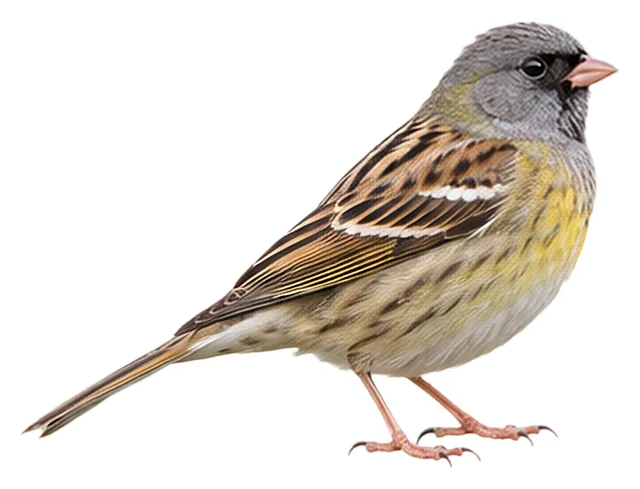
Black-faced Bunting
Emberiza spodocephala Pallas, 1776
≈14 cmLength18 gWeight
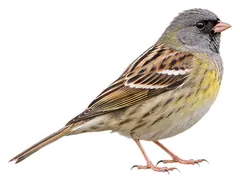
The male has a blue-gray head with blackish lores and cheeks, and shows little fear of people.
Busiest months: April · Most records: China, South Korea, Mongolia
How to identify
Field marks
- Male: head, neck and throat blue-gray with a slight olive wash
- Male: base of the bill, lores and cheeks gray-black
- Two white wing patches
- Male of the nominate subspecies: breast and flanks pale sulfur-yellow, belly white
Male, female and young
The female is less distinctly marked than the male, with a brown head and neck, yellowish-white supercilium and cheek stripe, and yellow underparts with brown streaks.
Voice
Short, metallic “tzii” or “tzee” calls, rather than a song.
Where and when it's recorded
Busiest months: April · Most records: China, South Korea, Mongolia

Black-faced Bunting has been recorded at 1,025 of the 8,276 birding hotspots we track, in 19 countries and regions.
Records by month Northern Hemisphere
Where it's recorded most
- Taipei – Tianliaoyang WetlandTaiwan (China)1,514 records
- Nanhui DongtanChina1,435 records
- Mai Po Nature ReserveHong Kong (China)874 records
More places
- Matsu – Dongyin Vegetable FarmChina642 records
- Muravyevka ParkRussia545 records
- Taipei – Beitou Guizikeng Drainage CanalTaiwan (China)542 records
- Matsu – Dongyin Shizi Vegetable FarmChina483 records
- Hsinchu Coast IBA – Gangnan Jincheng LakeTaiwan (China)430 records
- Nanpu MudflatChina403 records
- Beihu MarshlandChina388 records
Countries and regions with the most records
eBird records via GBIF up to 2024-12-31. A record means someone listed it; more records partly mean more birders, not more birds.
About
The black-faced bunting (Schoeniclus spodocephalus) is a small passerine bird in the Old World bunting family Emberizidae. It breeds in eastern Russia and Mongolia and winters from central Nepal to northern Indochina.
Excerpt from Wikipedia, CC BY-SA 4.0 · authors · Read more on Wikipedia
Questions
How big is the Black-faced Bunting?
The Black-faced Bunting is about ≈14 cm long and weighs around 18 g.
Where does the Black-faced Bunting live?
Its breeding range: Palearctic: temperate north-central, northeastern, central Palearctic shrubby areas in woodland: south-central Russia and northern Mongolia east to Sea of Okhotsk and northern Sakhalin (southeastern Russia) and south to northeastern Inner Mongolia, northern Heilongjiang (northeastern China) and northern, central Korean Peninsula; disjunctly Qinghai and Shaanxi south to Yunnan and Guizhou (central China). It is most often recorded in China, South Korea and Mongolia.
When is the best time to see the Black-faced Bunting?
At the hotspots we track, it is recorded most in April (Northern Hemisphere).
Is the Black-faced Bunting endangered?
The IUCN Red List classifies the Black-faced Bunting as Least Concern.
What does the Black-faced Bunting eat?
Main food: Insects & other invertebrates.
What family is the Black-faced Bunting in?
It belongs to the family Buntings (Emberizidae), order Passerines (Passeriformes).
At a glance
- Length
- ≈14 cm
- Weight
- 18 g
- Habitat
- Shrubland
- Diet
- Insects & other invertebrates
- Lifestyle
- Active on the ground
- Migration
- Migratory
- Conservation
- Least Concern
More measurements
- Wing
- 70 mm
- Tail
- 62 mm
- Bill
- 12 mm
- Tarsus
- 20 mm
Averages from the AVONET dataset; length from field guides where available.
Range
Palearctic: temperate north-central, northeastern, central Palearctic shrubby areas in woodland: south-central Russia and northern Mongolia east to Sea of Okhotsk and northern Sakhalin (southeastern Russia) and south to northeastern Inner Mongolia, northern Heilongjiang (northeastern China) and northern, central Korean Peninsula; disjunctly Qinghai and Shaanxi south to Yunnan and Guizhou (central China)
Breeding range, IOC World Bird List 15.2
Subspecies · 2
- Emberiza spodocephala spodocephala sc Russia and n Mongolia e to Sea of Okhotsk and n Sakhalin (se Russia) and s to ne Inner Mongolia, n Heilongjiang (ne China) and n, c Korean Pen. | non-breeding: s, e China, Taiwan (China) and Ryukyu Is. (s Japan)
- Emberiza spodocephala sordida Qinghai and Shaanxi s to Yunnan and Guizhou (c China) | non-breeding: c Nepal to ne India and n se Asia
Classification
- Order
- Passerines Passeriformes
- Family
- Buntings Emberizidae
- Genus
- Emberiza
Other birds in the genus Emberiza
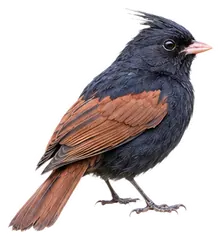 Crested BuntingEmberiza lathami
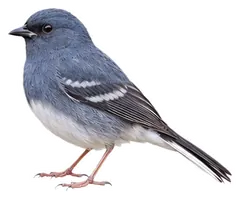 Slaty BuntingEmberiza siemsseni
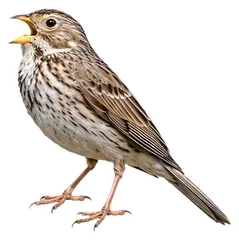 Corn BuntingEmberiza calandra
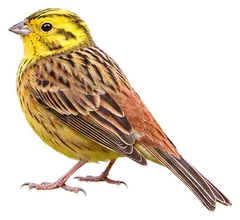 YellowhammerEmberiza citrinella
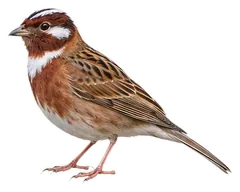 Pine BuntingEmberiza leucocephalos
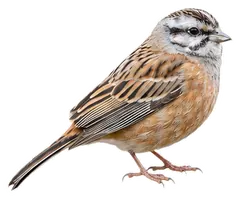 Rock BuntingEmberiza cia
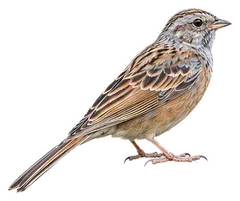 Godlewski's BuntingEmberiza godlewskii
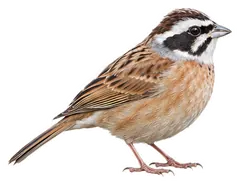 Meadow BuntingEmberiza cioides
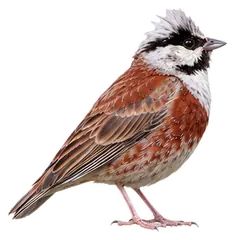 White-capped BuntingEmberiza stewarti
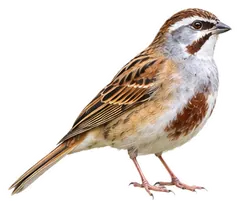 Jankowski's BuntingEmberiza jankowskii
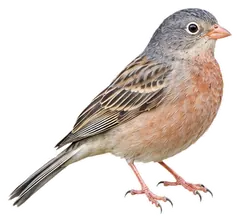 Grey-necked BuntingEmberiza buchanani
 Cinereous BuntingEmberiza cineracea
Download illustration
Free to use with credit: “Illustration: Bird Album (birdalbum.com)”. Drawn by AI from a reference photo by 大家好64. ↗

Heard it but can't see it? Mingji identifies birds by sound and photo, on your phone.