 Bird Album
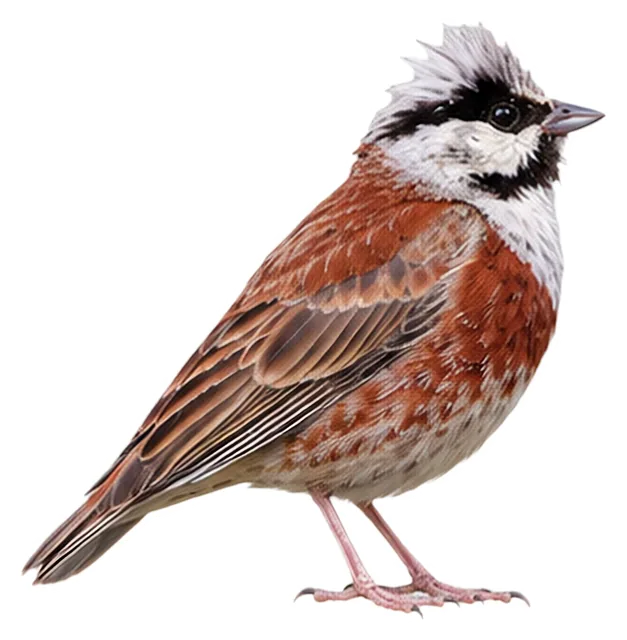
White-capped Bunting
Emberiza stewarti (Blyth, 1854)
≈14 cmLength16 gWeight
This migrant inhabits open grassland and feeds mainly on dry fruits and seeds.
Busiest months: February and May · Most records: India, Kazakhstan, Uzbekistan
How to identify
Where and when it's recorded

White-capped Bunting has been recorded at 64 of the 8,171 birding hotspots we track, in 9 countries and regions.
Records by month Northern Hemisphere
Where it's recorded most
- Ranthambore NPIndia140 records
- Kokpek CanyonKazakhstan114 records
- SattalIndia81 records
More places
- Bharatpur – Keoladeo Ghana NPIndia46 records
- PangotIndia43 records
- Takhta-Karacha mountain passUzbekistan41 records
- Forest Research Institute (FRI), New Forest CampusIndia41 records
- Asola Wildlife SanctuaryIndia35 records
- Jawaharlal Nehru University (JNU) CampusIndia34 records
- Corbett NPIndia32 records
Countries and regions with the most records
eBird records via GBIF up to 2024-12-31. A record means someone listed it; more records partly mean more birders, not more birds.
About
The white-capped bunting or chestnut-breasted bunting (Emberiza stewarti) is a species of bird in the family Emberizidae. It is found in Afghanistan, India, Iran, Kazakhstan, Kyrgyzstan, Nepal, Pakistan, Tajikistan, Turkmenistan, and Uzbekistan. Its natural habitats are boreal forests, boreal shrubland, and temperate grassland.
Excerpt from Wikipedia, CC BY-SA 4.0 · authors · Read more on Wikipedia
Questions
How big is the White-capped Bunting?
The White-capped Bunting is about ≈14 cm long and weighs around 16 g.
Where does the White-capped Bunting live?
Its breeding range: Oriental: montane temperate Central Asia dry woods: east-central, southern Kazakhstan, eastern Uzbekistan and far eastern Turkmenistan, through Kyrgyzstan and Tajikistan through Afghanistan and northern, west-central Pakistan, Kashmir to central Himachal Pradesh. It is most often recorded in India, Kazakhstan and Uzbekistan.
When is the best time to see the White-capped Bunting?
At the hotspots we track, it is recorded most in February and May (Northern Hemisphere).
Is the White-capped Bunting endangered?
The IUCN Red List classifies the White-capped Bunting as Least Concern.
What does the White-capped Bunting eat?
Main food: Seeds.
What family is the White-capped Bunting in?
It belongs to the family Buntings (Emberizidae), order Passerines (Passeriformes).
At a glance
- Length
- ≈14 cm
- Weight
- 16 g
- Habitat
- Grassland
- Diet
- Seeds
- Lifestyle
- Perches in trees
- Migration
- Migratory
- Conservation
- Least Concern
More measurements
- Wing
- 78 mm
- Tail
- 67 mm
- Bill
- 12 mm
- Tarsus
- 17 mm
Averages from the AVONET dataset; length from field guides where available.
Range
Oriental: montane temperate Central Asia dry woods: east-central, southern Kazakhstan, eastern Uzbekistan and far eastern Turkmenistan, through Kyrgyzstan and Tajikistan through Afghanistan and northern, west-central Pakistan, Kashmir to central Himachal Pradesh
Breeding range, IOC World Bird List 15.2
Classification
- Order
- Passerines Passeriformes
- Family
- Buntings Emberizidae
- Genus
- Emberiza
Other birds in the genus Emberiza
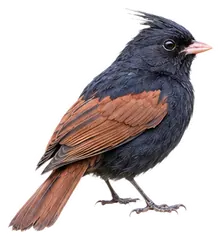 Crested BuntingEmberiza lathami
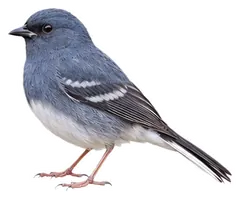 Slaty BuntingEmberiza siemsseni
 Corn BuntingEmberiza calandra
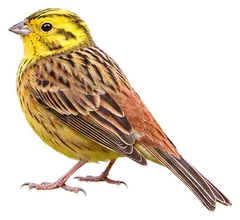 YellowhammerEmberiza citrinella
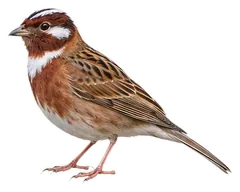 Pine BuntingEmberiza leucocephalos
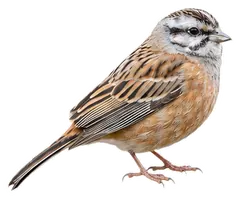 Rock BuntingEmberiza cia
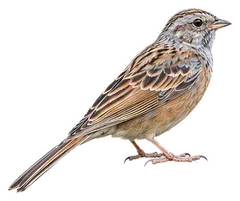 Godlewski's BuntingEmberiza godlewskii
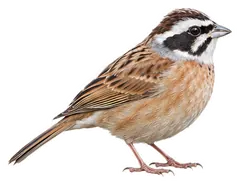 Meadow BuntingEmberiza cioides
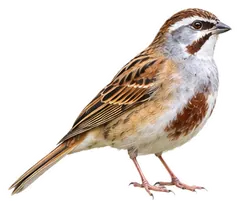 Jankowski's BuntingEmberiza jankowskii
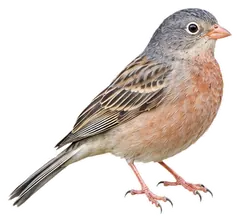 Grey-necked BuntingEmberiza buchanani
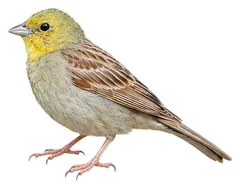 Cinereous BuntingEmberiza cineracea
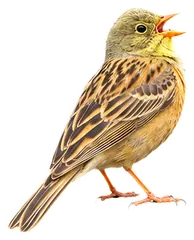 Ortolan BuntingEmberiza hortulana
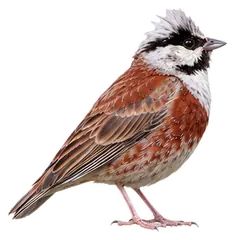
Download illustration
Free to use with credit: “Illustration: Bird Album (birdalbum.com)”. Drawn by AI from a reference photo by kindjay. ↗
Heard it but can't see it? Mingji identifies birds by sound and photo, on your phone.
In other languages
- EnglishWhite-capped Bunting
- 简体中文白顶鹀
- 繁體中文白頂鵐
- 日本語ハイガシラホオジロ
- DeutschSilberkopfammer
- FrançaisBruant de Stewart
- EspañolEscribano de Stewart
- Portuguêsescrevedeira-de-cabeça-branca
- ItalianoZigolo pettocastano
- NederlandsStewarts Gors
- РусскийОвсянка Стюарта
- Svenskasvarthakad sparv
- DanskSortstrubet Værling
- Polskitrznadel srebrnogłowy