 Bird Album
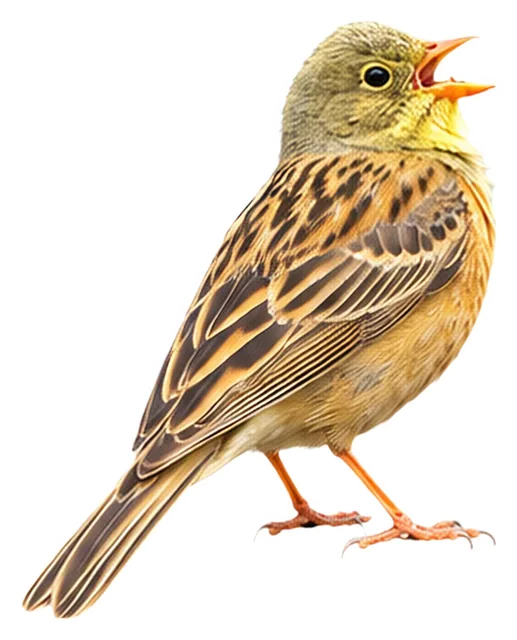
Ortolan Bunting
Emberiza hortulana Linnaeus, 1758
16–17 cmLength26 cmWingspan20 gWeight
It resembles a plainer Yellowhammer, with a gray-green head rather than a bright yellow one.
Busiest months: April · Most records: Israel, United Arab Emirates, Türkiye
Looks like Yellowhammer
How to identify
Field marks
- Head gray-green rather than bright yellow
- Less brightly colored overall than Yellowhammer
Voice
Male song resembles that of Yellowhammer.
Similar species
Where and when it's recorded

Ortolan Bunting has been recorded at 482 of the 8,171 birding hotspots we track, in 71 countries and regions.
Records by month Northern Hemisphere
Where it's recorded most
- Jerusalem Bird ObservatoryIsrael455 records
- RivaTürkiye423 records
- Abu Dhabi Golf and Equestrian ClubUnited Arab Emirates293 records
More places
- International Birding and Research Center Eilat (IBRCE)Israel289 records
- Gazelle ValleyIsrael180 records
- Abraq Al-HabariKuwait163 records
- Wamm FarmsUnited Arab Emirates152 records
- Madzharovo Crater AreaBulgaria135 records
- PN Sudoeste Alentejano e Costa Vicentina – CabranosaPortugal129 records
- Khovd Bird Ringing Station, Khovd, MNMongolia122 records
Countries and regions with the most records
eBird records via GBIF up to 2024-12-31. A record means someone listed it; more records partly mean more birders, not more birds.
About
The ortolan (Emberiza hortulana), also called ortolan bunting, is a Eurasian bird in the bunting family Emberizidae, a passerine family now separated by most modern scholars from the finches, Fringillidae. The genus name Emberiza is from Alemannic German Embritz, a bunting. The specific name hortulana is from the Italian name for this bird, ortolana.
Excerpt from Wikipedia, CC BY-SA 4.0 · authors · Read more on Wikipedia
Questions
How big is the Ortolan Bunting?
The Ortolan Bunting is about 16–17 cm long, with a wingspan of 26 cm and weighs around 20 g.
Where does the Ortolan Bunting live?
Its breeding range: Palearctic: southern, eastern subarctic to subtropical open wooded hills: western, central Palearctic: Scandinavia patchily to Iberian Peninsula, east through Baltic region, western, south-central Russia, northern Kazakhstan, far northern Xinjiang (northwestern China) and western, central, southern Mongolia; in south through coastal Algeria, northern Mediterranean to Turkey, Caucasus and northern Iran. It is most often recorded in Israel, United Arab Emirates and Türkiye.
When is the best time to see the Ortolan Bunting?
At the hotspots we track, it is recorded most in April (Northern Hemisphere).
Is the Ortolan Bunting endangered?
The IUCN Red List classifies the Ortolan Bunting as Least Concern.
What does the Ortolan Bunting eat?
Main food: Omnivore.
What family is the Ortolan Bunting in?
It belongs to the family Buntings (Emberizidae), order Passerines (Passeriformes).
At a glance
- Length
- 16–17 cm
- Wingspan
- 26 cm
- Weight
- 20 g
- Habitat
- Shrubland
- Diet
- Omnivore
- Lifestyle
- Varied
- Migration
- Migratory
- Conservation
- Least Concern
More measurements
- Wing
- 86 mm
- Tail
- 66 mm
- Bill
- 16 mm
- Tarsus
- 19 mm
Averages from the AVONET dataset; length from field guides where available.
Range
Palearctic: southern, eastern subarctic to subtropical open wooded hills: western, central Palearctic: Scandinavia patchily to Iberian Peninsula, east through Baltic region, western, south-central Russia, northern Kazakhstan, far northern Xinjiang (northwestern China) and western, central, southern Mongolia; in south through coastal Algeria, northern Mediterranean to Turkey, Caucasus and northern Iran
Breeding range, IOC World Bird List 15.2
Classification
- Order
- Passerines Passeriformes
- Family
- Buntings Emberizidae
- Genus
- Emberiza
Other birds in the genus Emberiza
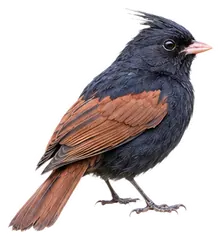 Crested BuntingEmberiza lathami
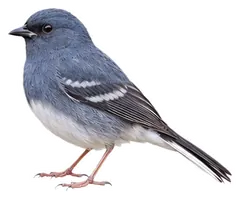 Slaty BuntingEmberiza siemsseni
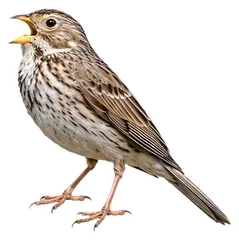 Corn BuntingEmberiza calandra
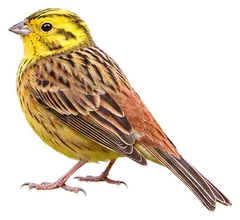 YellowhammerEmberiza citrinella
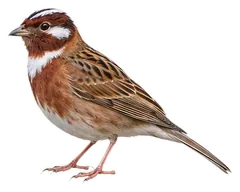 Pine BuntingEmberiza leucocephalos
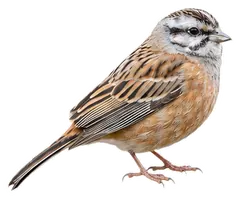 Rock BuntingEmberiza cia
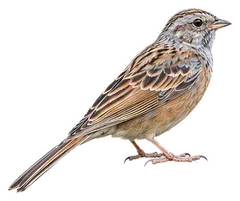 Godlewski's BuntingEmberiza godlewskii
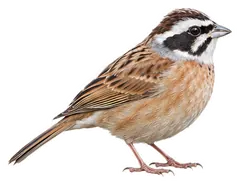 Meadow BuntingEmberiza cioides
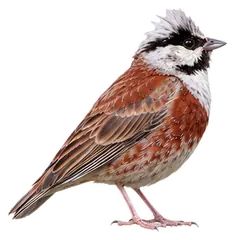 White-capped BuntingEmberiza stewarti
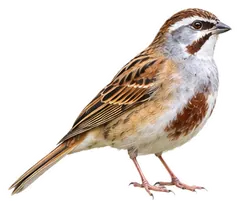 Jankowski's BuntingEmberiza jankowskii
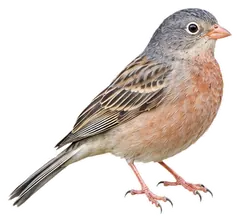 Grey-necked BuntingEmberiza buchanani
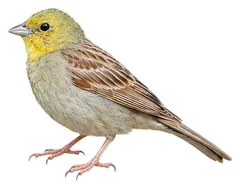 Cinereous BuntingEmberiza cineracea
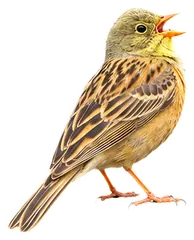
Download illustration
Free to use with credit: “Illustration: Bird Album (birdalbum.com)”. Drawn by AI from a reference photo by egorbirder. ↗
Heard it but can't see it? Mingji identifies birds by sound and photo, on your phone.