 Bird Album
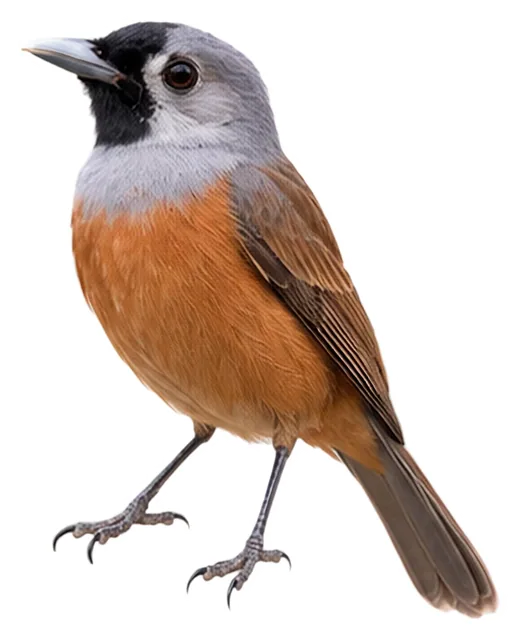
Black-faced Monarch
Monarcha melanopsis (Vieillot, 1818)
23 gWeight
The black-faced monarch (Monarcha melanopsis) is a passerine songbird in the family Monarchidae found along the eastern seaboard of Australia, and also New Guinea (where most birds migrate to during the austral winter; May to August).
Busiest months: October · Most records: Australia, Papua New Guinea
Where and when it's recorded

Black-faced Monarch has been recorded at 112 of the 8,171 birding hotspots we track, in 2 countries and regions.
Records by month Southern Hemisphere
Where it's recorded most
- O'Reilly's Rainforest RetreatAustralia1,019 records
- Jerrara DamAustralia597 records
- Finch Hatton GorgeAustralia587 records
More places
- Bendthualaly, BellawongarahAustralia489 records
- Kingfisher Park Birdwatchers LodgeAustralia485 records
- Hasties Swamp National ParkAustralia440 records
- Royal National Park – Lady Carrington DriveAustralia424 records
- Mary Cairncross ReserveAustralia398 records
- Crater Lakes National Park – Chambers Rainforest LodgeAustralia353 records
- D'Aguilar National Park – Maiala Loop WalkAustralia340 records
Countries and regions with the most records
eBird records via GBIF up to 2024-12-31. A record means someone listed it; more records partly mean more birders, not more birds.
About
The black-faced monarch (Monarcha melanopsis) is a passerine songbird in the family Monarchidae found along the eastern seaboard of Australia, and also New Guinea (where most birds migrate to during the austral winter; May to August).
Excerpt from Wikipedia, CC BY-SA 4.0 · authors · Read more on Wikipedia
Questions
How big is the Black-faced Monarch?
The Black-faced Monarch weighs around 23 g.
Where does the Black-faced Monarch live?
Its breeding range: Australasia: northeastern Queensland (south of Cape York Peninsula) to southeastern Victoria (eastern Australia). It is most often recorded in Australia and Papua New Guinea.
When is the best time to see the Black-faced Monarch?
At the hotspots we track, it is recorded most in October (Southern Hemisphere).
Is the Black-faced Monarch endangered?
The IUCN Red List classifies the Black-faced Monarch as Least Concern.
What does the Black-faced Monarch eat?
Main food: Insects & other invertebrates.
What family is the Black-faced Monarch in?
It belongs to the family Monarchs (Monarchidae), order Passerines (Passeriformes).
At a glance
- Weight
- 23 g
- Habitat
- Forest
- Diet
- Insects & other invertebrates
- Lifestyle
- Perches in trees
- Migration
- Migratory
- Conservation
- Least Concern
More measurements
- Wing
- 89 mm
- Tail
- 74 mm
- Bill
- 21 mm
- Tarsus
- 20 mm
Averages from the AVONET dataset; length from field guides where available.
Range
Australasia: northeastern Queensland (south of Cape York Peninsula) to southeastern Victoria (eastern Australia)
Breeding range, IOC World Bird List 15.2
Classification
- Order
- Passerines Passeriformes
- Family
- Monarchs Monarchidae
- Genus
- Monarcha
Other birds in the genus Monarcha
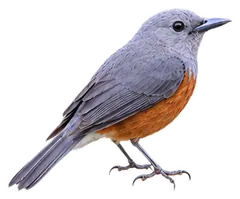 Island MonarchMonarcha cinerascens
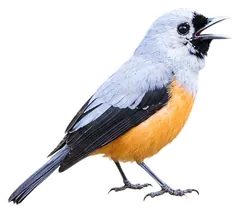 Black-winged MonarchMonarcha frater
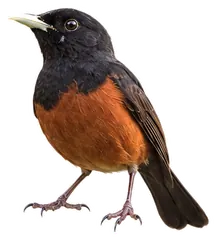 Chestnut-bellied MonarchMonarcha castaneiventris
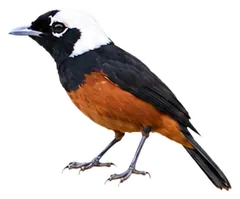 White-capped MonarchMonarcha richardsii
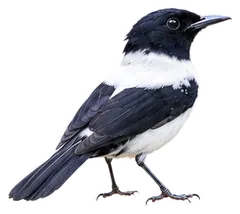 Yap MonarchMonarcha godeffroyi
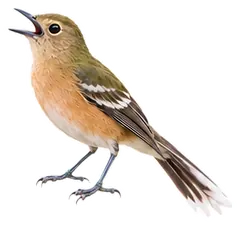 Tinian MonarchMonarcha takatsukasae
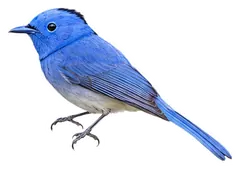 Black-naped MonarchHypothymis azurea
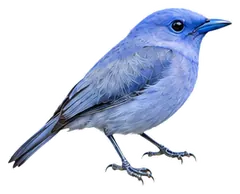 Pale-blue MonarchHypothymis puella
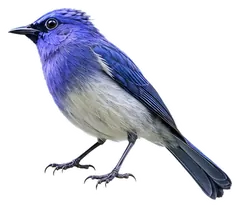 Short-crested MonarchHypothymis helenae
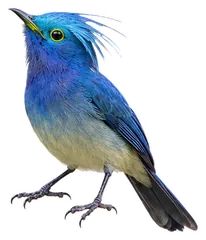 Celestial MonarchHypothymis coelestis
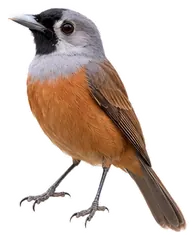
Download illustration
Free to use with credit: “Illustration: Bird Album (birdalbum.com)”. Drawn by AI from a reference photo by Steve Murray. ↗
Heard it but can't see it? Mingji identifies birds by sound and photo, on your phone.