 Bird Album
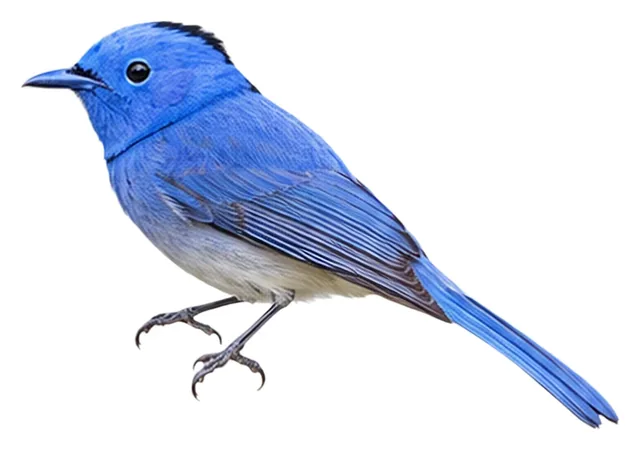
Black-naped Monarch
Hypothymis azurea (Boddaert, 1783)
≈13 cmLength11 gWeight
The male is mostly pale sky-blue, with a single black patch on the occiput and a narrow black neck band, and perches upright.
Busiest months: February–March and November–December · Most records: China, India, Thailand
How to identify
Field marks
- Male mainly pale sky-blue, with white lower belly
- Male has black occiput and a narrow black neck band
- Short legs and feet; upright perching posture
- When alarmed, raises feathers on the occiput into a pointed crest
Male, female and young
Female duller, without black markings, and with brownish wings and back.
Voice
A sharp, short “skrip”.
Where and when it's recorded

Black-naped Monarch has been recorded at 814 of the 8,171 birding hotspots we track, in 17 countries and regions.
Records by month Northern Hemisphere
Where it's recorded most
- Kanha NP – Mukki ZoneIndia4,603 records
- Nantou – Jiji Endemic Species Research InstituteTaiwan (China)3,232 records
- Taipei – Taipei Botanical GardenTaiwan (China)2,168 records
More places
- Yeliu IBATaiwan (China)1,338 records
- Taichung – Taichung Metropolitan ParkTaiwan (China)1,246 records
- Chiayi – NCYU Lantan CampusTaiwan (China)1,228 records
- Chidyatapu Biological ParkIndia1,126 records
- Taipei – Tianliaoyang WetlandTaiwan (China)1,048 records
- Yilan – Dingliao Ecological ParkTaiwan (China)1,025 records
- Bondla Wildlife SanctuaryIndia957 records
Countries and regions with the most records
eBird records via GBIF up to 2024-12-31. A record means someone listed it; more records partly mean more birders, not more birds.
About
The black-naped monarch (Hypothymis azurea) is a passerine bird belonging to the family of monarch flycatchers found in southern and south-eastern Asia. They have a call that is similar to that of the Asian paradise flycatcher, and in tropical forest habitats, pairs may join mixed-species foraging flocks.
Excerpt from Wikipedia, CC BY-SA 4.0 · authors · Read more on Wikipedia
Questions
How big is the Black-naped Monarch?
The Black-naped Monarch is about ≈13 cm long and weighs around 11 g.
Where does the Black-naped Monarch live?
Its breeding range: Oriental: widespread, also Lesser Sundas. It is most often recorded in China, India and Thailand.
When is the best time to see the Black-naped Monarch?
At the hotspots we track, it is recorded most in February, March, November and December (Northern Hemisphere).
Is the Black-naped Monarch endangered?
The IUCN Red List classifies the Black-naped Monarch as Least Concern.
What does the Black-naped Monarch eat?
Main food: Insects & other invertebrates.
What family is the Black-naped Monarch in?
It belongs to the family Monarchs (Monarchidae), order Passerines (Passeriformes).
At a glance
- Length
- ≈13 cm
- Weight
- 11 g
- Habitat
- Forest
- Diet
- Insects & other invertebrates
- Lifestyle
- Perches in trees
- Migration
- Resident (barely migrates)
- Conservation
- Least Concern
More measurements
- Wing
- 70 mm
- Tail
- 75 mm
- Bill
- 12 mm
- Tarsus
- 16 mm
Averages from the AVONET dataset; length from field guides where available.
Range
Oriental: widespread, also Lesser Sundas
Breeding range, IOC World Bird List 15.2
Subspecies · 2
- Hypothymis azurea styani India and Nepal to se China and Vietnam
- Hypothymis azurea oberholseri Taiwan (China)
Classification
- Order
- Passerines Passeriformes
- Family
- Monarchs Monarchidae
- Genus
- Hypothymis
Other birds in the genus Hypothymis
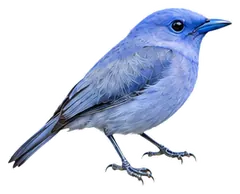 Pale-blue MonarchHypothymis puella
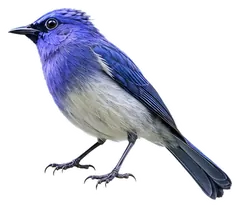 Short-crested MonarchHypothymis helenae
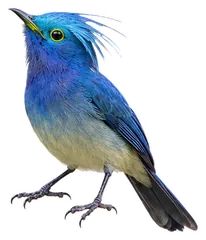 Celestial MonarchHypothymis coelestis
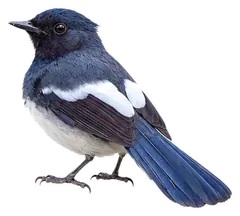 Blue-mantled Crested FlycatcherTrochocercus cyanomelas
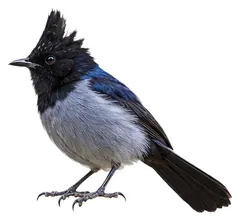 Blue-headed Crested FlycatcherTrochocercus nitens
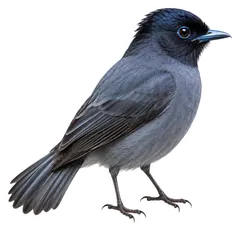 Bedford's Paradise FlycatcherTerpsiphone bedfordi
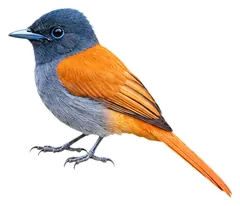 Rufous-vented Paradise FlycatcherTerpsiphone rufocinerea
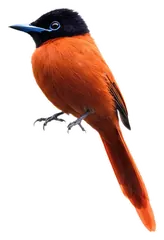 Red-bellied Paradise FlycatcherTerpsiphone rufiventer
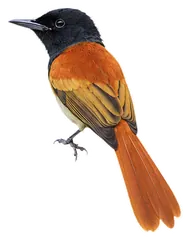 Bates's Paradise FlycatcherTerpsiphone batesi
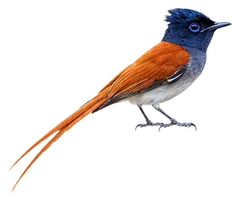 African Paradise FlycatcherTerpsiphone viridis
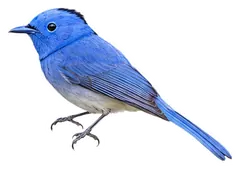
Download illustration
Free to use with credit: “Illustration: Bird Album (birdalbum.com)”. Drawn by AI from a reference photo by JJ Harrison (https://www.jjharrison.com.au/). ↗

Heard it but can't see it? Mingji identifies birds by sound and photo, on your phone.