 Bird Album
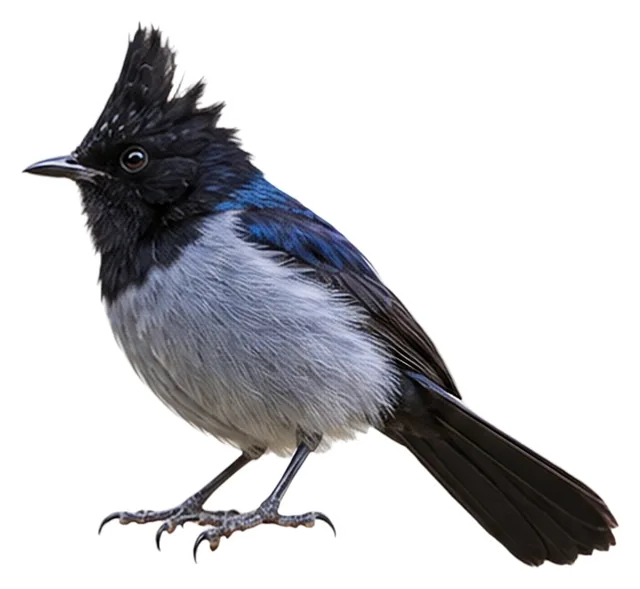
Blue-headed Crested Flycatcher
Trochocercus nitens Cassin, 1859
12 gWeight
The blue-headed crested flycatcher (Trochocercus nitens) is a species of bird in the family Monarchidae, native to the African tropical forest.
Busiest months: March and November–December · Most records: Ghana, Uganda, Cameroon
Where and when it's recorded

Blue-headed Crested Flycatcher has been recorded at 52 of the 8,171 birding hotspots we track, in 11 countries and regions.
Records by month Northern Hemisphere
Where it's recorded most
- Ankasa NPGhana162 records
- Atewa Range – upland forest & ridgeGhana122 records
- Semuliki NP – Kirumya TrailUganda94 records
More places
- Semuliki NPUganda75 records
- Bobiri Butterfly SanctuaryGhana45 records
- Nsuta ForestGhana40 records
- Atewa – farm scrub and degraded forestGhana40 records
- Bonkro VillageGhana37 records
- Bakossi Mountains – Kodmin ForestCameroon36 records
- Tiwai Island Wildlife SanctuarySierra Leone33 records
Countries and regions with the most records
eBird records via GBIF up to 2024-12-31. A record means someone listed it; more records partly mean more birders, not more birds.
About
The blue-headed crested flycatcher (Trochocercus nitens) is a species of bird in the family Monarchidae, native to the African tropical forest.
Excerpt from Wikipedia, CC BY-SA 4.0 · authors · Read more on Wikipedia
Questions
How big is the Blue-headed Crested Flycatcher?
The Blue-headed Crested Flycatcher weighs around 12 g.
Where does the Blue-headed Crested Flycatcher live?
Its breeding range: Africa: western, central. It is most often recorded in Ghana, Uganda and Cameroon.
When is the best time to see the Blue-headed Crested Flycatcher?
At the hotspots we track, it is recorded most in March, November and December (Northern Hemisphere).
Is the Blue-headed Crested Flycatcher endangered?
The IUCN Red List classifies the Blue-headed Crested Flycatcher as Least Concern.
What does the Blue-headed Crested Flycatcher eat?
Main food: Insects & other invertebrates.
What family is the Blue-headed Crested Flycatcher in?
It belongs to the family Monarchs (Monarchidae), order Passerines (Passeriformes).
At a glance
- Weight
- 12 g
- Habitat
- Forest
- Diet
- Insects & other invertebrates
- Lifestyle
- Perches in trees
- Migration
- Resident (barely migrates)
- Conservation
- Least Concern
More measurements
- Wing
- 65 mm
- Tail
- 69 mm
- Bill
- 15 mm
- Tarsus
- 16 mm
Averages from the AVONET dataset; length from field guides where available.
Range
Africa: western, central
Breeding range, IOC World Bird List 15.2
Classification
- Order
- Passerines Passeriformes
- Family
- Monarchs Monarchidae
- Genus
- Trochocercus
Other birds in the genus Trochocercus
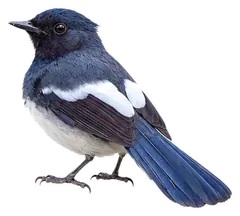 Blue-mantled Crested FlycatcherTrochocercus cyanomelas
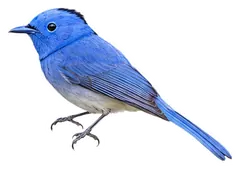 Black-naped MonarchHypothymis azurea
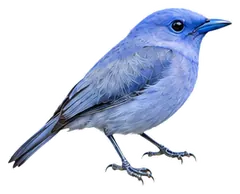 Pale-blue MonarchHypothymis puella
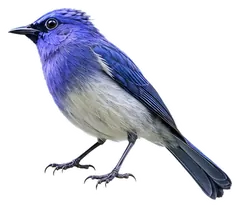 Short-crested MonarchHypothymis helenae
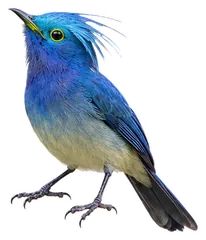 Celestial MonarchHypothymis coelestis
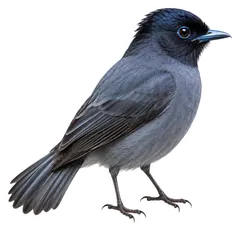 Bedford's Paradise FlycatcherTerpsiphone bedfordi
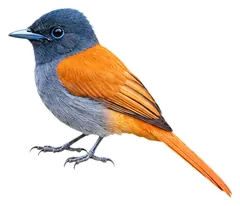 Rufous-vented Paradise FlycatcherTerpsiphone rufocinerea
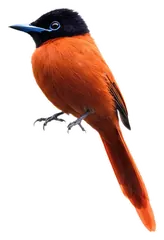 Red-bellied Paradise FlycatcherTerpsiphone rufiventer
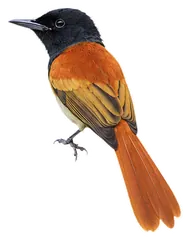 Bates's Paradise FlycatcherTerpsiphone batesi
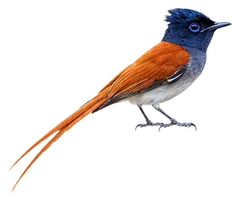 African Paradise FlycatcherTerpsiphone viridis
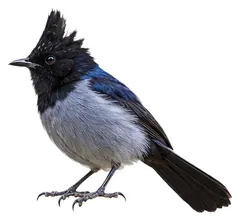
Download illustration
Free to use with credit: “Illustration: Bird Album (birdalbum.com)”. Drawn by AI from a reference photo by mlanguy. ↗
Heard it but can't see it? Mingji identifies birds by sound and photo, on your phone.
In other languages
- EnglishBlue-headed Crested Flycatcher
- 简体中文蓝头凤头鹟
- 繁體中文藍頭鳳頭鶲
- 日本語アオカンムリヒタキ
- DeutschSchwarzkopfmonarch
- FrançaisTchitrec noir
- EspañolMonarca brillante
- Portuguêspapa-moscas-de-poupa-ocidental
- ItalianoPigliamosche crestato testablu
- NederlandsBlauwkopkuifmonarch
- РусскийЧубатый монарх
- Svenskablåhuvad monark
- DanskBlåhovedet Topmonark
- Polskimuchodławka stalowa