 Bird Album
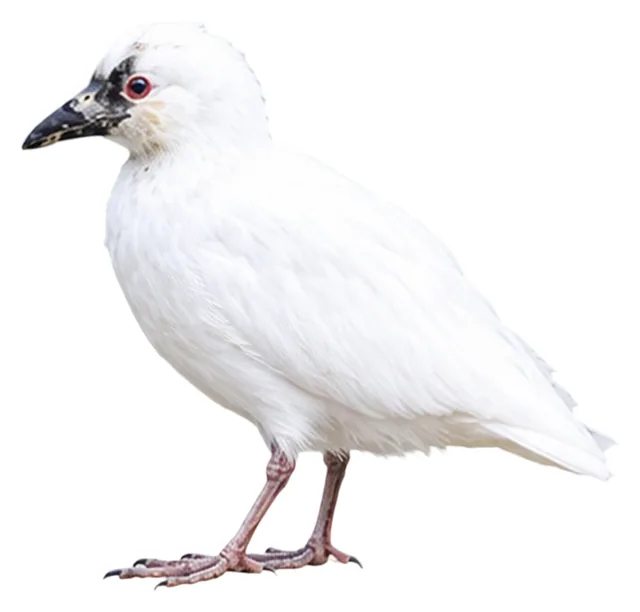
Black-faced Sheathbill
Chionis minor Hartlaub, 1841
494 gWeight
The black-faced sheathbill (Chionis minor), also called the lesser sheathbill or paddy bird, is one of only two species of sheathbills, aberrant shorebirds which are terrestrial (land) scavengers of subantarctic islands.
Busiest months: February · Most records: French Southern Territories, Heard & McDonald Islands
Where and when it's recorded
Busiest months: February · Most records: French Southern Territories, Heard & McDonald Islands

Black-faced Sheathbill has been recorded at 6 of the 8,276 birding hotspots we track, in 2 countries and regions.
Records by month Southern Hemisphere
Where it's recorded most
- Ile HauteFrench Southern Territories47 records
- Baie du MarinFrench Southern Territories14 records
- Port-aux-FrançaisFrench Southern Territories14 records
More places
- Ile MayèsFrench Southern Territories9 records
- Wharf PointHeard & McDonald Islands5 records
- Cap RatmanoffFrench Southern Territories5 records
Countries and regions with the most records
eBird records via GBIF up to 2024-12-31. A record means someone listed it; more records partly mean more birders, not more birds.
About
The black-faced sheathbill (Chionis minor), also called the lesser sheathbill or paddy bird, is one of only two species of sheathbills, aberrant shorebirds which are terrestrial (land) scavengers of subantarctic islands.
Excerpt from Wikipedia, CC BY-SA 4.0 · authors · Read more on Wikipedia
Questions
How big is the Black-faced Sheathbill?
The Black-faced Sheathbill weighs around 494 g.
Where does the Black-faced Sheathbill live?
Its breeding range: Indian Ocean: islands of subantarctic western, central South Indian Ocean. It is most often recorded in French Southern Territories and Heard & McDonald Islands.
When is the best time to see the Black-faced Sheathbill?
At the hotspots we track, it is recorded most in February (Southern Hemisphere).
Is the Black-faced Sheathbill endangered?
The IUCN Red List classifies the Black-faced Sheathbill as Least Concern.
What does the Black-faced Sheathbill eat?
Main food: Omnivore.
What family is the Black-faced Sheathbill in?
It belongs to the family Sheathbills (Chionidae), order Charadriiformes.
At a glance
- Weight
- 494 g
- Habitat
- Ocean
- Diet
- Omnivore
- Lifestyle
- Active on the ground
- Migration
- Partial migrant
- Conservation
- Least Concern
More measurements
- Wing
- 227 mm
- Tail
- 106 mm
- Bill
- 34 mm
- Tarsus
- 45 mm
Averages from the AVONET dataset; length from field guides where available.
Range
Indian Ocean: islands of subantarctic western, central South Indian Ocean
Breeding range, IOC World Bird List 15.2
Classification
- Order
- Charadriiformes
- Family
- Sheathbills Chionidae
- Genus
- Chionis
Other birds in the genus Chionis
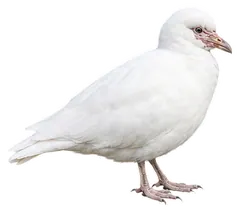 Snowy SheathbillChionis albus
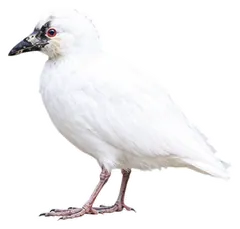
Download illustration
Free to use with credit: “Illustration: Bird Album (birdalbum.com)”. Drawn by AI from a reference photo by Rémi Bigonneau. ↗
Heard it but can't see it? Mingji identifies birds by sound and photo, on your phone.
In other languages
- EnglishBlack-faced Sheathbill
- 简体中文黑脸鞘嘴鸥
- 繁體中文黑臉鞘嘴鷗
- 日本語カオグロサヤハシチドリ
- DeutschSchwarzgesicht-Scheidenschnabel
- FrançaisPetit Chionis
- EspañolPicovaina de las Kerguelen
- Portuguêspomba-antártica-de-cara-preta
- ItalianoChione faccianera
- NederlandsKlein IJshoen
- РусскийЧернолицая белая ржанка
- Svenskasvartnäbbad slidnäbb
- DanskSortnæbbet Skedenæb
- Polskipochwodziób czarnodzioby