 Bird Album
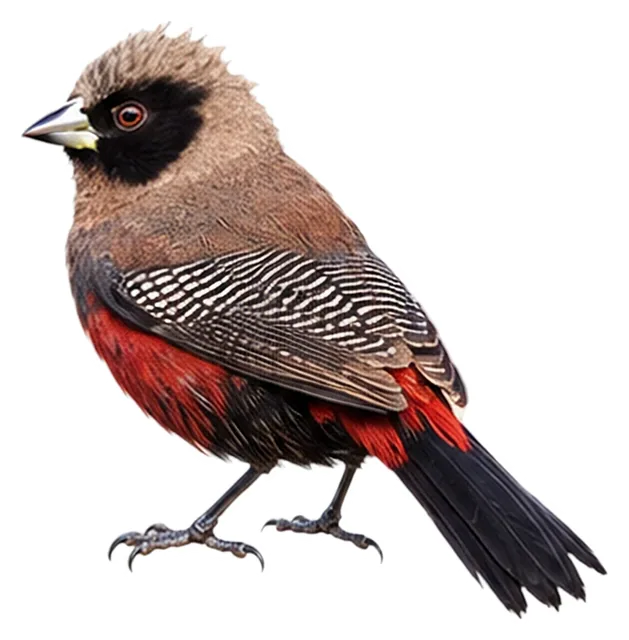
Black-faced Waxbill
Brunhilda erythronotos (Vieillot, 1817)
9.2 gWeight
The black-faced waxbill (Brunhilda erythronotos) is a common species of estrildid finch found in southern Africa.
Busiest months: July and November · Most records: Namibia, Tanzania, South Africa
Where and when it's recorded
Busiest months: July and November · Most records: Namibia, Tanzania, South Africa

Black-faced Waxbill has been recorded at 130 of the 8,276 birding hotspots we track, in 8 countries and regions.
Records by month Southern Hemisphere
Where it's recorded most
- Avis DamNamibia482 records
- Nairobi NPKenya280 records
- Polokwane GRSouth Africa226 records
More places
- Zaagkuildrift RdSouth Africa217 records
- Daan Viljoen Game ReserveNamibia154 records
- Serengeti NPTanzania133 records
- Ondudu LodgeNamibia123 records
- Serengeti NP – Naabi Hill GateTanzania106 records
- Serengeti NP – SeroneraTanzania82 records
- Okonjima Nature ReserveNamibia81 records
Countries and regions with the most records
eBird records via GBIF up to 2024-12-31. A record means someone listed it; more records partly mean more birders, not more birds.
About
The black-faced waxbill (Brunhilda erythronotos) is a common species of estrildid finch found in southern Africa.
Excerpt from Wikipedia, CC BY-SA 4.0 · authors · Read more on Wikipedia
Questions
How big is the Black-faced Waxbill?
The Black-faced Waxbill weighs around 9.2 g.
Where does the Black-faced Waxbill live?
Its breeding range: Africa: southern, eastern. It is most often recorded in Namibia, Tanzania and South Africa.
When is the best time to see the Black-faced Waxbill?
At the hotspots we track, it is recorded most in July and November (Southern Hemisphere).
What does the Black-faced Waxbill eat?
Main food: Seeds.
What family is the Black-faced Waxbill in?
It belongs to the family Waxbills, Munias & Allies (Estrildidae), order Passerines (Passeriformes).
At a glance
- Weight
- 9.2 g
- Habitat
- Shrubland
- Diet
- Seeds
- Lifestyle
- Varied
- Migration
- Resident (barely migrates)
More measurements
- Wing
- 53 mm
- Tail
- 61 mm
- Bill
- 10 mm
- Tarsus
- 15 mm
Averages from the AVONET dataset; length from field guides where available.
Range
Africa: southern, eastern
Breeding range, IOC World Bird List 15.2
Classification
- Order
- Passerines Passeriformes
- Family
- Waxbills, Munias & Allies Estrildidae
- Genus
- Brunhilda
Other birds in the genus Brunhilda
 Black-cheeked WaxbillBrunhilda charmosyna
 Pictorella MannikinHeteromunia pectoralis
 Mountain FiretailOreostruthus fuliginosus
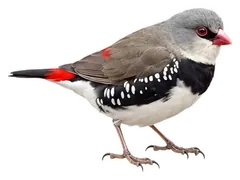 Diamond FiretailStagonopleura guttata
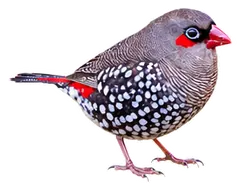 Red-eared FiretailStagonopleura oculata
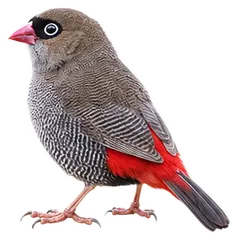 Beautiful FiretailStagonopleura bella
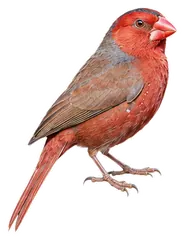 Crimson FinchNeochmia phaeton
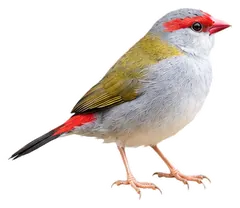 Red-browed FinchNeochmia temporalis
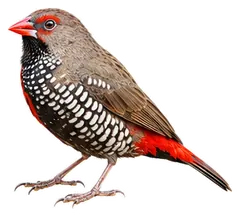 Painted FinchEmblema pictum
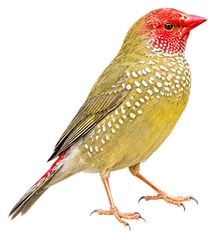 Star FinchEmblema ruficauda
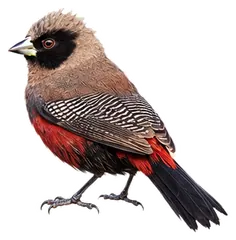
Download illustration
Free to use with credit: “Illustration: Bird Album (birdalbum.com)”. Drawn by AI from a reference photo by Ian N. White. ↗
Heard it but can't see it? Mingji identifies birds by sound and photo, on your phone.
In other languages
- EnglishBlack-faced Waxbill
- 简体中文黑颊梅花雀
- 繁體中文黑頰梅花雀
- 日本語ホオグロカエデチョウ
- DeutschElfenastrild
- FrançaisAstrild à moustaches
- EspañolEstrilda carinegra sureña
- Portuguêsbico-de-lacre-de-faces-pretas
- ItalianoEstrilda guancenere
- NederlandsElfenastrild
- РусскийЧернолицый астрильд
- Svenskasnårastrild
- DanskAlfeastrild
- Polskiastryld czarnolicy