 Bird Album
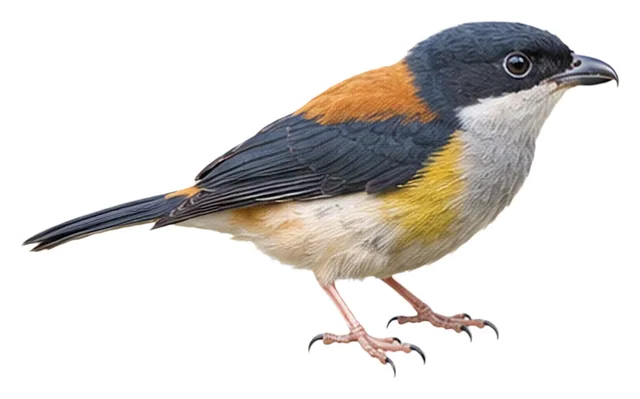
Black-headed Shrike-babbler
Pteruthius rufiventer Blyth, 1842
≈20 cmLength43 gWeight
It lives in moist mountain forests in the subtropics or tropics.
Busiest months: April · Most records: China, Bhutan, Myanmar (Burma)
How to identify
Where and when it's recorded

Black-headed Shrike-babbler has been recorded at 37 of the 8,171 birding hotspots we track, in 5 countries and regions.
Records by month Northern Hemisphere
Where it's recorded most
- Baihualing [General Area]China66 records
- Mount VictoriaMyanmar (Burma)26 records
- Lingmethang Rd – Namling mid-elevation forestBhutan21 records
More places
- Natma Taung NP – Mount VictoriaMyanmar (Burma)20 records
- JiangjiazhaiChina12 records
- LingmethangBhutan11 records
- Natmataung NPMyanmar (Burma)10 records
- Baihualing – Jiujiezi SaddleChina9 records
- Dulong River ValleyChina9 records
- Sengor – camp and upper Lingmethan RdBhutan8 records
Countries and regions with the most records
eBird records via GBIF up to 2024-12-31. A record means someone listed it; more records partly mean more birders, not more birds.
About
The black-headed shrike-babbler (Pteruthius rufiventer) is a bird species traditionally placed with the Old World babblers in the family Timaliidae. However, it might be one of the few Eurasian vireos (Vireonidae).
Excerpt from Wikipedia, CC BY-SA 4.0 · authors · Read more on Wikipedia
Questions
How big is the Black-headed Shrike-babbler?
The Black-headed Shrike-babbler is about ≈20 cm long and weighs around 43 g.
Where does the Black-headed Shrike-babbler live?
Its breeding range: Oriental: Himalayas to northern Myanmar, southern China and northwestern Vietnam. It is most often recorded in China, Bhutan and Myanmar (Burma).
When is the best time to see the Black-headed Shrike-babbler?
At the hotspots we track, it is recorded most in April (Northern Hemisphere).
Is the Black-headed Shrike-babbler endangered?
The IUCN Red List classifies the Black-headed Shrike-babbler as Least Concern.
What does the Black-headed Shrike-babbler eat?
Main food: Insects & other invertebrates.
What family is the Black-headed Shrike-babbler in?
It belongs to the family Vireos, Greenlets, Shrike-babblers (Vireonidae), order Passerines (Passeriformes).
At a glance
- Length
- ≈20 cm
- Weight
- 43 g
- Habitat
- Forest
- Diet
- Insects & other invertebrates
- Lifestyle
- Perches in trees
- Migration
- Resident (barely migrates)
- Conservation
- Least Concern
More measurements
- Wing
- 89 mm
- Tail
- 82 mm
- Bill
- 21 mm
- Tarsus
- 30 mm
Averages from the AVONET dataset; length from field guides where available.
Range
Oriental: Himalayas to northern Myanmar, southern China and northwestern Vietnam
Breeding range, IOC World Bird List 15.2
Classification
- Order
- Passerines Passeriformes
- Family
- Vireos, Greenlets, Shrike-babblers Vireonidae
- Genus
- Pteruthius
Other birds in the genus Pteruthius
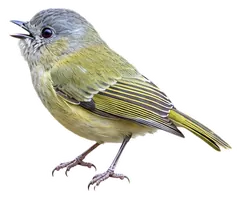 Green Shrike-babblerPteruthius xanthochlorus
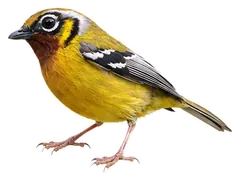 Black-eared Shrike-babblerPteruthius melanotis
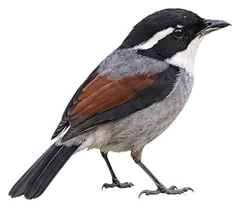 White-browed Shrike-babblerPteruthius aeralatus
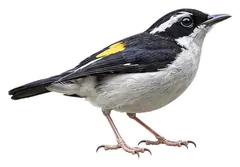 Pied Shrike-babblerPteruthius flaviscapis
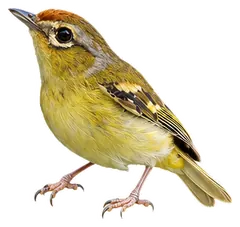 Clicking Shrike-babblerPteruthius intermedius
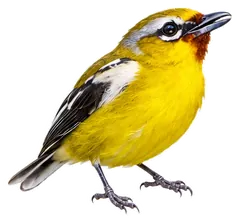 Trilling Shrike-babblerPteruthius aenobarbus
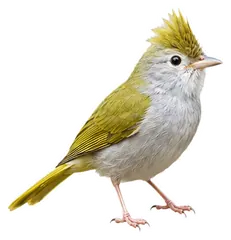 White-bellied ErpornisErpornis zantholeuca
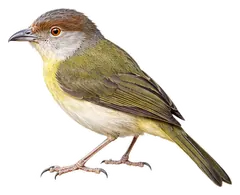 Rufous-browed PeppershrikeCyclarhis gujanensis
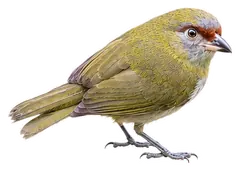 Black-billed PeppershrikeCyclarhis nigrirostris
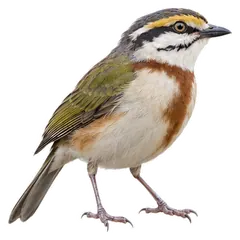 Chestnut-sided Shrike-VireoVireolanius melitophrys
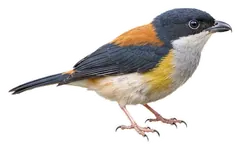
Download illustration
Free to use with credit: “Illustration: Bird Album (birdalbum.com)”. Drawn by AI from a reference photo by Subhayan Biswas. ↗
Heard it but can't see it? Mingji identifies birds by sound and photo, on your phone.
In other languages
- EnglishBlack-headed Shrike-babbler
- 简体中文棕腹鵙鹛
- 繁體中文棕腹鵙鶥
- 日本語セアカモズチメドリ
- DeutschRotbauch-Würgervireo
- FrançaisAllotrie à ventre roux
- EspañolVireo alcaudón ventrirrufo
- Portuguêsalótria-de-barriga-vermelha
- ItalianoGarrulo averla testanera
- NederlandsZwartkopklauwiertimalia
- РусскийКраснобрюхая птерутия
- Svenskasvarthuvad brokvireo
- DanskSorthovedet Vireotimalie
- Polskidzierzbogłów czarnogłowy