 Bird Album
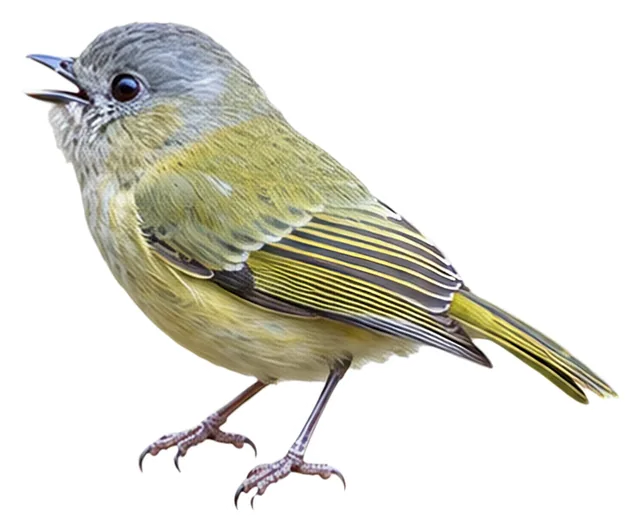
Green Shrike-babbler
Pteruthius xanthochlorus Gray, JE & Gray, GR, 1847
≈12 cmLength14 gWeight
It is a small shrike-babbler about 13 cm long, the male having a gray head, olive back and yellow belly.
Busiest months: April · Most records: China, Bhutan, India
How to identify
Field marks
- Male has a gray head with a blackish crown
- Olive back
- Pale gray throat and breast; yellow belly
Male, female and young
The female is slightly duller than the male and has a gray crown.
Where and when it's recorded

Green Shrike-babbler has been recorded at 154 of the 8,171 birding hotspots we track, in 6 countries and regions.
Records by month Northern Hemisphere
Where it's recorded most
- Munsyari – Bheema WodeyarIndia104 records
- Mt. PhulchowkiNepal78 records
- PelelaBhutan72 records
More places
- Hike to Tiger's Nest MonasteryBhutan53 records
- Mount VictoriaMyanmar (Burma)49 records
- Tangjiahe NNRChina49 records
- Natma Taung NP – Mount VictoriaMyanmar (Burma)48 records
- Sengor – camp and upper Lingmethan RdBhutan45 records
- Daqing ValleyChina44 records
- Longcanggou [General Area]China36 records
Countries and regions with the most records
eBird records via GBIF up to 2024-12-31. A record means someone listed it; more records partly mean more birders, not more birds.
About
The green shrike-babbler (Pteruthius xanthochlorus) is a bird species that was earlier placed in the family Timaliidae. The species is now considered to be an Asian offshoot of the American vireos and belongs in the family Vireonidae.
Excerpt from Wikipedia, CC BY-SA 4.0 · authors · Read more on Wikipedia
Questions
How big is the Green Shrike-babbler?
The Green Shrike-babbler is about ≈12 cm long and weighs around 14 g.
Where does the Green Shrike-babbler live?
Its breeding range: Oriental: Himalayas to northeastern Myanmar. It is most often recorded in China, Bhutan and India.
When is the best time to see the Green Shrike-babbler?
At the hotspots we track, it is recorded most in April (Northern Hemisphere).
Is the Green Shrike-babbler endangered?
The IUCN Red List classifies the Green Shrike-babbler as Least Concern.
What does the Green Shrike-babbler eat?
Main food: Insects & other invertebrates.
What family is the Green Shrike-babbler in?
It belongs to the family Vireos, Greenlets, Shrike-babblers (Vireonidae), order Passerines (Passeriformes).
At a glance
- Length
- ≈12 cm
- Weight
- 14 g
- Habitat
- Forest
- Diet
- Insects & other invertebrates
- Lifestyle
- Perches in trees
- Migration
- Resident (barely migrates)
- Conservation
- Least Concern
More measurements
- Wing
- 62 mm
- Tail
- 46 mm
- Bill
- 12 mm
- Tarsus
- 22 mm
Averages from the AVONET dataset; length from field guides where available.
Range
Oriental: Himalayas to northeastern Myanmar
Breeding range, IOC World Bird List 15.2
Subspecies · 1
- Pteruthius xanthochlorus pallidus n Myanmar to sc, se China
Classification
- Order
- Passerines Passeriformes
- Family
- Vireos, Greenlets, Shrike-babblers Vireonidae
- Genus
- Pteruthius
Other birds in the genus Pteruthius
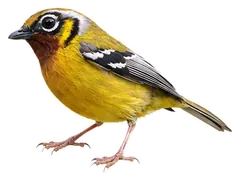 Black-eared Shrike-babblerPteruthius melanotis
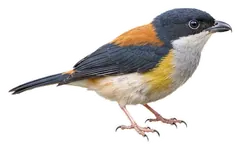 Black-headed Shrike-babblerPteruthius rufiventer
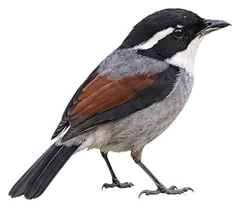 White-browed Shrike-babblerPteruthius aeralatus
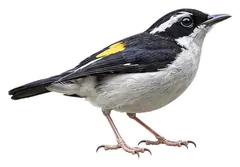 Pied Shrike-babblerPteruthius flaviscapis
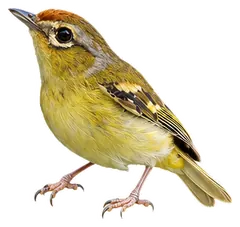 Clicking Shrike-babblerPteruthius intermedius
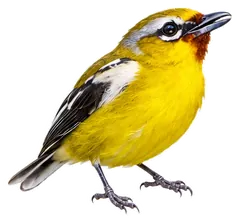 Trilling Shrike-babblerPteruthius aenobarbus
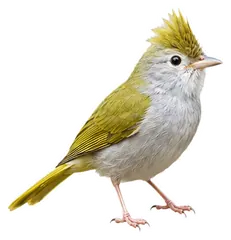 White-bellied ErpornisErpornis zantholeuca
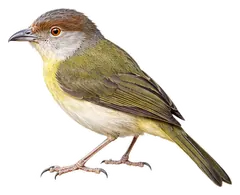 Rufous-browed PeppershrikeCyclarhis gujanensis
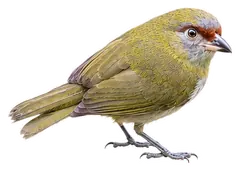 Black-billed PeppershrikeCyclarhis nigrirostris
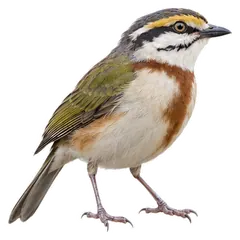 Chestnut-sided Shrike-VireoVireolanius melitophrys
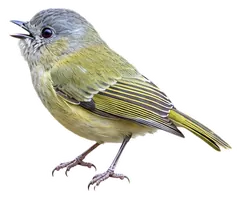
Download illustration
Free to use with credit: “Illustration: Bird Album (birdalbum.com)”. Drawn by AI from a reference photo by Attila Steiner. ↗
Heard it but can't see it? Mingji identifies birds by sound and photo, on your phone.