 Bird Album
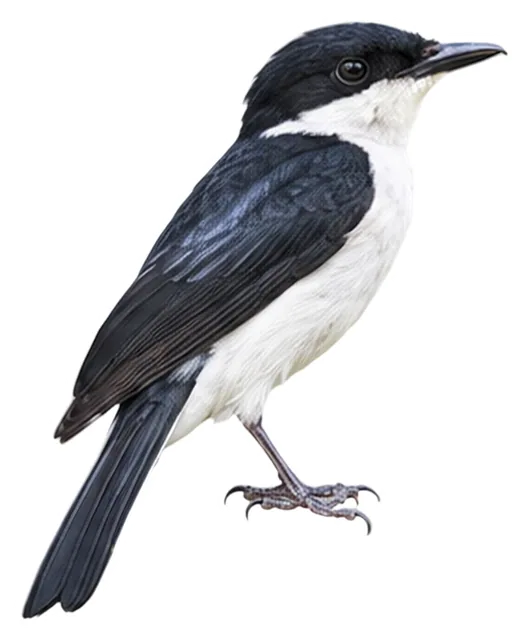
Black-winged Flycatcher-shrike
Hemipus hirundinaceus (Temminck, 1822)
10 gWeight
The black-winged flycatcher-shrike (Hemipus hirundinaceus) is a species of bird in the flycatcher-shrike genus, Hemipus.
Busiest months: March and July · Most records: Malaysia, Indonesia, Singapore
Where and when it's recorded

Black-winged Flycatcher-shrike has been recorded at 113 of the 8,171 birding hotspots we track, in 5 countries and regions.
Records by month Northern Hemisphere
Where it's recorded most
- Sepilok – Rainforest Discovery CenterMalaysia1,459 records
- Gunung Panti Recreational Forest – Panti Bird Sanctuary and North AreaMalaysia504 records
- Danum Valley Borneo Rainforest LodgeMalaysia328 records
More places
- Cibodas Botanical GardenIndonesia270 records
- Tabin Wildlife ReserveMalaysia270 records
- Taman Botani Negara Shah AlamMalaysia228 records
- Pulau Ubin: Chek Jawa WetlandsSingapore200 records
- Kebun Raya Eka Karya BaliIndonesia190 records
- Danum Valley Field CentreMalaysia159 records
- Gunung Gede Pangrango NP – Waterfall TrailIndonesia157 records
Countries and regions with the most records
eBird records via GBIF up to 2024-12-31. A record means someone listed it; more records partly mean more birders, not more birds.
About
The black-winged flycatcher-shrike (Hemipus hirundinaceus) is a species of bird in the flycatcher-shrike genus, Hemipus. It is usually placed in the Vangidae. It is found in the Malay Peninsula and the Greater Sunda Islands.
Excerpt from Wikipedia, CC BY-SA 4.0 · authors · Read more on Wikipedia
Questions
How big is the Black-winged Flycatcher-shrike?
The Black-winged Flycatcher-shrike weighs around 10 g.
Where does the Black-winged Flycatcher-shrike live?
Its breeding range: Oriental: Malay Peninsula, Sumatra, Simeulue and Nias (west of northern Sumatra), Riau and Lingga islands (east of central Sumatra), Bangka and Belitung (east of southern Sumatra), Java, Bali, Borneo and Banggi (north of northeastern Borneo). It is most often recorded in Malaysia, Indonesia and Singapore.
When is the best time to see the Black-winged Flycatcher-shrike?
At the hotspots we track, it is recorded most in March and July (Northern Hemisphere).
Is the Black-winged Flycatcher-shrike endangered?
The IUCN Red List classifies the Black-winged Flycatcher-shrike as Least Concern.
What does the Black-winged Flycatcher-shrike eat?
Main food: Insects & other invertebrates.
What family is the Black-winged Flycatcher-shrike in?
It belongs to the family Vangas & Allies (Vangidae), order Passerines (Passeriformes).
At a glance
- Weight
- 10 g
- Habitat
- Forest
- Diet
- Insects & other invertebrates
- Lifestyle
- Perches in trees
- Migration
- Resident (barely migrates)
- Conservation
- Least Concern
More measurements
- Wing
- 63 mm
- Tail
- 49 mm
- Bill
- 15 mm
- Tarsus
- 13 mm
Averages from the AVONET dataset; length from field guides where available.
Range
Oriental: Malay Peninsula, Sumatra, Simeulue and Nias (west of northern Sumatra), Riau and Lingga islands (east of central Sumatra), Bangka and Belitung (east of southern Sumatra), Java, Bali, Borneo and Banggi (north of northeastern Borneo)
Breeding range, IOC World Bird List 15.2
Classification
- Order
- Passerines Passeriformes
- Family
- Vangas & Allies Vangidae
- Genus
- Hemipus
Other birds in the genus Hemipus
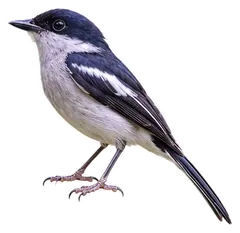 Bar-winged Flycatcher-shrikeHemipus picatus
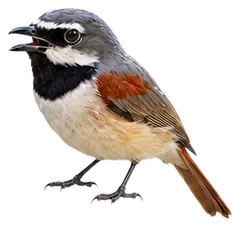 Red-tailed VangaCalicalicus madagascariensis
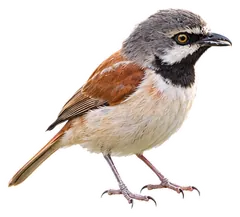 Red-shouldered VangaCalicalicus rufocarpalis
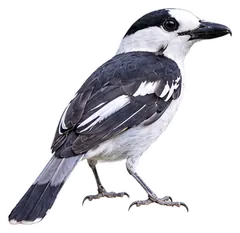 Hook-billed VangaVanga curvirostris
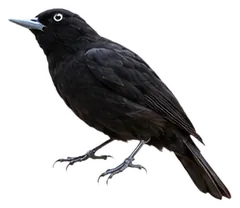 Bernier's VangaOriolia bernieri
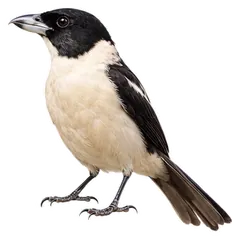 Lafresnaye's VangaXenopirostris xenopirostris
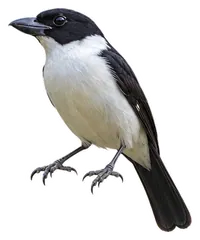 Van Dam's VangaXenopirostris damii
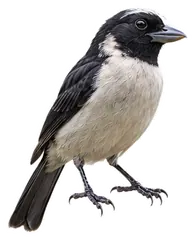 Pollen's VangaXenopirostris polleni
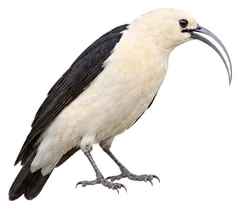 Sickle-billed VangaFalculea palliata
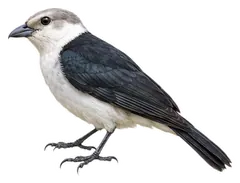 White-headed VangaArtamella viridis
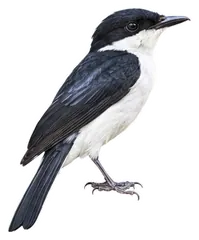
Download illustration
Free to use with credit: “Illustration: Bird Album (birdalbum.com)”. Drawn by AI from a reference photo by Munim Zabidi. ↗
Heard it but can't see it? Mingji identifies birds by sound and photo, on your phone.
In other languages
- EnglishBlack-winged Flycatcher-shrike
- 简体中文黑翅鹟鵙
- 繁體中文黑翅鶲鵙
- 日本語ハグロヒタキサンショウクイ
- DeutschSundaschnäppervanga
- FrançaisHémipe véloce
- EspañolOruguero golondrina
- Portuguêspicanço-andorinha
- ItalianoAverla pigliamosche alinere
- NederlandsZwartvleugeldwergtriller
- РусскийЧернокрылый личинколов
- Svenskasvartvingad skogstörnskata
- DanskSortvinget Dværgtornskade
- Polskikruczynek czarnoskrzydły