 Bird Album
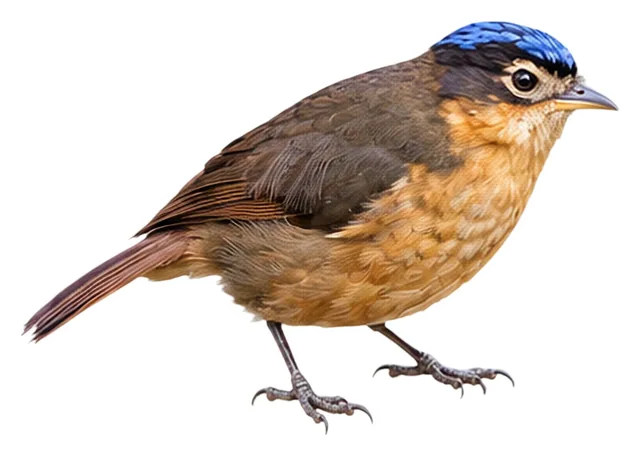
Blue-capped Ifrit
Ifrita kowaldi (De Vis, 1890)
16–17 cmLength32 gWeight
The blue-capped ifrit (Ifrita kowaldi) is a species of small passerine bird in the monotypic family Ifritidae, native to the montane rainforests of New Guinea.
Busiest months: July–August · Most records: Papua New Guinea
Where and when it's recorded

Blue-capped Ifrit has been recorded at 10 of the 8,171 birding hotspots we track, in 1 country or region.
Records by month Southern Hemisphere
Where it's recorded most
- Kumul LodgePapua New Guinea435 records
- Tomba & Murmur Pass [2400-2800m]Papua New Guinea142 records
- Rondon RidgePapua New Guinea139 records
More places
- Highlands Hwy – above Ambua Lodge to Tari GapPapua New Guinea113 records
- Ambua LodgePapua New Guinea94 records
- Tari GapPapua New Guinea78 records
- Rondon Ridge LodgePapua New Guinea41 records
- Mt Komonge RidgePapua New Guinea40 records
- Tonga TrailPapua New Guinea3 records
- Elevala RiverPapua New Guinea2 records
Countries and regions with the most records
eBird records via GBIF up to 2024-12-31. A record means someone listed it; more records partly mean more birders, not more birds.
About
The blue-capped ifrit (Ifrita kowaldi) is a species of small passerine bird in the monotypic family Ifritidae, native to the montane rainforests of New Guinea. These birds are insectivorous and are notable for their distinctive blue crown and presence of batrachotoxin, a potent neurotoxin, in their feathers and skin. This chemical defense is believed to come from their diet, particularly Choresine beetles.
Excerpt from Wikipedia, CC BY-SA 4.0 · authors · Read more on Wikipedia
Questions
How big is the Blue-capped Ifrit?
The Blue-capped Ifrit is about 16–17 cm long and weighs around 32 g.
Where does the Blue-capped Ifrit live?
Its breeding range: Australasia: montane west to southeastern New Guinea. It is most often recorded in Papua New Guinea.
When is the best time to see the Blue-capped Ifrit?
At the hotspots we track, it is recorded most in July and August (Southern Hemisphere).
Is the Blue-capped Ifrit endangered?
The IUCN Red List classifies the Blue-capped Ifrit as Least Concern.
What does the Blue-capped Ifrit eat?
Main food: Insects & other invertebrates.
What family is the Blue-capped Ifrit in?
It belongs to the family Ifrit (Ifritidae), order Passerines (Passeriformes).
At a glance
- Length
- 16–17 cm
- Weight
- 32 g
- Habitat
- Forest
- Diet
- Insects & other invertebrates
- Lifestyle
- Perches in trees
- Migration
- Resident (barely migrates)
- Conservation
- Least Concern
More measurements
- Wing
- 80 mm
- Tail
- 54 mm
- Bill
- 16 mm
- Tarsus
- 27 mm
Averages from the AVONET dataset; length from field guides where available.
Range
Australasia: montane west to southeastern New Guinea
Breeding range, IOC World Bird List 15.2
Classification
- Order
- Passerines Passeriformes
- Family
- Ifrit Ifritidae
- Genus
- Ifrita
Download illustration
Free to use with credit: “Illustration: Bird Album (birdalbum.com)”. Drawn by AI from reference photos. ↗
Heard it but can't see it? Mingji identifies birds by sound and photo, on your phone.