 Bird Album
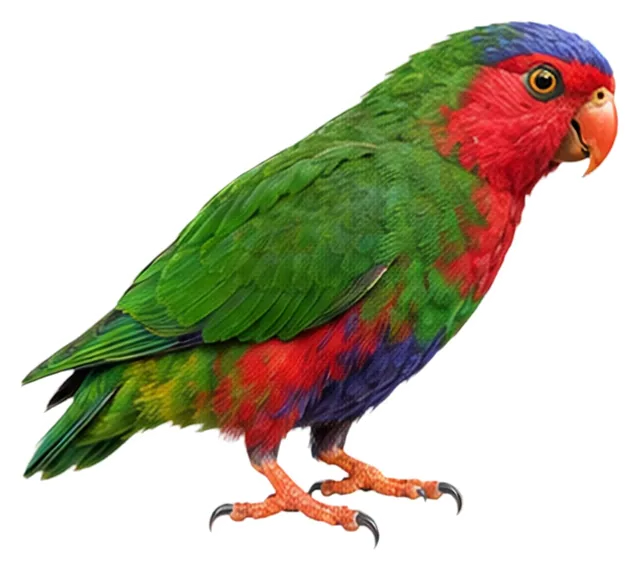
Blue-crowned Lorikeet
Vini australis (Gmelin, JF, 1788)
50 gWeight
The blue-crowned lorikeet (Vini australis), also known as the blue-crowned lory, blue-crested lory, Solomon lory or Samoan lory, is a parrot found In the Polynesian Islands of Samoa, Tonga, Fiji, and some other islands off the coast like Niue and Futuna.
Busiest months: August · Most records: Samoa, American Samoa, Tonga
Where and when it's recorded

Blue-crowned Lorikeet has been recorded at 17 of the 8,171 birding hotspots we track, in 4 countries and regions.
Records by month Southern Hemisphere
Where it's recorded most
- Malolo'lelei Watershed ReserveSamoa75 records
- Dave Parker's Eco LodgeSamoa54 records
- Apia – Mt. Vaea & Robert Louis Stevenson MuseumSamoa16 records
More places
- A'opo Cloud Forest Conservation AreaSamoa14 records
- Vaisagno WatertankSamoa10 records
- O le Pupu Pue NPSamoa10 records
- Upolu – Lake Lanoto'oSamoa7 records
- Ofu Beach National ParkAmerican Samoa3 records
- Tonga – Vava'uTonga2 records
- American Samoa NP – Vatia BayAmerican Samoa2 records
Countries and regions with the most records
eBird records via GBIF up to 2024-12-31. A record means someone listed it; more records partly mean more birders, not more birds.
About
The blue-crowned lorikeet (Vini australis), also known as the blue-crowned lory, blue-crested lory, Solomon lory or Samoan lory, is a parrot found In the Polynesian Islands of Samoa, Tonga, Fiji, and some other islands off the coast like Niue and Futuna. It is a 19 centimetres (7.5 in) green lorikeet with a red throat, blue crown, and belly patch shading from red at the top to purple at the bottom.
Excerpt from Wikipedia, CC BY-SA 4.0 · authors · Read more on Wikipedia
Questions
How big is the Blue-crowned Lorikeet?
The Blue-crowned Lorikeet weighs around 50 g.
Where does the Blue-crowned Lorikeet live?
Its breeding range: Pacific Ocean: Lau Archipelago (eastern Fiji, southwestern Polynesia), Wallis and Futuna (northeast of Fiji), Savaii, Upolu and Aleipata (western Samoa) and Manua group (American Samoa, central Polynesia), Tonga and Niue (south-central Polynesia). It is most often recorded in Samoa, American Samoa and Tonga.
When is the best time to see the Blue-crowned Lorikeet?
At the hotspots we track, it is recorded most in August (Southern Hemisphere).
Is the Blue-crowned Lorikeet endangered?
The IUCN Red List classifies the Blue-crowned Lorikeet as Least Concern.
What does the Blue-crowned Lorikeet eat?
Main food: Nectar.
What family is the Blue-crowned Lorikeet in?
It belongs to the family Old World Parrots (Psittaculidae), order Parrot (Psittaciformes).
At a glance
- Weight
- 50 g
- Habitat
- Forest
- Diet
- Nectar
- Lifestyle
- Perches in trees
- Migration
- Resident (barely migrates)
- Conservation
- Least Concern
More measurements
- Wing
- 99 mm
- Tail
- 61 mm
- Bill
- 16 mm
- Tarsus
- 14 mm
Averages from the AVONET dataset; length from field guides where available.
Range
Pacific Ocean: Lau Archipelago (eastern Fiji, southwestern Polynesia), Wallis and Futuna (northeast of Fiji), Savaii, Upolu and Aleipata (western Samoa) and Manua group (American Samoa, central Polynesia), Tonga and Niue (south-central Polynesia)
Breeding range, IOC World Bird List 15.2
Classification
- Order
- Parrot Psittaciformes
- Family
- Old World Parrots Psittaculidae
- Genus
- Vini
Other birds in the genus Vini
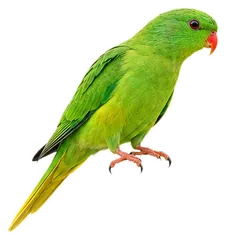 Meek's LorikeetVini meeki
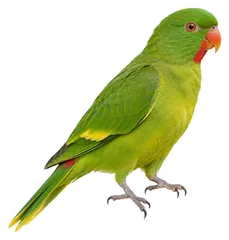 Red-chinned LorikeetVini rubrigularis
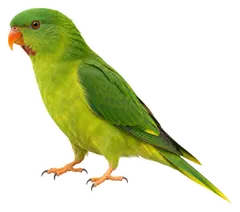 Palm LorikeetVini palmarum
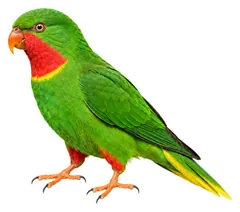 Red-throated LorikeetVini amabilis
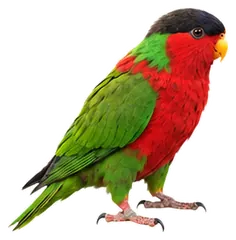 Collared LoryVini solitaria
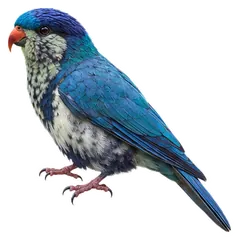 Ultramarine LorikeetVini ultramarina
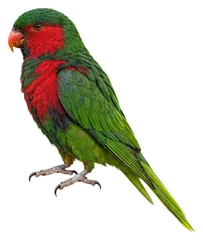 Stephen's LorikeetVini stepheni
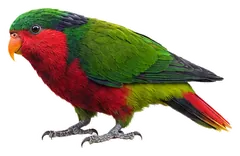 Kuhl's LorikeetVini kuhlii
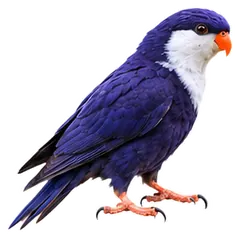 Blue LorikeetVini peruviana
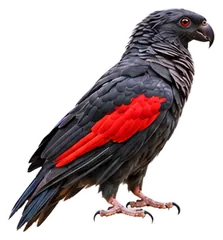 Pesquet's ParrotPsittrichas fulgidus
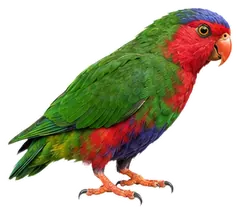
Download illustration
Free to use with credit: “Illustration: Bird Album (birdalbum.com)”. Drawn by AI from a reference photo by Casey Weissburg. ↗
Heard it but can't see it? Mingji identifies birds by sound and photo, on your phone.
In other languages
- EnglishBlue-crowned Lorikeet
- 简体中文蓝冠鹦鹉
- 繁體中文藍冠吸蜜鸚鵡
- 日本語ズアオムスメインコ
- DeutschBlaukappenlori
- FrançaisLori fringillaire
- EspañolLori de Samoa
- Portuguêslóri-de-coroa-azul
- ItalianoLorichetto capoblu
- NederlandsBlauwkaplori
- РусскийСинешапочный лори-отшельник
- Svenskablåkronad lorikit
- DanskBlåkronet Lori
- Polskiloreczka modroczapkowa