 Bird Album
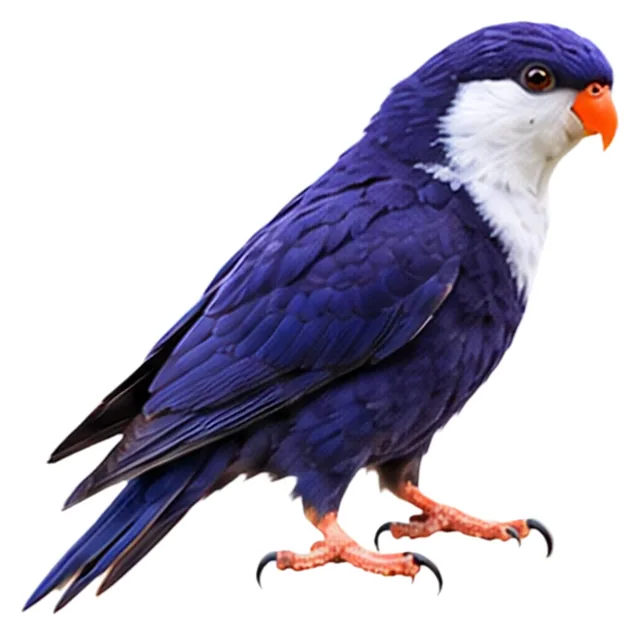
Blue Lorikeet
Vini peruviana (Müller, PLS, 1776)
29 gWeight
The blue lorikeet (Vini peruviana) is a small lorikeet from French Polynesia and the Cook Islands.
Busiest months: July · Most records: French Polynesia, Cook Islands
Where and when it's recorded
Busiest months: July · Most records: French Polynesia, Cook Islands

Blue Lorikeet has been recorded at 5 of the 8,276 birding hotspots we track, in 2 countries and regions.
Records by month Southern Hemisphere
Where it's recorded most
- Rangiroa – Blue LagoonFrench Polynesia37 records
- AitutakiCook Islands34 records
- Rarotonga – Wigmore Watefall areaCook Islands1 record
More places
- Titikaveka Coastline & village areaCook Islands1 record
- Rarotonga – Muri Beach/LagoonCook Islands1 record
Countries and regions with the most records
eBird records via GBIF up to 2024-12-31. A record means someone listed it; more records partly mean more birders, not more birds.
About
The blue lorikeet (Vini peruviana) is a small lorikeet from French Polynesia and the Cook Islands. It is also known as the Tahiti lorikeet, violet lorikeet, Tahitian lory, blue lory, nunbird, and the indigo lory. It was formerly found on 23 islands around Tahiti, but is now restricted to perhaps eight islands: Aitutaki, Apataki, Arutua, Kaukura, Manuae, Maupihaa, Motu One, Rangiroa, and possibly Manihi and Manuae.
Excerpt from Wikipedia, CC BY-SA 4.0 · authors · Read more on Wikipedia
Questions
How big is the Blue Lorikeet?
The Blue Lorikeet weighs around 29 g.
Where does the Blue Lorikeet live?
Its breeding range: Pacific Ocean: Aitutaki (southern Cook Islands), Manuae, Maupihaa, Motu One (western Society Islands) and Apataki, Arutua, Kaukura, Rangiroa and Tikehau (Tuamotu Islands; extinct on numerous other islands; eastern Polynesia). It is most often recorded in French Polynesia and Cook Islands.
When is the best time to see the Blue Lorikeet?
At the hotspots we track, it is recorded most in July (Southern Hemisphere).
Is the Blue Lorikeet endangered?
The IUCN Red List classifies the Blue Lorikeet as Vulnerable.
What does the Blue Lorikeet eat?
Main food: Nectar.
What family is the Blue Lorikeet in?
It belongs to the family Old World Parrots (Psittaculidae), order Parrot (Psittaciformes).
At a glance
- Weight
- 29 g
- Habitat
- Woodland
- Diet
- Nectar
- Lifestyle
- Perches in trees
- Migration
- Resident (barely migrates)
- Conservation
- Vulnerable
More measurements
- Wing
- 108 mm
- Tail
- 67 mm
- Bill
- 14 mm
- Tarsus
- 14 mm
Averages from the AVONET dataset; length from field guides where available.
Range
Pacific Ocean: Aitutaki (southern Cook Islands), Manuae, Maupihaa, Motu One (western Society Islands) and Apataki, Arutua, Kaukura, Rangiroa and Tikehau (Tuamotu Islands; extinct on numerous other islands; eastern Polynesia)
Breeding range, IOC World Bird List 15.2
Classification
- Order
- Parrot Psittaciformes
- Family
- Old World Parrots Psittaculidae
- Genus
- Vini
Other birds in the genus Vini
 Meek's LorikeetVini meeki
 Red-chinned LorikeetVini rubrigularis
 Palm LorikeetVini palmarum
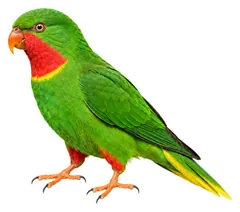 Red-throated LorikeetVini amabilis
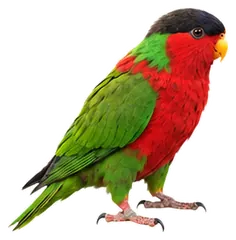 Collared LoryVini solitaria
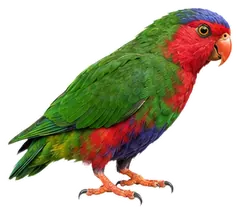 Blue-crowned LorikeetVini australis
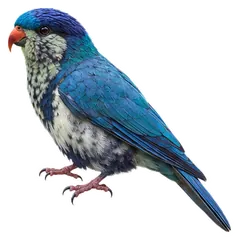 Ultramarine LorikeetVini ultramarina
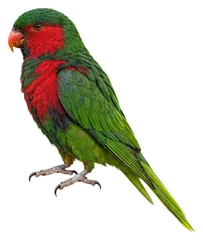 Stephen's LorikeetVini stepheni
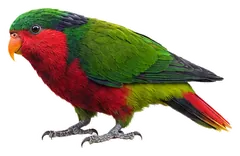 Kuhl's LorikeetVini kuhlii
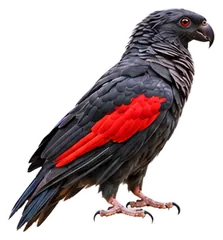 Pesquet's ParrotPsittrichas fulgidus
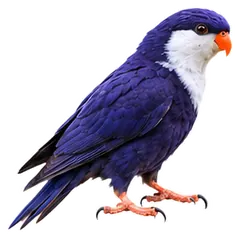
Download illustration
Free to use with credit: “Illustration: Bird Album (birdalbum.com)”. Drawn by AI from a reference photo by Joseph Brider. ↗
Heard it but can't see it? Mingji identifies birds by sound and photo, on your phone.