 Bird Album
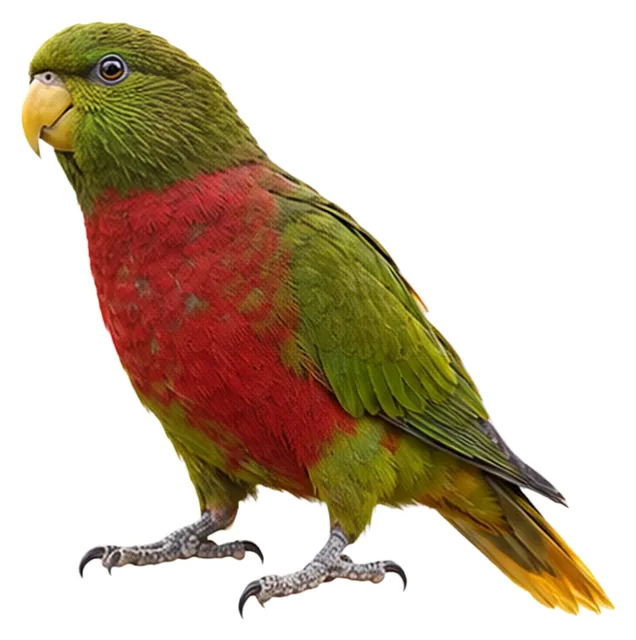
Yellow-billed Lorikeet
Neopsittacus musschenbroekii (Schlegel, 1871)
51 gWeight
The yellow-billed lorikeet (Neopsittacus musschenbroekii) is a species of parrot in the family Psittaculidae.
Busiest months: July · Most records: Papua New Guinea, Indonesia
Where and when it's recorded

Yellow-billed Lorikeet has been recorded at 15 of the 8,171 birding hotspots we track, in 2 countries and regions.
Records by month Southern Hemisphere
Where it's recorded most
- Ambua LodgePapua New Guinea215 records
- Tomba & Murmur Pass [2400-2800m]Papua New Guinea128 records
- Rondon RidgePapua New Guinea125 records
More places
- Mt Komonge RidgePapua New Guinea110 records
- Rondon Ridge LodgePapua New Guinea104 records
- Highlands Hwy – above Ambua Lodge to Tari GapPapua New Guinea103 records
- Kumul LodgePapua New Guinea84 records
- Arfak Mtns – German CampIndonesia79 records
- Tari GapPapua New Guinea62 records
- Tonga TrailPapua New Guinea47 records
Countries and regions with the most records
eBird records via GBIF up to 2024-12-31. A record means someone listed it; more records partly mean more birders, not more birds.
About
The yellow-billed lorikeet (Neopsittacus musschenbroekii) is a species of parrot in the family Psittaculidae.
Excerpt from Wikipedia, CC BY-SA 4.0 · authors · Read more on Wikipedia
Questions
How big is the Yellow-billed Lorikeet?
The Yellow-billed Lorikeet weighs around 51 g.
Where does the Yellow-billed Lorikeet live?
Its breeding range: Australasia: montane Bird's Head (northwestern New Guinea), west-central to northeastern (Huon Peninsula) and southeastern New Guinea. It is most often recorded in Papua New Guinea and Indonesia.
When is the best time to see the Yellow-billed Lorikeet?
At the hotspots we track, it is recorded most in July (Southern Hemisphere).
Is the Yellow-billed Lorikeet endangered?
The IUCN Red List classifies the Yellow-billed Lorikeet as Least Concern.
What does the Yellow-billed Lorikeet eat?
Main food: Fruit.
What family is the Yellow-billed Lorikeet in?
It belongs to the family Old World Parrots (Psittaculidae), order Parrot (Psittaciformes).
At a glance
- Weight
- 51 g
- Habitat
- Forest
- Diet
- Fruit
- Lifestyle
- Perches in trees
- Migration
- Resident (barely migrates)
- Conservation
- Least Concern
More measurements
- Wing
- 105 mm
- Tail
- 88 mm
- Bill
- 15 mm
- Tarsus
- 14 mm
Averages from the AVONET dataset; length from field guides where available.
Range
Australasia: montane Bird's Head (northwestern New Guinea), west-central to northeastern (Huon Peninsula) and southeastern New Guinea
Breeding range, IOC World Bird List 15.2
Classification
- Order
- Parrot Psittaciformes
- Family
- Old World Parrots Psittaculidae
- Genus
- Neopsittacus
Other birds in the genus Neopsittacus
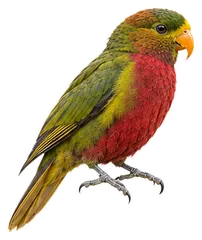 Orange-billed LorikeetNeopsittacus pullicauda
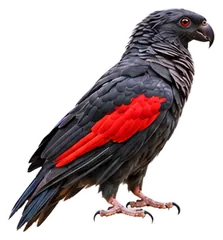 Pesquet's ParrotPsittrichas fulgidus
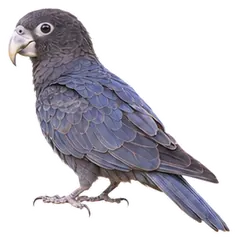 Greater Vasa ParrotCoracopsis vasa
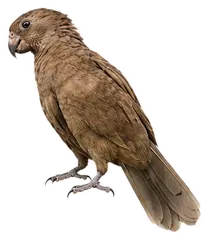 Seychelles Black ParrotCoracopsis barklyi
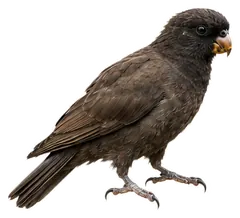 Comoro Black ParrotCoracopsis sibilans
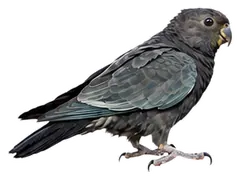 Lesser Vasa ParrotCoracopsis nigra
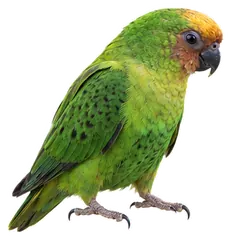 Yellow-capped Pygmy ParrotMicropsitta keiensis
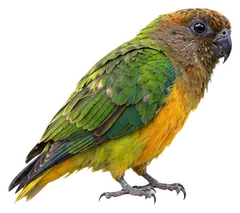 Geelvink Pygmy ParrotMicropsitta geelvinkiana
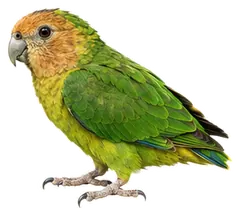 Buff-faced Pygmy ParrotMicropsitta pusio
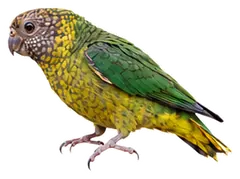 Meek's Pygmy ParrotMicropsitta meeki
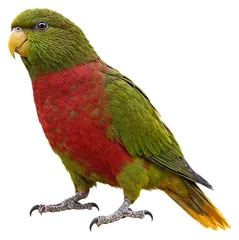
Download illustration
Free to use with credit: “Illustration: Bird Album (birdalbum.com)”. Drawn by AI from a reference photo by Chien Lee. ↗
Heard it but can't see it? Mingji identifies birds by sound and photo, on your phone.
In other languages
- EnglishYellow-billed Lorikeet
- 简体中文马氏鹦鹉
- 繁體中文黃嘴吸蜜鸚鵡
- 日本語タカネインコ
- DeutschGelbschnabel-Berglori
- FrançaisLori de Musschenbroek
- EspañolLori montano grande
- Portuguêslóri-de-bico-amarelo
- ItalianoLorichetto beccogiallo
- NederlandsMusschenbroeks Lori
- РусскийЖелтоклювый лорикет
- Svenskagulnäbbad lorikit
- DanskGualori
- Polskiirianka duża