 Bird Album
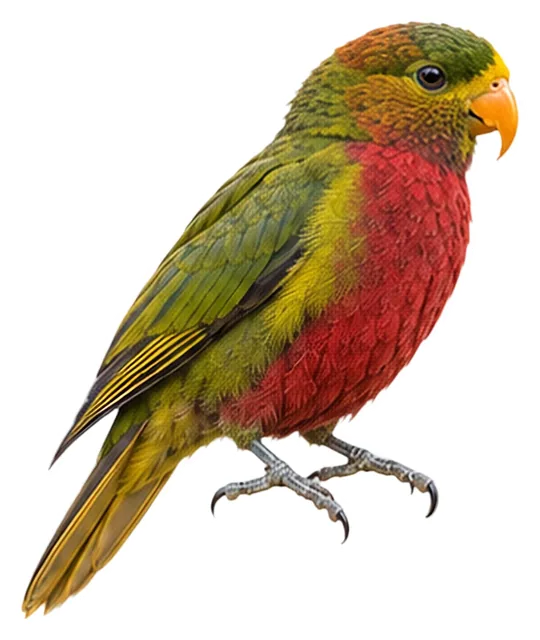
Orange-billed Lorikeet
Neopsittacus pullicauda Hartert, EJO, 1896
33 gWeight
The orange-billed lorikeet (Neopsittacus pullicauda) is a species in the Old World parrot family Psittaculidae.
Busiest months: July–August · Most records: Papua New Guinea, Indonesia
Where and when it's recorded

Orange-billed Lorikeet has been recorded at 16 of the 8,171 birding hotspots we track, in 2 countries and regions.
Records by month Southern Hemisphere
Where it's recorded most
- Tomba & Murmur Pass [2400-2800m]Papua New Guinea211 records
- Kumul LodgePapua New Guinea104 records
- Rondon RidgePapua New Guinea80 records
More places
- Ambua LodgePapua New Guinea78 records
- Highlands Hwy – above Ambua Lodge to Tari GapPapua New Guinea51 records
- Mt Komonge RidgePapua New Guinea49 records
- Rondon Ridge LodgePapua New Guinea32 records
- Tari GapPapua New Guinea24 records
- Drimgas Road, KiungaPapua New Guinea8 records
- NimbokrangIndonesia4 records
Countries and regions with the most records
eBird records via GBIF up to 2024-12-31. A record means someone listed it; more records partly mean more birders, not more birds.
About
The orange-billed lorikeet (Neopsittacus pullicauda) is a species in the Old World parrot family Psittaculidae. First described by the German ornithologist Ernst Hartert in 1896, it is endemic to New Guinea, where it mainly inhabits cloud forest, forest edges, and cleared areas bordering forests at elevations of 2,100–3,800 m (6,900–12,500 ft). Adults are 18 cm (7.1 in) long on average and weigh 25–40 g (0.88–1.41 oz), and are mainly green in color, with a red underside and narrow yellow streaking on the cheeks.
Excerpt from Wikipedia, CC BY-SA 4.0 · authors · Read more on Wikipedia
Questions
How big is the Orange-billed Lorikeet?
The Orange-billed Lorikeet weighs around 33 g.
Where does the Orange-billed Lorikeet live?
Its breeding range: Australasia: montane west-central to northeastern (Huon Peninsula) and southeastern New Guinea. It is most often recorded in Papua New Guinea and Indonesia.
When is the best time to see the Orange-billed Lorikeet?
At the hotspots we track, it is recorded most in July and August (Southern Hemisphere).
Is the Orange-billed Lorikeet endangered?
The IUCN Red List classifies the Orange-billed Lorikeet as Least Concern.
What does the Orange-billed Lorikeet eat?
Main food: Omnivore.
What family is the Orange-billed Lorikeet in?
It belongs to the family Old World Parrots (Psittaculidae), order Parrot (Psittaciformes).
At a glance
- Weight
- 33 g
- Habitat
- Forest
- Diet
- Omnivore
- Lifestyle
- Perches in trees
- Migration
- Resident (barely migrates)
- Conservation
- Least Concern
More measurements
- Wing
- 104 mm
- Tail
- 90 mm
- Bill
- 17 mm
- Tarsus
- 16 mm
Averages from the AVONET dataset; length from field guides where available.
Range
Australasia: montane west-central to northeastern (Huon Peninsula) and southeastern New Guinea
Breeding range, IOC World Bird List 15.2
Classification
- Order
- Parrot Psittaciformes
- Family
- Old World Parrots Psittaculidae
- Genus
- Neopsittacus
Other birds in the genus Neopsittacus
 Yellow-billed LorikeetNeopsittacus musschenbroekii
 Pesquet's ParrotPsittrichas fulgidus
 Greater Vasa ParrotCoracopsis vasa
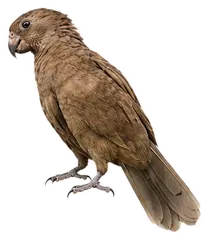 Seychelles Black ParrotCoracopsis barklyi
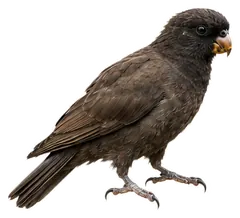 Comoro Black ParrotCoracopsis sibilans
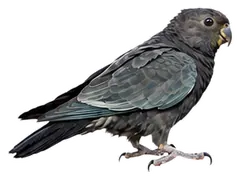 Lesser Vasa ParrotCoracopsis nigra
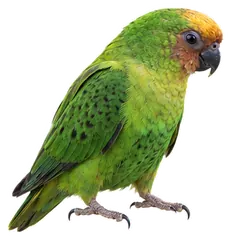 Yellow-capped Pygmy ParrotMicropsitta keiensis
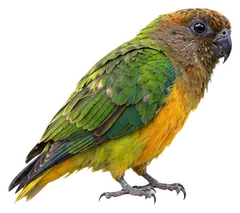 Geelvink Pygmy ParrotMicropsitta geelvinkiana
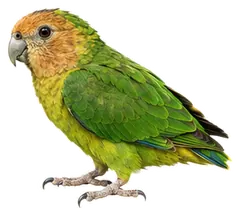 Buff-faced Pygmy ParrotMicropsitta pusio
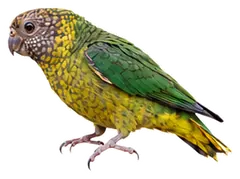 Meek's Pygmy ParrotMicropsitta meeki
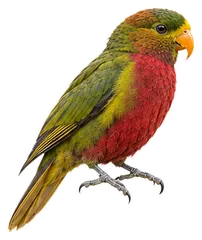
Download illustration
Free to use with credit: “Illustration: Bird Album (birdalbum.com)”. Drawn by AI from a reference photo by avocat. ↗
Heard it but can't see it? Mingji identifies birds by sound and photo, on your phone.
In other languages
- EnglishOrange-billed Lorikeet
- 简体中文翠绿鹦鹉
- 繁體中文橙嘴吸蜜鸚鵡
- 日本語アルプスインコ
- DeutschOrangeschnabel-Berglori
- FrançaisLori émeraude
- EspañolLori montano chico
- Portuguêslóri-de-bico-laranja
- ItalianoLorichetto beccoarancio
- NederlandsSmaragdlori
- РусскийОранжевоклювый лорикет
- Svenskaorangenäbbad lorikit
- DanskMørkhalet Gualori
- Polskiirianka mała