 Bird Album
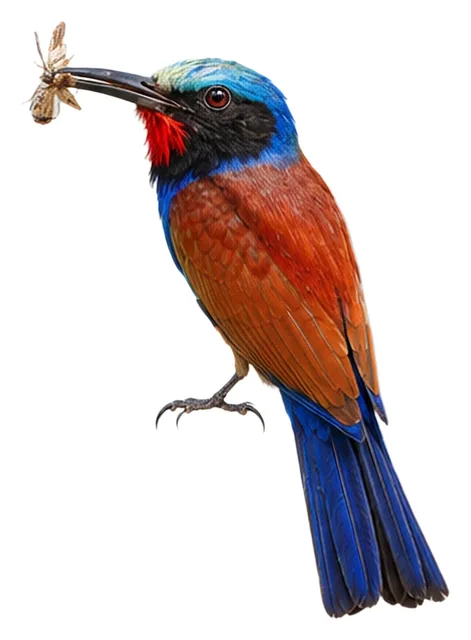
Blue-headed Bee-eater
Merops muelleri (Cassin, 1857)
22 gWeight
The blue-headed bee-eater (Merops muelleri) is a species of bird in the family Meropidae.
Busiest months: November · Most records: Kenya, Gabon, Congo - Brazzaville
Where and when it's recorded

Blue-headed Bee-eater has been recorded at 12 of the 8,276 birding hotspots we track, in 5 countries and regions.
Records by month Northern Hemisphere
Where it's recorded most
- Kakamega Forest NRKenya330 records
- Kakamega Forest NR – Rondo Retreat CentreKenya207 records
- Kakamega Forest NR – Zimmerman Plot/Isecheno Forest StationKenya194 records
More places
- Kakamega Forest NR – Ikuywa RiverKenya52 records
- Parc de la LekediGabon10 records
- Ipassa Makokou Nature ReserveGabon8 records
- Ndzehe Concession - Ngaga CampCongo - Brazzaville3 records
- Odzala NP – Mboko CampCongo - Brazzaville2 records
- PN de la LopéGabon2 records
- Dzanga-Sangha NP – Dzanga BaiCentral African Republic1 record
Countries and regions with the most records
eBird records via GBIF up to 2024-12-31. A record means someone listed it; more records partly mean more birders, not more birds.
About
The blue-headed bee-eater (Merops muelleri) is a species of bird in the family Meropidae. It is found in forest habitats in tropical West and Central Africa, including in Cameroon, Central African Republic, Republic of the Congo, Democratic Republic of the Congo, Gabon, Equatorial Guinea, and Kenya.
Excerpt from Wikipedia, CC BY-SA 4.0 · authors · Read more on Wikipedia
Questions
How big is the Blue-headed Bee-eater?
The Blue-headed Bee-eater weighs around 22 g.
Where does the Blue-headed Bee-eater live?
Its breeding range: Africa: southern Cameroon to western Kenya. It is most often recorded in Kenya, Gabon and Congo - Brazzaville.
When is the best time to see the Blue-headed Bee-eater?
At the hotspots we track, it is recorded most in November (Northern Hemisphere).
Is the Blue-headed Bee-eater endangered?
The IUCN Red List classifies the Blue-headed Bee-eater as Least Concern.
What does the Blue-headed Bee-eater eat?
Main food: Insects & other invertebrates.
What family is the Blue-headed Bee-eater in?
It belongs to the family Bee-eaters (Meropidae), order Coraciiformes.
At a glance
- Weight
- 22 g
- Habitat
- Forest
- Diet
- Insects & other invertebrates
- Lifestyle
- Perches in trees
- Migration
- Resident (barely migrates)
- Conservation
- Least Concern
More measurements
- Wing
- 86 mm
- Tail
- 74 mm
- Bill
- 32 mm
- Tarsus
- 11 mm
Averages from the AVONET dataset; length from field guides where available.
Range
Africa: southern Cameroon to western Kenya
Breeding range, IOC World Bird List 15.2
Classification
- Order
- Coraciiformes
- Family
- Bee-eaters Meropidae
- Genus
- Merops
Other birds in the genus Merops
 Black-headed Bee-eaterMerops breweri
 Blue-moustached Bee-eaterMerops mentalis
 Black Bee-eaterMerops gularis
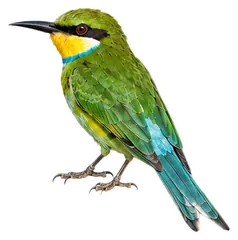 Swallow-tailed Bee-eaterMerops hirundineus
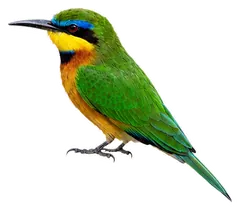 Little Bee-eaterMerops pusillus
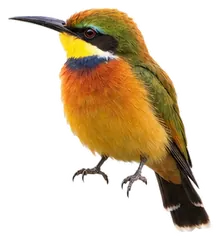 Blue-breasted Bee-eaterMerops variegatus
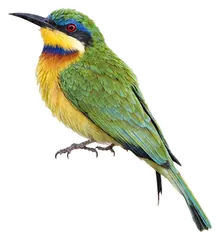 Ethiopian Bee-eaterMerops lafresnayii
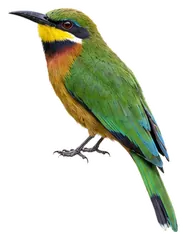 Cinnamon-chested Bee-eaterMerops oreobates
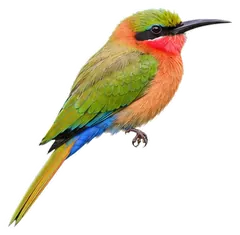 Red-throated Bee-eaterMerops bulocki
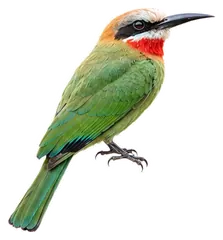 White-fronted Bee-eaterMerops bullockoides
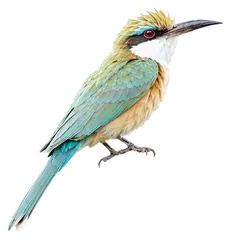 Somali Bee-eaterMerops revoilii
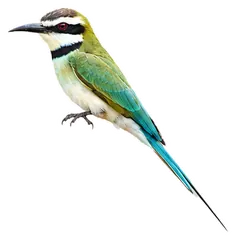 White-throated Bee-eaterMerops albicollis
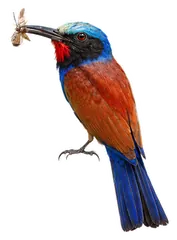
Download illustration
Free to use with credit: “Illustration: Bird Album (birdalbum.com)”. Drawn by AI from a reference photo by Paul Carter. ↗
Heard it but can't see it? Mingji identifies birds by sound and photo, on your phone.
In other languages
- EnglishBlue-headed Bee-eater
- 简体中文蓝头蜂虎
- 繁體中文藍頭蜂虎
- 日本語ムラサキハチクイ
- DeutschSaphirspint
- FrançaisGuêpier à tête bleue
- EspañolAbejaruco cabeciazul oriental
- Portuguêsabelharuco-de-cabeça-azul
- ItalianoGruccione testablu
- NederlandsBlauwkopbijeneter
- РусскийСапфировая щурка
- Svenskablåhuvad biätare
- DanskBrunrygget Biæder
- Polskiżołna szafirowa