 Bird Album
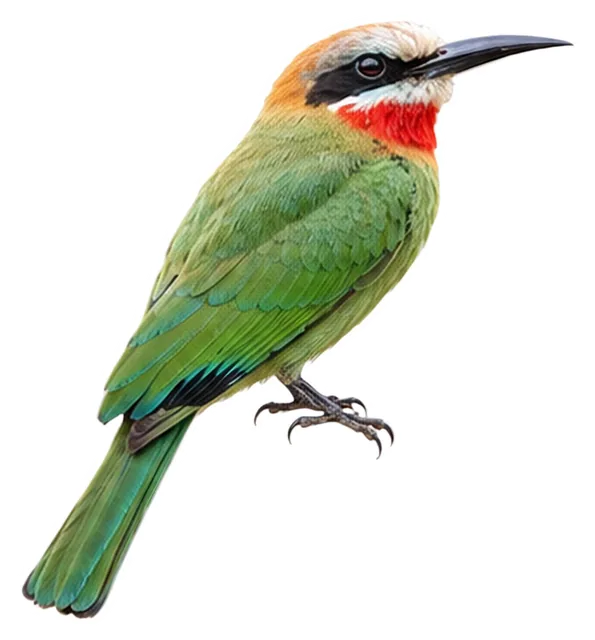
White-fronted Bee-eater
Merops bullockoides Smith, A, 1834
35 gWeight
The white-fronted bee-eater (Merops bullockoides) is a species of bee-eater widely distributed in sub-equatorial Africa.
Busiest months: October–November · Most records: South Africa, Botswana, Zambia
Where and when it's recorded

White-fronted Bee-eater has been recorded at 200 of the 8,171 birding hotspots we track, in 15 countries and regions.
Records by month Southern Hemisphere
Where it's recorded most
- Lake Nakuru NPKenya856 records
- Kruger NP – Skukuza CampSouth Africa556 records
- Arusha NPTanzania511 records
More places
- Okavango Delta – Xaro LodgeBotswana359 records
- Drotsky's CabinsBotswana338 records
- South Luangwa NPZambia312 records
- Aga Khan University – Loilenok Hills and FieldsTanzania286 records
- Kruger NP – Pafuri/S63 areaSouth Africa279 records
- Mosi-oa-Tunya NPZambia272 records
- Rietvlei NRSouth Africa228 records
Countries and regions with the most records
eBird records via GBIF up to 2024-12-31. A record means someone listed it; more records partly mean more birders, not more birds.
About
The white-fronted bee-eater (Merops bullockoides) is a species of bee-eater widely distributed in sub-equatorial Africa.
Excerpt from Wikipedia, CC BY-SA 4.0 · authors · Read more on Wikipedia
Questions
How big is the White-fronted Bee-eater?
The White-fronted Bee-eater weighs around 35 g.
Where does the White-fronted Bee-eater live?
Its breeding range: Africa: Gabon to Kenya, south to southern Angola, central South Africa and southern Mozambique. It is most often recorded in South Africa, Botswana and Zambia.
When is the best time to see the White-fronted Bee-eater?
At the hotspots we track, it is recorded most in October and November (Southern Hemisphere).
Is the White-fronted Bee-eater endangered?
The IUCN Red List classifies the White-fronted Bee-eater as Least Concern.
What does the White-fronted Bee-eater eat?
Main food: Insects & other invertebrates.
What family is the White-fronted Bee-eater in?
It belongs to the family Bee-eaters (Meropidae), order Coraciiformes.
At a glance
- Weight
- 35 g
- Habitat
- Woodland
- Diet
- Insects & other invertebrates
- Lifestyle
- Perches in trees
- Migration
- Resident (barely migrates)
- Conservation
- Least Concern
More measurements
- Wing
- 112 mm
- Tail
- 92 mm
- Bill
- 38 mm
- Tarsus
- 12 mm
Averages from the AVONET dataset; length from field guides where available.
Range
Africa: Gabon to Kenya, south to southern Angola, central South Africa and southern Mozambique
Breeding range, IOC World Bird List 15.2
Classification
- Order
- Coraciiformes
- Family
- Bee-eaters Meropidae
- Genus
- Merops
Other birds in the genus Merops
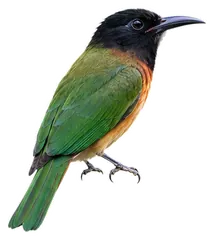 Black-headed Bee-eaterMerops breweri
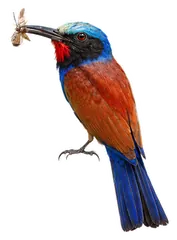 Blue-headed Bee-eaterMerops muelleri
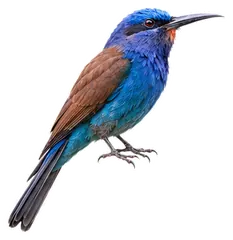 Blue-moustached Bee-eaterMerops mentalis
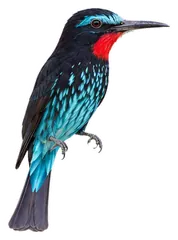 Black Bee-eaterMerops gularis
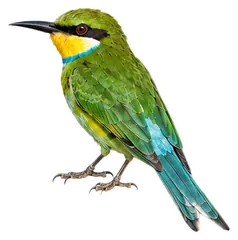 Swallow-tailed Bee-eaterMerops hirundineus
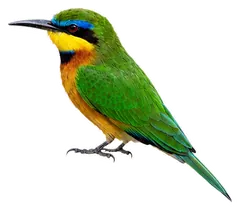 Little Bee-eaterMerops pusillus
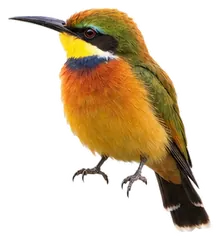 Blue-breasted Bee-eaterMerops variegatus
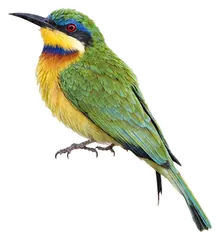 Ethiopian Bee-eaterMerops lafresnayii
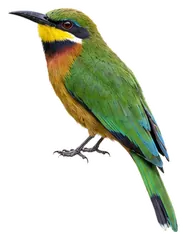 Cinnamon-chested Bee-eaterMerops oreobates
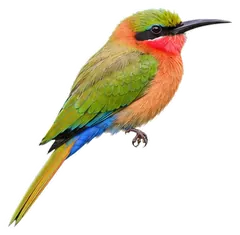 Red-throated Bee-eaterMerops bulocki
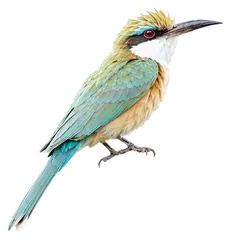 Somali Bee-eaterMerops revoilii
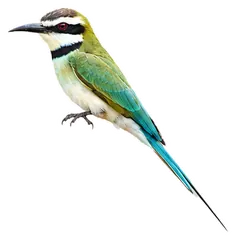 White-throated Bee-eaterMerops albicollis
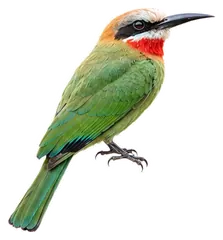
Download illustration
Free to use with credit: “Illustration: Bird Album (birdalbum.com)”. Drawn by AI from a reference photo by Alex R. ↗
Heard it but can't see it? Mingji identifies birds by sound and photo, on your phone.
In other languages
- EnglishWhite-fronted Bee-eater
- 简体中文白额蜂虎
- 繁體中文白額蜂虎
- 日本語シロビタイハチクイ
- DeutschWeißstirnspint
- FrançaisGuêpier à front blanc
- EspañolAbejaruco frentiblanco
- Portuguêsabelharuco-de-testa-branca
- ItalianoGruccione frontebianca
- NederlandsWitkapbijeneter
- РусскийБелолобая щурка
- Svenskavitpannad biätare
- DanskHvidpandet Biæder
- Polskiżołna białoczelna