 Bird Album
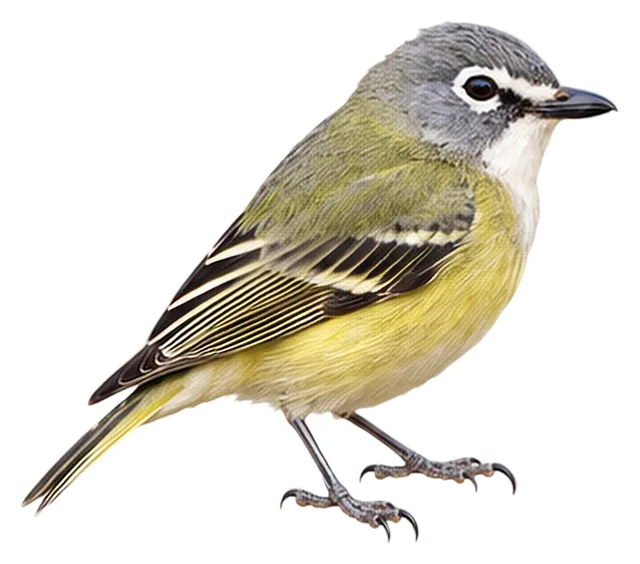
Blue-headed Vireo
Vireo solitarius (Wilson, A, 1810)
15 gWeight
The blue-headed vireo (Vireo solitarius) is a migratory songbird found in North and Central America.
Busiest months: May · Most records: United States, Canada, Mexico
Where and when it's recorded

Blue-headed Vireo has been recorded at 681 of the 8,171 birding hotspots we track, in 15 countries and regions.
Records by month Northern Hemisphere
Where it's recorded most
- Point Pelee National ParkCanada10,820 records
- Magee Marsh – BoardwalkUnited States9,113 records
- Prospect ParkUnited States7,395 records
More places
- Central ParkUnited States7,320 records
- Audubon Corkscrew Swamp SanctuaryUnited States6,865 records
- Mount Auburn CemeteryUnited States6,081 records
- Estero Llano Grande SP WBCUnited States4,204 records
- RNF du Cap-TourmenteCanada4,009 records
- Sabine WoodsUnited States3,369 records
- Parker River NWRUnited States3,072 records
Countries and regions with the most records
eBird records via GBIF up to 2024-12-31. A record means someone listed it; more records partly mean more birders, not more birds.
About
The blue-headed vireo (Vireo solitarius) is a migratory songbird found in North and Central America. There are currently two recognized subspecies that belong to the blue-headed vireo. It has a range that extends across Canada and the eastern coast of the United States, Mexico, and some of Central America.
Excerpt from Wikipedia, CC BY-SA 4.0 · authors · Read more on Wikipedia
Questions
How big is the Blue-headed Vireo?
The Blue-headed Vireo weighs around 15 g.
Where does the Blue-headed Vireo live?
Its breeding range: North America: eastern. It is most often recorded in United States, Canada and Mexico.
When is the best time to see the Blue-headed Vireo?
At the hotspots we track, it is recorded most in May (Northern Hemisphere).
Is the Blue-headed Vireo endangered?
The IUCN Red List classifies the Blue-headed Vireo as Least Concern.
What does the Blue-headed Vireo eat?
Main food: Insects & other invertebrates.
What family is the Blue-headed Vireo in?
It belongs to the family Vireos, Greenlets, Shrike-babblers (Vireonidae), order Passerines (Passeriformes).
At a glance
- Weight
- 15 g
- Habitat
- Forest
- Diet
- Insects & other invertebrates
- Lifestyle
- Perches in trees
- Migration
- Migratory
- Conservation
- Least Concern
More measurements
- Wing
- 75 mm
- Tail
- 51 mm
- Bill
- 14 mm
- Tarsus
- 19 mm
Averages from the AVONET dataset; length from field guides where available.
Range
North America: eastern
Breeding range, IOC World Bird List 15.2
Classification
- Order
- Passerines Passeriformes
- Family
- Vireos, Greenlets, Shrike-babblers Vireonidae
- Genus
- Vireo
Other birds in the genus Vireo
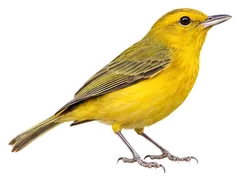 Golden VireoVireo hypochryseus
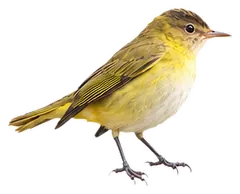 Yellow-green VireoVireo flavoviridis
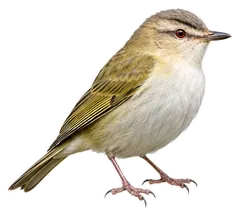 Red-eyed VireoVireo olivaceus
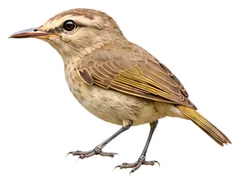 Yucatan VireoVireo magister
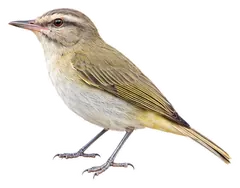 Black-whiskered VireoVireo altiloquus
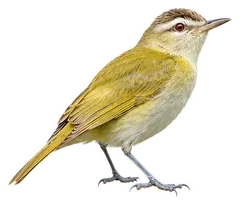 Chivi VireoVireo chivi
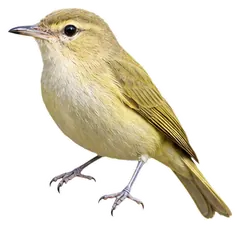 Noronha VireoVireo gracilirostris
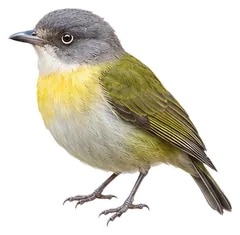 Tepui VireoVireo sclateri
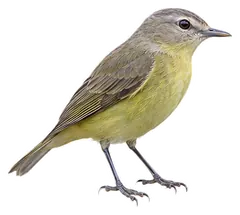 Philadelphia VireoVireo philadelphicus
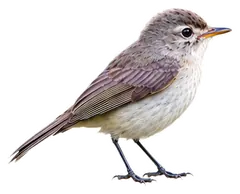 Eastern Warbling VireoVireo gilvus
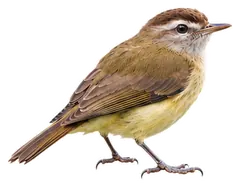 Brown-capped VireoVireo leucophrys
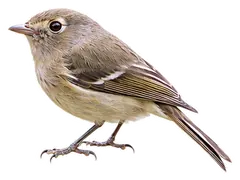 Hutton's VireoVireo huttoni
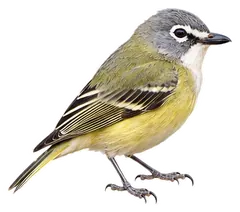
Download illustration
Free to use with credit: “Illustration: Bird Album (birdalbum.com)”. Drawn by AI from a reference photo by Will Bennett. ↗
Heard it but can't see it? Mingji identifies birds by sound and photo, on your phone.