 Bird Album
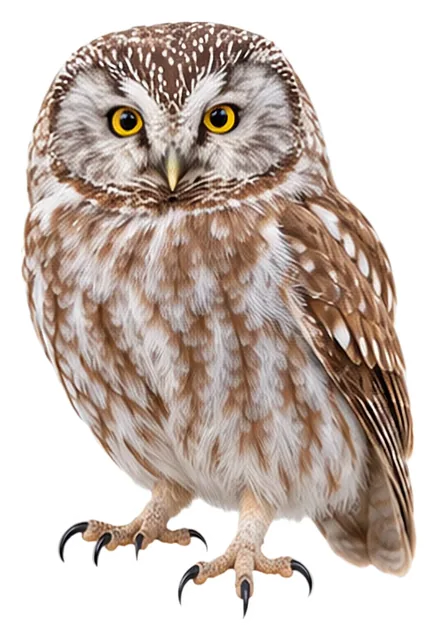
Boreal Owl
Aegolius funereus (Linnaeus, 1758)
21–25 cmLength56 cmWingspan137 gWeight
The adult's white supercilium and yellow eyes often give it a slightly startled look.
Busiest months: January · Most records: Canada, United States, Czechia
How to identify
Field marks
- Adult facial disc white with a dark border
- Adult eyes yellow
- Adult back and wings brown with conspicuous white patches
- Adult bill pale yellow
Male, female and young
Sexes similar in appearance; female larger.
Voice
The male gives a loud trill during courtship and to advertise its territory.
Where and when it's recorded
Busiest months: January · Most records: Canada, United States, Czechia

Boreal Owl has been recorded at 117 of the 8,276 birding hotspots we track, in 20 countries and regions.
Records by month Northern Hemisphere
Where it's recorded most
- Domaine de MaizeretsCanada848 records
- RN de Pointe-YamachicheCanada399 records
- Amherst IslandCanada312 records
More places
- Arboretum, Parcs de la Frayère et des VoilesCanada244 records
- Dunes de TadoussacCanada165 records
- CHKO Jeseníky – Červenohorské sedloCzechia149 records
- RNF du Cap-TourmenteCanada139 records
- Hilliardton Marsh Research and Education CentreCanada123 records
- TadoussacCanada102 records
- Whitefish PointUnited States91 records
Countries and regions with the most records
eBird records via GBIF up to 2024-12-31. A record means someone listed it; more records partly mean more birders, not more birds.
About
The boreal owl or Tengmalm's owl (Aegolius funereus) is a small owl in the "true owl" family Strigidae. It is known as the boreal owl or, more rarely, Richardson's owl after Sir John Richardson, in North America, and as Tengmalm's owl in Europe and Asia, after the Swedish naturalist Peter Gustaf Tengmalm.
Excerpt from Wikipedia, CC BY-SA 4.0 · authors · Read more on Wikipedia
Questions
How big is the Boreal Owl?
The Boreal Owl is about 21–25 cm long, with a wingspan of 56 cm and weighs around 137 g.
Where does the Boreal Owl live?
Its breeding range: North America, Palearctic: northern. It is most often recorded in Canada, United States and Czechia.
When is the best time to see the Boreal Owl?
At the hotspots we track, it is recorded most in January (Northern Hemisphere).
Is the Boreal Owl endangered?
The IUCN Red List classifies the Boreal Owl as Least Concern.
What does the Boreal Owl eat?
Main food: Vertebrate prey.
What family is the Boreal Owl in?
It belongs to the family Owls (Strigidae), order Strigiformes.
At a glance
- Length
- 21–25 cm
- Wingspan
- 56 cm
- Weight
- 137 g
- Habitat
- Forest
- Diet
- Vertebrate prey
- Lifestyle
- Perches in trees
- Migration
- Partial migrant
- Conservation
- Least Concern
More measurements
- Wing
- 169 mm
- Tail
- 102 mm
- Bill
- 18 mm
- Tarsus
- 23 mm
Averages from the AVONET dataset; length from field guides where available.
Range
North America, Palearctic: northern
Breeding range, IOC World Bird List 15.2
Subspecies · 2
- Aegolius funereus sibiricus se Siberia and ne China
- Aegolius funereus beickianus nw India and sw China
Classification
- Order
- Strigiformes
- Family
- Owls Strigidae
- Genus
- Aegolius
Other birds in the genus Aegolius
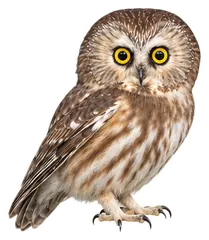 Northern Saw-whet OwlAegolius acadicus
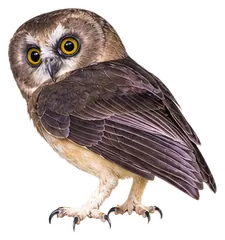 Unspotted Saw-whet OwlAegolius ridgwayi
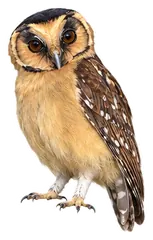 Buff-fronted OwlAegolius harrisii
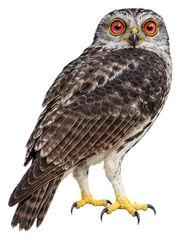 Papuan Hawk-OwlUroglaux dimorpha
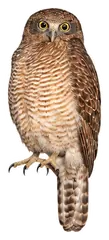 Rufous OwlNinox rufa
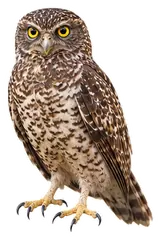 Powerful OwlNinox strenua
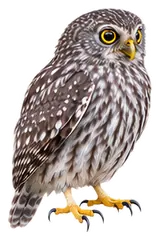 Barking OwlNinox connivens
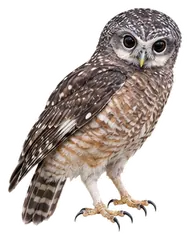 Sumba BoobookNinox rudolfi
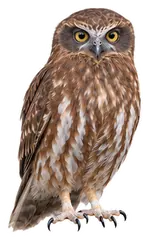 Australian BoobookNinox boobook
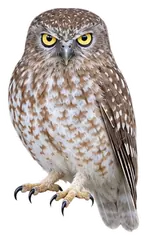 Rote BoobookNinox rotiensis
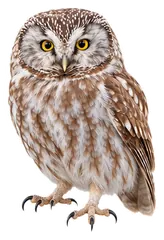
Download illustration
Free to use with credit: “Illustration: Bird Album (birdalbum.com)”. Drawn by AI from a reference photo by Яковлева Полина. ↗
Heard it but can't see it? Mingji identifies birds by sound and photo, on your phone.