 Bird Album
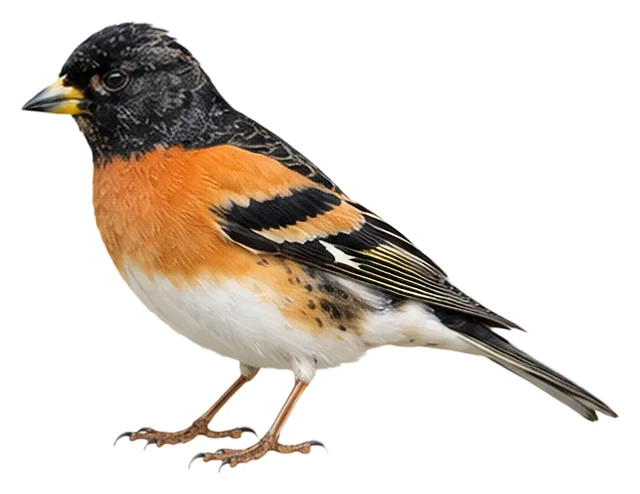
Brambling
Fringilla montifringilla Linnaeus, 1758
≈16 cmLength27 cmWingspan23 gWeight
In the breeding season, the male has a black head, orange breast, white belly and white rump.
Busiest months: October · Most records: China, United Kingdom, South Korea
Looks like Eurasian Chaffinch
How to identify
Field marks
- Rump white
- Orange breast contrasts strongly with white belly
- Scapulars orange, with dark spots on the sides of the body
- Bill yellow, black in the male in the breeding season
Male, female and young
Females and younger birds are less striking, resembling some individuals of Eurasian Chaffinch.
Similar species
Where and when it's recorded

Brambling has been recorded at 1,918 of the 8,171 birding hotspots we track, in 78 countries and regions.
Records by month Northern Hemisphere
Where it's recorded most
- St. Paul IslandUnited States1,453 records
- Titchwell Marsh RSPB ReserveUnited Kingdom1,014 records
- HelgolandGermany880 records
More places
- Jerusalem Bird ObservatoryIsrael778 records
- Spurn Bird Observatory Recording AreaUnited Kingdom742 records
- GambellUnited States732 records
- Lynford ArboretumUnited Kingdom720 records
- Hel – CypelPoland689 records
- Taipei – Tianliaoyang WetlandTaiwan (China)652 records
- Jinshan – Jinshan Youth Activity CenterTaiwan (China)608 records
Countries and regions with the most records
eBird records via GBIF up to 2024-12-31. A record means someone listed it; more records partly mean more birders, not more birds.
About
The brambling (Fringilla montifringilla) is a small passerine bird in the finch family Fringillidae. It has also been called the cock o' the north and the mountain finch. It is widespread and migratory, often seen in very large flocks.
Excerpt from Wikipedia, CC BY-SA 4.0 · authors · Read more on Wikipedia
Questions
How big is the Brambling?
The Brambling is about ≈16 cm long, with a wingspan of 27 cm and weighs around 23 g.
Where does the Brambling live?
Its breeding range: Palearctic: widespread, northern Europe through Russia, northern Kazakhstan, northwestern Mongolia to Russian Far East. It is most often recorded in China, United Kingdom and South Korea.
When is the best time to see the Brambling?
At the hotspots we track, it is recorded most in October (Northern Hemisphere).
Is the Brambling endangered?
The IUCN Red List classifies the Brambling as Least Concern.
What does the Brambling eat?
Main food: Omnivore.
What family is the Brambling in?
It belongs to the family Finches, Euphonias (Fringillidae), order Passerines (Passeriformes).
At a glance
- Length
- ≈16 cm
- Wingspan
- 27 cm
- Weight
- 23 g
- Habitat
- Forest
- Diet
- Omnivore
- Lifestyle
- Varied
- Migration
- Migratory
- Conservation
- Least Concern
More measurements
- Wing
- 89 mm
- Tail
- 62 mm
- Bill
- 14 mm
- Tarsus
- 19 mm
Averages from the AVONET dataset; length from field guides where available.
Range
Palearctic: widespread, northern Europe through Russia, northern Kazakhstan, northwestern Mongolia to Russian Far East
Breeding range, IOC World Bird List 15.2
Classification
- Order
- Passerines Passeriformes
- Family
- Finches, Euphonias Fringillidae
- Genus
- Fringilla
Other birds in the genus Fringilla
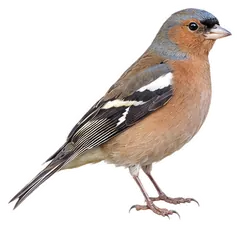 Eurasian ChaffinchFringilla coelebs
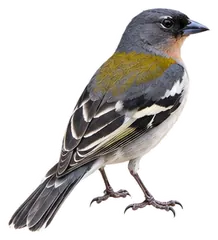 African ChaffinchFringilla spodiogenys
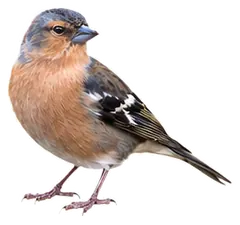 Azores ChaffinchFringilla moreletti
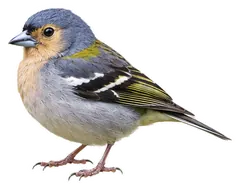 Madeira ChaffinchFringilla maderensis
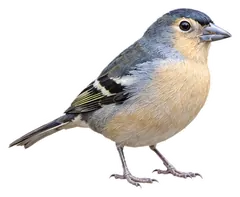 Canary Islands ChaffinchFringilla canariensis
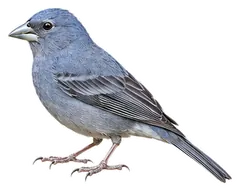 Tenerife Blue ChaffinchFringilla teydea
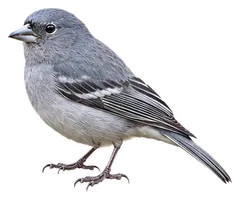 Gran Canaria Blue ChaffinchFringilla polatzeki
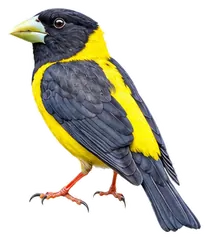 Black-and-yellow GrosbeakMycerobas icterioides
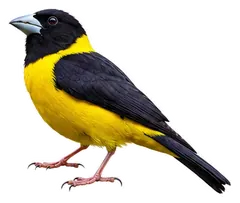 Collared GrosbeakMycerobas affinis
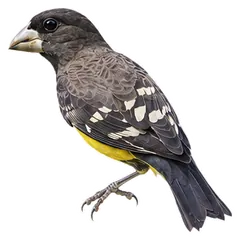 Spot-winged GrosbeakMycerobas melanozanthos
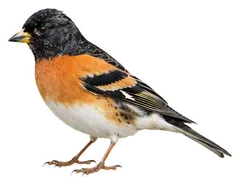
Download illustration
Free to use with credit: “Illustration: Bird Album (birdalbum.com)”. Drawn by AI from a reference photo by Pierre Dalous. ↗

Heard it but can't see it? Mingji identifies birds by sound and photo, on your phone.