 Bird Album
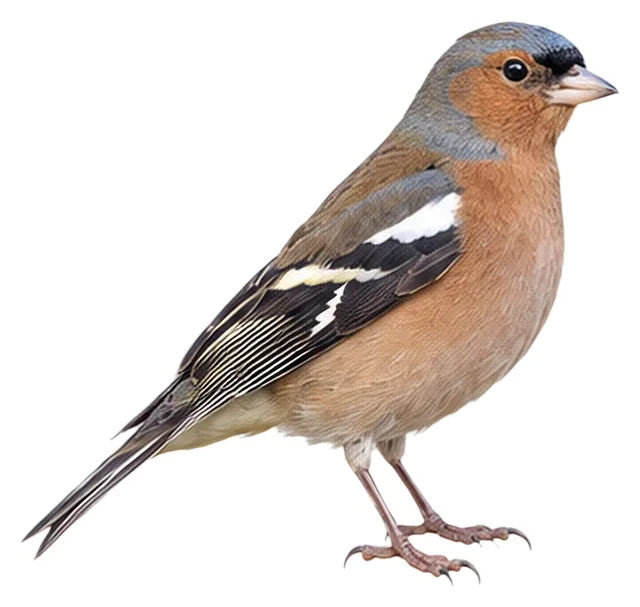
Eurasian Chaffinch
Fringilla coelebs Linnaeus, 1758
14–16 cmLength26 cmWingspan24 gWeight
The male has a blue-gray crown and rusty breast, with 2 conspicuous white bands on the wings.
Busiest months: March–May and October · Most records: United Kingdom, Spain, New Zealand
How to identify
Field marks
- 2 conspicuous white bands on the upperwing
- Male of the nominate subspecies has a black forehead and blue-gray crown and nape
- Male of the nominate subspecies has dark rusty sides of the head, throat and breast
- Outer tail feathers on both sides have white wedge-shaped patches
Male, female and young
Female is plain, with a gray-brown head and upperparts and an olive rump; juvenile resembles the female.
Voice
Flight call is “tupe”; gives “chink” when separated or alarmed; male sings loudly from a conspicuous perch.
Where and when it's recorded

Eurasian Chaffinch has been recorded at 1,597 of the 8,171 birding hotspots we track, in 81 countries and regions.
Records by month Northern Hemisphere
Where it's recorded most
- Titchwell Marsh RSPB ReserveUnited Kingdom5,923 records
- Amwell HMWT NRUnited Kingdom5,653 records
- Minsmere RSPB ReserveUnited Kingdom5,205 records
More places
- Txingudi – PlaiaundiSpain4,417 records
- Urdaibai RB – bird center y laguna de OruetaSpain3,175 records
- Rutland WaterUnited Kingdom3,123 records
- Walthamstow WetlandsUnited Kingdom2,691 records
- Otmoor RSPB ReserveUnited Kingdom2,418 records
- Spurn Bird Observatory Recording AreaUnited Kingdom2,304 records
- WWT London Wetland CentreUnited Kingdom2,243 records
Countries and regions with the most records
eBird records via GBIF up to 2024-12-31. A record means someone listed it; more records partly mean more birders, not more birds.
About
The Eurasian chaffinch, common chaffinch, or simply the chaffinch (Fringilla coelebs) is a common and widespread small passerine bird – in the finch family. The male bird has a strong voice and sings from exposed perches to attract a mate.
Excerpt from Wikipedia, CC BY-SA 4.0 · authors · Read more on Wikipedia
Questions
How big is the Eurasian Chaffinch?
The Eurasian Chaffinch is about 14–16 cm long, with a wingspan of 26 cm and weighs around 24 g.
Where does the Eurasian Chaffinch live?
Its breeding range: Palearctic: western Europe to Iran and Turkmenistan. It is most often recorded in United Kingdom, Spain and New Zealand.
When is the best time to see the Eurasian Chaffinch?
At the hotspots we track, it is recorded most in March, April, May and October (Northern Hemisphere).
Is the Eurasian Chaffinch endangered?
The IUCN Red List classifies the Eurasian Chaffinch as Least Concern.
What does the Eurasian Chaffinch eat?
Main food: Insects & other invertebrates.
What family is the Eurasian Chaffinch in?
It belongs to the family Finches, Euphonias (Fringillidae), order Passerines (Passeriformes).
At a glance
- Length
- 14–16 cm
- Wingspan
- 26 cm
- Weight
- 24 g
- Habitat
- Forest
- Diet
- Insects & other invertebrates
- Lifestyle
- Varied
- Migration
- Partial migrant
- Conservation
- Least Concern
More measurements
- Wing
- 86 mm
- Tail
- 66 mm
- Bill
- 15 mm
- Tarsus
- 18 mm
Averages from the AVONET dataset; length from field guides where available.
Range
Palearctic: western Europe to Iran and Turkmenistan
Breeding range, IOC World Bird List 15.2
Classification
- Order
- Passerines Passeriformes
- Family
- Finches, Euphonias Fringillidae
- Genus
- Fringilla
Other birds in the genus Fringilla
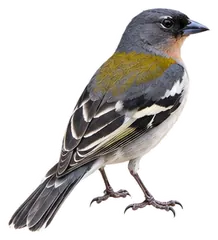 African ChaffinchFringilla spodiogenys
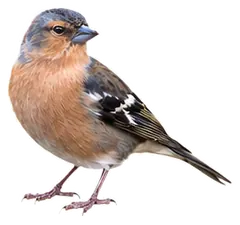 Azores ChaffinchFringilla moreletti
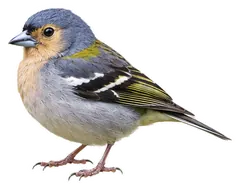 Madeira ChaffinchFringilla maderensis
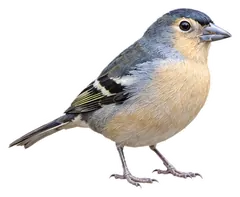 Canary Islands ChaffinchFringilla canariensis
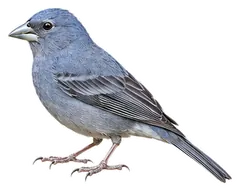 Tenerife Blue ChaffinchFringilla teydea
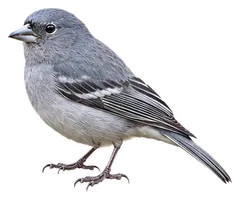 Gran Canaria Blue ChaffinchFringilla polatzeki
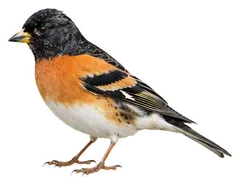 BramblingFringilla montifringilla
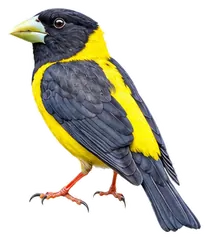 Black-and-yellow GrosbeakMycerobas icterioides
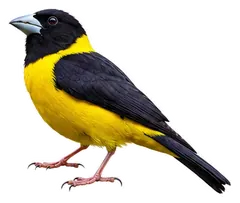 Collared GrosbeakMycerobas affinis
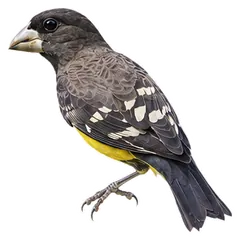 Spot-winged GrosbeakMycerobas melanozanthos
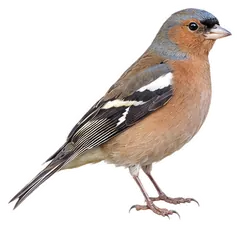
Download illustration
Free to use with credit: “Illustration: Bird Album (birdalbum.com)”. Drawn by AI from a reference photo by caroline legg. ↗

Heard it but can't see it? Mingji identifies birds by sound and photo, on your phone.