 Bird Album
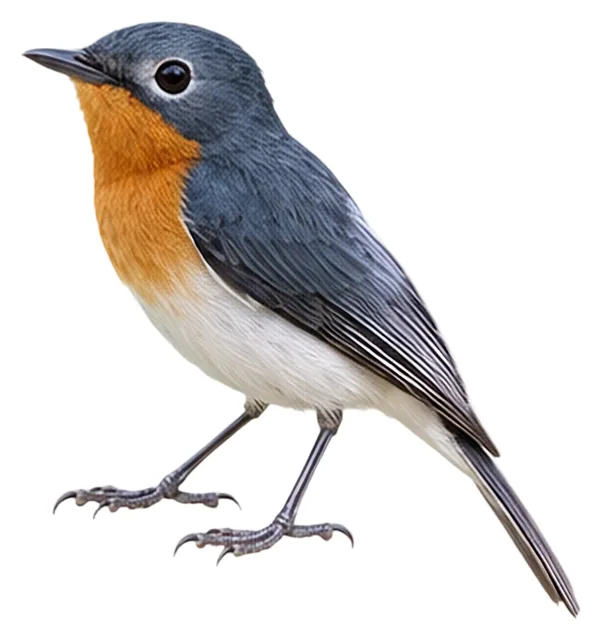
Broad-billed Flycatcher
Myiagra ruficollis (Vieillot, 1818)
10 gWeight
The broad-billed flycatcher (Myiagra ruficollis) is a species of bird in the family Monarchidae.
Busiest months: August–October · Most records: Australia, Timor-Leste, Papua New Guinea
Where and when it's recorded
Busiest months: August–October · Most records: Australia, Timor-Leste, Papua New Guinea

Broad-billed Flycatcher has been recorded at 27 of the 8,276 birding hotspots we track, in 3 countries and regions.
Records by month Southern Hemisphere
Where it's recorded most
- Crab Creek MangrovesAustralia1,340 records
- Fogg Dam Conservation ReserveAustralia772 records
- Broome Bird ObservatoryAustralia677 records
More places
- East Point Mangrove BoardwalkAustralia636 records
- Buffalo CreekAustralia302 records
- Kakadu National Park – Yellow WaterAustralia286 records
- East PointAustralia181 records
- Leanyer PondsAustralia75 records
- Muirhead bushlandAustralia47 records
- Lake Laga salt lake, Masin Fatuk, NuniraTimor-Leste24 records
Countries and regions with the most records
eBird records via GBIF up to 2024-12-31. A record means someone listed it; more records partly mean more birders, not more birds.
About
The broad-billed flycatcher (Myiagra ruficollis) is a species of bird in the family Monarchidae. It is found in northern Australia, the Lesser Sunda Islands and southern New Guinea. Its natural habitats are subtropical or tropical moist lowland forest, subtropical or tropical mangrove forest, and subtropical or tropical moist montane forest.
Excerpt from Wikipedia, CC BY-SA 4.0 · authors · Read more on Wikipedia
Questions
How big is the Broad-billed Flycatcher?
The Broad-billed Flycatcher weighs around 10 g.
Where does the Broad-billed Flycatcher live?
Its breeding range: Australasia: Lesser Sundas, Tanimbar Islands (southern Moluccas), southern New Guinea and northeastern Western Australia to northeastern Queensland (northern Australia). It is most often recorded in Australia, Timor-Leste and Papua New Guinea.
When is the best time to see the Broad-billed Flycatcher?
At the hotspots we track, it is recorded most in August, September and October (Southern Hemisphere).
Is the Broad-billed Flycatcher endangered?
The IUCN Red List classifies the Broad-billed Flycatcher as Least Concern.
What does the Broad-billed Flycatcher eat?
Main food: Insects & other invertebrates.
What family is the Broad-billed Flycatcher in?
It belongs to the family Monarchs (Monarchidae), order Passerines (Passeriformes).
At a glance
- Weight
- 10 g
- Habitat
- Woodland
- Diet
- Insects & other invertebrates
- Lifestyle
- Perches in trees
- Migration
- Resident (barely migrates)
- Conservation
- Least Concern
More measurements
- Wing
- 71 mm
- Tail
- 66 mm
- Bill
- 17 mm
- Tarsus
- 18 mm
Averages from the AVONET dataset; length from field guides where available.
Range
Australasia: Lesser Sundas, Tanimbar Islands (southern Moluccas), southern New Guinea and northeastern Western Australia to northeastern Queensland (northern Australia)
Breeding range, IOC World Bird List 15.2
Classification
- Order
- Passerines Passeriformes
- Family
- Monarchs Monarchidae
- Genus
- Myiagra
Other birds in the genus Myiagra
 Chuuk FlycatcherMyiagra oceanica
 Palau FlycatcherMyiagra erythrops
 Pohnpei FlycatcherMyiagra pluto
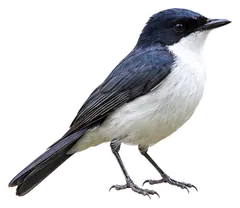 Moluccan FlycatcherMyiagra galeata
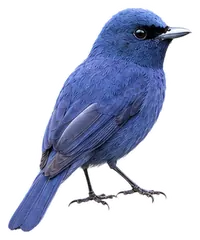 Biak Black FlycatcherMyiagra atra
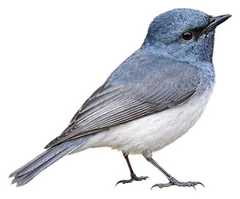 Leaden FlycatcherMyiagra rubecula
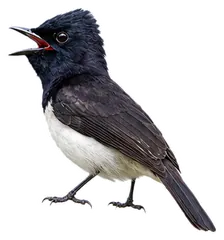 Steel-blue FlycatcherMyiagra ferrocyanea
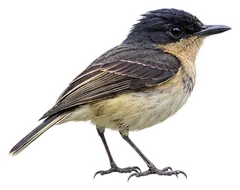 Makira FlycatcherMyiagra cervinicauda
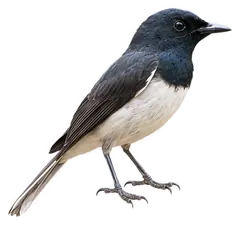 Melanesian FlycatcherMyiagra caledonica
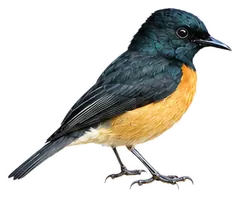 Vanikoro FlycatcherMyiagra vanikorensis
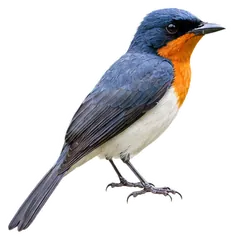 Samoan FlycatcherMyiagra albiventris
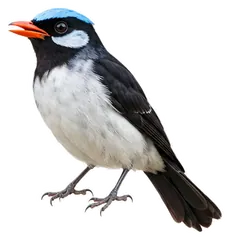 Azure-crested FlycatcherMyiagra azureocapilla
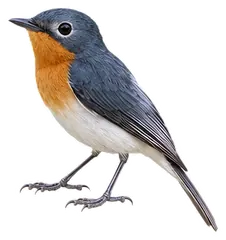
Download illustration
Free to use with credit: “Illustration: Bird Album (birdalbum.com)”. Drawn by AI from a reference photo by Chris Clarke. ↗
Heard it but can't see it? Mingji identifies birds by sound and photo, on your phone.
In other languages
- EnglishBroad-billed Flycatcher
- 简体中文棕颈阔嘴鹟
- 繁體中文棕頸闊嘴鶲
- 日本語ヒロハシヒラハシ
- DeutschBreitschnabelmonarch
- FrançaisMonarque à bec large
- EspañolMonarca piquiancho
- Portuguêspapa-moscas-de-bico-largo
- ItalianoPigliamosche beccolargo
- NederlandsKaneelborstmonarch
- РусскийШирококлювая миагра
- Svenskabrednäbbad monark
- DanskBrednæbsmonark
- Polskimuszarka szerokodzioba