 Bird Album
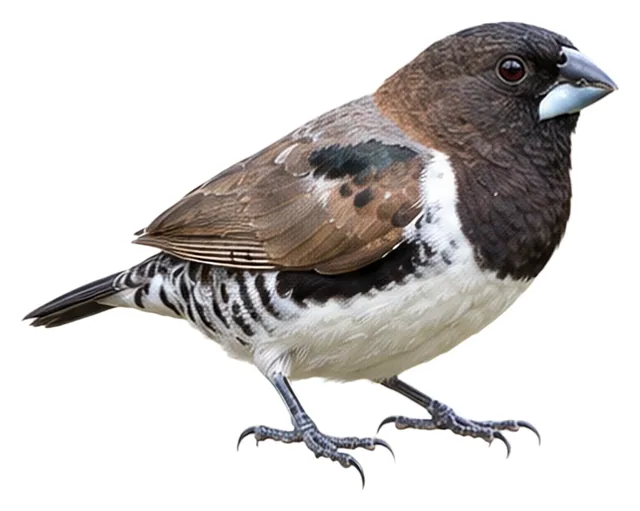
Bronze Mannikin
Spermestes cucullata Swainson, 1837
9–10 cmLength9 gWeight
The bronze mannikin or bronze munia (Spermestes cucullata) is a small passerine (i.e. perching) bird of the Afrotropics.
Most records: Uganda, Kenya, South Africa
Where and when it's recorded
Most records: Uganda, Kenya, South Africa

Bronze Mannikin has been recorded at 560 of the 8,276 birding hotspots we track, in 43 countries and regions.
Records by month Southern Hemisphere
Where it's recorded most
- Nairobi NPKenya1,049 records
- Kirstenbosch Botanical GardenSouth Africa841 records
- Entebbe Botanical GardenUganda732 records
More places
- Nairobi River @ National Museums of KenyaKenya495 records
- Bigodi SwampUganda476 records
- Mabamba SwampUganda427 records
- Karura ForestKenya398 records
- Huntington Central Park – EastUnited States396 records
- Nyandungu Urban Wetland Eco-tourism ParkRwanda340 records
- Walter Sisulu National Botanical GardenSouth Africa330 records
Countries and regions with the most records
eBird records via GBIF up to 2024-12-31. A record means someone listed it; more records partly mean more birders, not more birds.
About
The bronze mannikin or bronze munia (Spermestes cucullata) is a small passerine (i.e. perching) bird of the Afrotropics. This very social estrildid finch is an uncommon to locally abundant bird in much of Africa south of the Sahara Desert, where it is resident, nomadic or irruptive in mesic savanna or forest margin habitats. It has an estimated global extent of occurrence of 23,600,000 km2 (9,100,000 sq mi).
Excerpt from Wikipedia, CC BY-SA 4.0 · authors · Read more on Wikipedia
Questions
How big is the Bronze Mannikin?
The Bronze Mannikin is about 9–10 cm long and weighs around 9 g.
Where does the Bronze Mannikin live?
Its breeding range: Africa: western, central, eastern, southern. It is most often recorded in Uganda, Kenya and South Africa.
Is the Bronze Mannikin endangered?
The IUCN Red List classifies the Bronze Mannikin as Least Concern.
What does the Bronze Mannikin eat?
Main food: Seeds.
What family is the Bronze Mannikin in?
It belongs to the family Waxbills, Munias & Allies (Estrildidae), order Passerines (Passeriformes).
At a glance
- Length
- 9–10 cm
- Weight
- 9 g
- Habitat
- Woodland
- Diet
- Seeds
- Lifestyle
- Active on the ground
- Migration
- Resident (barely migrates)
- Conservation
- Least Concern
More measurements
- Wing
- 48 mm
- Tail
- 31 mm
- Bill
- 10 mm
- Tarsus
- 13 mm
Averages from the AVONET dataset; length from field guides where available.
Range
Africa: western, central, eastern, southern
Breeding range, IOC World Bird List 15.2
Classification
- Order
- Passerines Passeriformes
- Family
- Waxbills, Munias & Allies Estrildidae
- Genus
- Spermestes
Other birds in the genus Spermestes
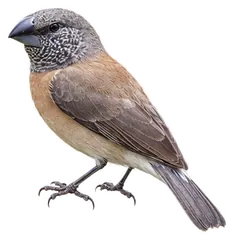 Grey-headed SilverbillSpermestes griseicapilla
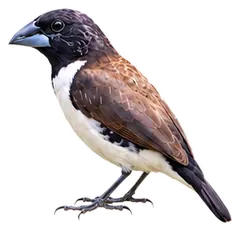 Magpie MannikinSpermestes fringilloides
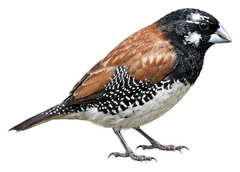 Black-and-white MannikinSpermestes bicolor
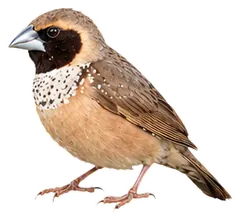 Pictorella MannikinHeteromunia pectoralis
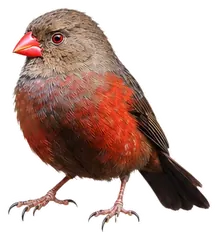 Mountain FiretailOreostruthus fuliginosus
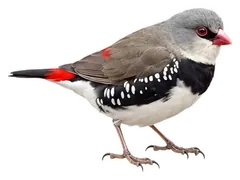 Diamond FiretailStagonopleura guttata
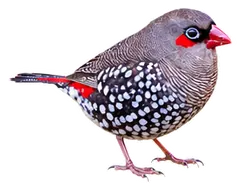 Red-eared FiretailStagonopleura oculata
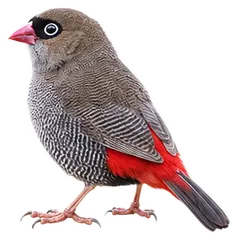 Beautiful FiretailStagonopleura bella
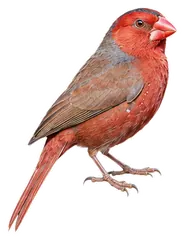 Crimson FinchNeochmia phaeton
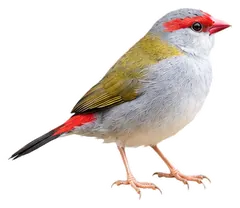 Red-browed FinchNeochmia temporalis
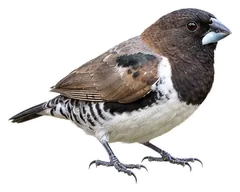
Download illustration
Free to use with credit: “Illustration: Bird Album (birdalbum.com)”. Drawn by AI from a reference photo by Alexander Viduetsky. ↗
Heard it but can't see it? Mingji identifies birds by sound and photo, on your phone.