 Bird Album
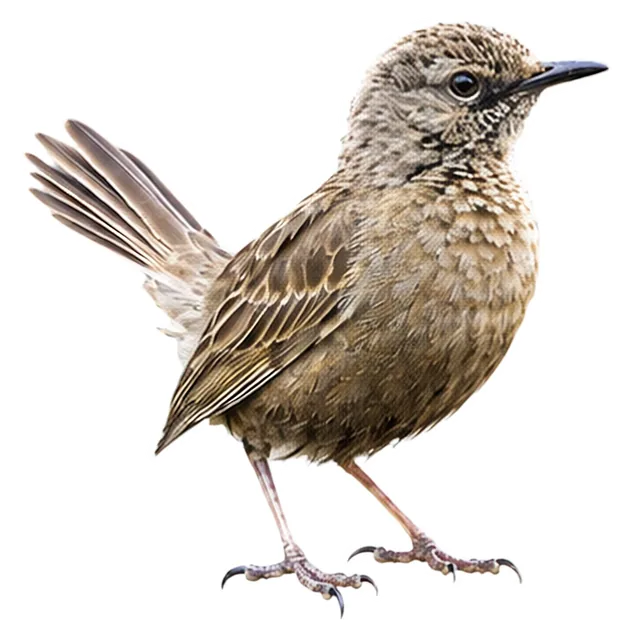
Brown Songlark
Cincloramphus cruralis (Vigors & Horsfield, 1827)
23–25 cmLength49 gWeight
The brown songlark (Cincloramphus cruralis), also Australian songlark, is a small passerine bird found throughout much of Australia.
Busiest months: October · Most records: Australia
Where and when it's recorded

Brown Songlark has been recorded at 92 of the 8,171 birding hotspots we track, in 1 country or region.
Records by month Southern Hemisphere
Where it's recorded most
- Roebuck Plains StationAustralia927 records
- Western Treatment PlantAustralia672 records
- Alice Springs Sewage PondsAustralia242 records
More places
- Bowra Wildlife SanctuaryAustralia223 records
- Richmond LowlandsAustralia211 records
- Lake ClarendonAustralia192 records
- Lake Samsonvale – Golds Scrub LaneAustralia143 records
- Port BundabergAustralia124 records
- Terrick Terrick National ParkAustralia114 records
- Atkinsons DamAustralia87 records
Countries and regions with the most records
eBird records via GBIF up to 2024-12-31. A record means someone listed it; more records partly mean more birders, not more birds.
About
The brown songlark (Cincloramphus cruralis), also Australian songlark, is a small passerine bird found throughout much of Australia. A member of the family Locustellidae, this species is notable for sexual size dimorphism, among the most pronounced in any bird. It is a moderate-sized bird of nondescript plumage; the female brownish above and paler below, the larger male a darker brown.
Excerpt from Wikipedia, CC BY-SA 4.0 · authors · Read more on Wikipedia
Questions
How big is the Brown Songlark?
The Brown Songlark is about 23–25 cm long and weighs around 49 g.
Where does the Brown Songlark live?
Its breeding range: Australasia: Australia (except far northern and Tasmania), breeding mostly in southern. It is most often recorded in Australia.
When is the best time to see the Brown Songlark?
At the hotspots we track, it is recorded most in October (Southern Hemisphere).
Is the Brown Songlark endangered?
The IUCN Red List classifies the Brown Songlark as Least Concern.
What does the Brown Songlark eat?
Main food: Insects & other invertebrates.
What family is the Brown Songlark in?
It belongs to the family Grassbirds & Allies (Locustellidae), order Passerines (Passeriformes).
At a glance
- Length
- 23–25 cm
- Weight
- 49 g
- Habitat
- Grassland
- Diet
- Insects & other invertebrates
- Lifestyle
- Active on the ground
- Migration
- Migratory
- Conservation
- Least Concern
More measurements
- Wing
- 94 mm
- Tail
- 86 mm
- Bill
- 20 mm
- Tarsus
- 34 mm
Averages from the AVONET dataset; length from field guides where available.
Range
Australasia: Australia (except far northern and Tasmania), breeding mostly in southern
Breeding range, IOC World Bird List 15.2
Classification
- Order
- Passerines Passeriformes
- Family
- Grassbirds & Allies Locustellidae
- Genus
- Cincloramphus
Other birds in the genus Cincloramphus
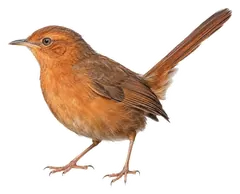 Rusty ThicketbirdCincloramphus rubiginosus
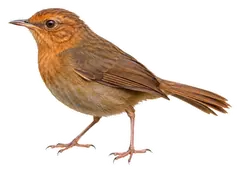 New Britain ThicketbirdCincloramphus grosvenori
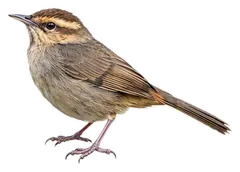 Buff-banded ThicketbirdCincloramphus bivittatus
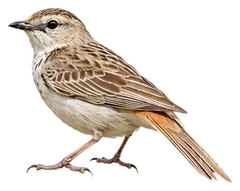 Rufous SonglarkCincloramphus mathewsi
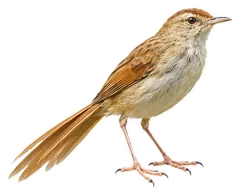 Papuan GrassbirdCincloramphus macrurus
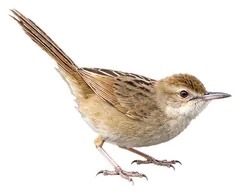 Tawny GrassbirdCincloramphus timoriensis
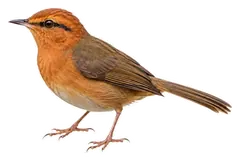 Guadalcanal ThicketbirdCincloramphus turipavae
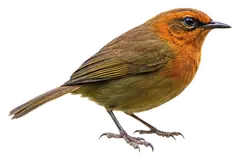 Santo ThicketbirdCincloramphus whitneyi
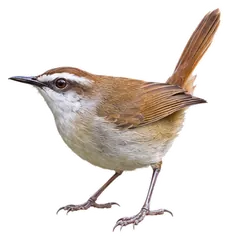 New Caledonian ThicketbirdCincloramphus mariae
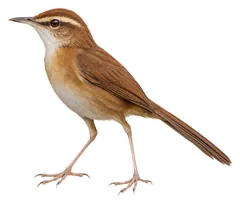 Long-legged ThicketbirdCincloramphus rufus
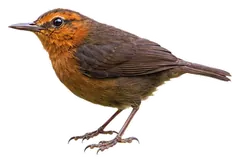 Bougainville ThicketbirdCincloramphus llaneae
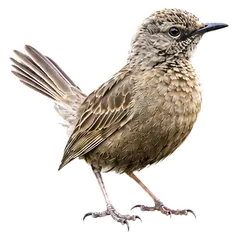
Download illustration
Free to use with credit: “Illustration: Bird Album (birdalbum.com)”. Drawn by AI from reference photos. ↗
Heard it but can't see it? Mingji identifies birds by sound and photo, on your phone.
In other languages
- EnglishBrown Songlark
- 简体中文褐鹨莺
- 繁體中文褐鷚鶯
- 日本語ヒバリモドキ
- DeutschSchwarzbauch-Buschsänger
- FrançaisMégalure brune
- EspañolYerbera parda
- Portuguêscapineiro-pardo
- ItalianoLodola canterina bruna
- NederlandsRoetbruine Grasvogel
- РусскийЖаворонковая клинохвостка
- Svenskasotgräsfågel
- DanskSodbrun Lærkesanger
- Polskikrzakowik brunatny