 Bird Album
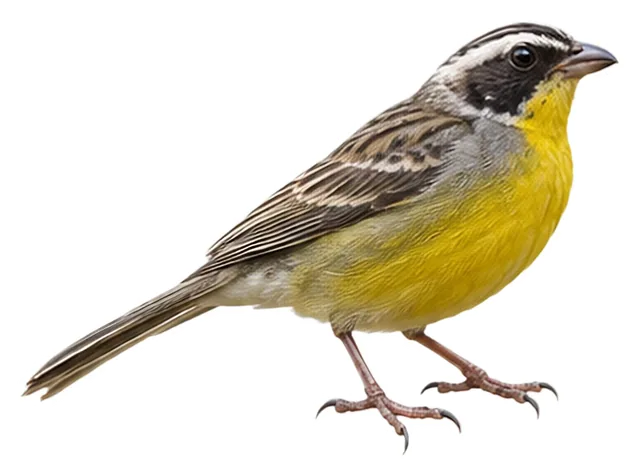
Cabanis's Bunting
Emberiza cabanisi (Reichenow, 1875)
25 gWeight
Cabanis's bunting (Fringillaria cabanisi) is a species of bird in the family Emberizidae.
Busiest months: October and December · Most records: Zambia, Malawi, Tanzania
Where and when it's recorded

Cabanis's Bunting has been recorded at 52 of the 8,171 birding hotspots we track, in 16 countries and regions.
Records by month Southern Hemisphere
Where it's recorded most
- East Usambara Mountains – Amani Nature ReserveTanzania100 records
- Budongo Forest Reserve – Royal MileUganda65 records
- Aberfoyle LodgeZimbabwe54 records
More places
- Dzalanyama Forest Lodge areaMalawi48 records
- Dzalanyama Forest ReserveMalawi47 records
- Lazy J Ranch & Bird SanctuaryZambia45 records
- Masuku LodgeZambia31 records
- Benoue NPCameroon29 records
- Mole NPGhana26 records
- Mutinondo WildernessZambia23 records
Countries and regions with the most records
eBird records via GBIF up to 2024-12-31. A record means someone listed it; more records partly mean more birders, not more birds.
About
Cabanis's bunting (Fringillaria cabanisi) is a species of bird in the family Emberizidae.
Excerpt from Wikipedia, CC BY-SA 4.0 · authors · Read more on Wikipedia
Questions
How big is the Cabanis's Bunting?
The Cabanis's Bunting weighs around 25 g.
Where does the Cabanis's Bunting live?
Its breeding range: Africa: tropical African broadleaf woodland: Guinea and far southern Mali east to far southern Sudan and northwestern Uganda; in south to central Angola, southern Zimbabwe and central Mozambique. It is most often recorded in Zambia, Malawi and Tanzania.
When is the best time to see the Cabanis's Bunting?
At the hotspots we track, it is recorded most in October and December (Southern Hemisphere).
Is the Cabanis's Bunting endangered?
The IUCN Red List classifies the Cabanis's Bunting as Least Concern.
What does the Cabanis's Bunting eat?
Main food: Insects & other invertebrates.
What family is the Cabanis's Bunting in?
It belongs to the family Buntings (Emberizidae), order Passerines (Passeriformes).
At a glance
- Weight
- 25 g
- Habitat
- Woodland
- Diet
- Insects & other invertebrates
- Lifestyle
- Active on the ground
- Migration
- Resident (barely migrates)
- Conservation
- Least Concern
More measurements
- Wing
- 76 mm
- Tail
- 65 mm
- Bill
- 14 mm
- Tarsus
- 20 mm
Averages from the AVONET dataset; length from field guides where available.
Range
Africa: tropical African broadleaf woodland: Guinea and far southern Mali east to far southern Sudan and northwestern Uganda; in south to central Angola, southern Zimbabwe and central Mozambique
Breeding range, IOC World Bird List 15.2
Classification
- Order
- Passerines Passeriformes
- Family
- Buntings Emberizidae
- Genus
- Emberiza
Other birds in the genus Emberiza
 Crested BuntingEmberiza lathami
 Slaty BuntingEmberiza siemsseni
 Corn BuntingEmberiza calandra
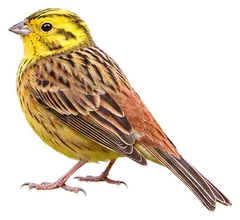 YellowhammerEmberiza citrinella
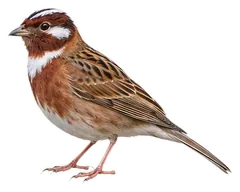 Pine BuntingEmberiza leucocephalos
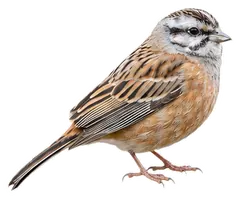 Rock BuntingEmberiza cia
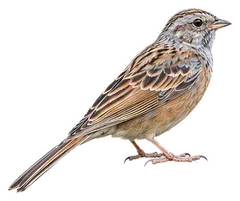 Godlewski's BuntingEmberiza godlewskii
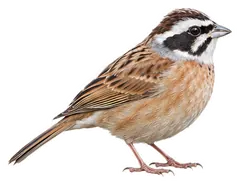 Meadow BuntingEmberiza cioides
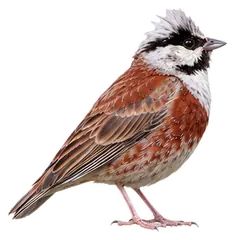 White-capped BuntingEmberiza stewarti
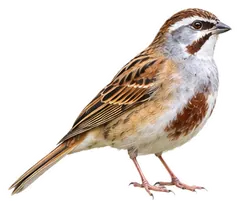 Jankowski's BuntingEmberiza jankowskii
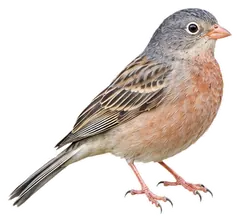 Grey-necked BuntingEmberiza buchanani
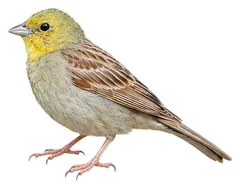 Cinereous BuntingEmberiza cineracea
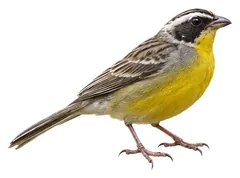
Download illustration
Free to use with credit: “Illustration: Bird Album (birdalbum.com)”. Drawn by AI from a reference photo by rguinness. ↗
Heard it but can't see it? Mingji identifies birds by sound and photo, on your phone.
In other languages
- EnglishCabanis's Bunting
- 简体中文白眉黄腹鹀
- 繁體中文白眉黃腹鵐
- 日本語キンムネホオグロ
- DeutschCabanisammer
- FrançaisBruant de Cabanis
- EspañolEscribano de Cabanis
- Portuguêsescrevedeira-de-bochecha-preta
- ItalianoZigolo di Cabanis
- NederlandsCabanis' Gors
- РусскийАфриканская овсянка
- Svenskasvartkindad sparv
- DanskSortkindet Værling
- Polskitrznadel szaroboczny