 Bird Album
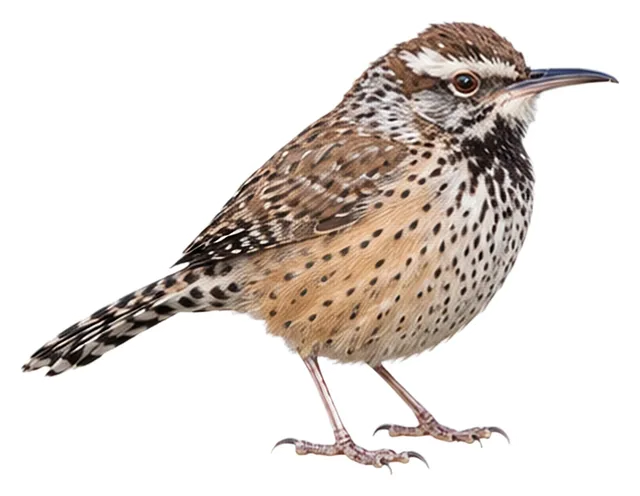
Cactus Wren
Campylorhynchus brunneicapillus (Lafresnaye, 1835)
18–23 cmLength39 gWeight
The cactus wren (Campylorhynchus brunneicapillus) is a species of wren that is endemic to the deserts of the southwestern United States and northern and central Mexico.
Busiest months: March–April · Most records: United States, Mexico
Where and when it's recorded

Cactus Wren has been recorded at 92 of the 8,171 birding hotspots we track, in 2 countries and regions.
Records by month Northern Hemisphere
Where it's recorded most
- Desert Botanical GardenUnited States6,779 records
- Sabino Dam and downstream riparianUnited States5,587 records
- Frank G. Bonelli RP/Puddingstone Reservoir and vicinityUnited States5,491 records
More places
- Florida Canyon – lowerUnited States4,967 records
- Portal – Cave Creek RanchUnited States4,603 records
- Sweetwater WetlandsUnited States4,520 records
- Agua Caliente ParkUnited States4,334 records
- Catalina SPUnited States3,508 records
- Boyce Thompson ArboretumUnited States3,269 records
- PortalUnited States3,263 records
Countries and regions with the most records
eBird records via GBIF up to 2024-12-31. A record means someone listed it; more records partly mean more birders, not more birds.
About
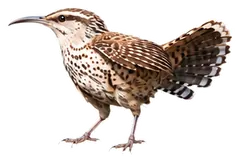
The cactus wren (Campylorhynchus brunneicapillus) is a species of wren that is endemic to the deserts of the southwestern United States and northern and central Mexico. It is the state bird of Arizona, and the largest wren in the United States. Its plumage is brown, with black and white spots as markings.
Excerpt from Wikipedia, CC BY-SA 4.0 · authors · Read more on Wikipedia
Questions
How big is the Cactus Wren?
The Cactus Wren is about 18–23 cm long and weighs around 39 g.
Where does the Cactus Wren live?
Its breeding range: North America, Middle America: southwestern USA and Mexico. It is most often recorded in United States and Mexico.
When is the best time to see the Cactus Wren?
At the hotspots we track, it is recorded most in March and April (Northern Hemisphere).
Is the Cactus Wren endangered?
The IUCN Red List classifies the Cactus Wren as Least Concern.
What does the Cactus Wren eat?
Main food: Insects & other invertebrates.
What family is the Cactus Wren in?
It belongs to the family Wrens (Troglodytidae), order Passerines (Passeriformes).
At a glance
- Length
- 18–23 cm
- Weight
- 39 g
- Habitat
- Shrubland
- Diet
- Insects & other invertebrates
- Lifestyle
- Perches in trees
- Migration
- Resident (barely migrates)
- Conservation
- Least Concern
More measurements
- Wing
- 83 mm
- Tail
- 86 mm
- Bill
- 26 mm
- Tarsus
- 26 mm
Averages from the AVONET dataset; length from field guides where available.
Range
North America, Middle America: southwestern USA and Mexico
Breeding range, IOC World Bird List 15.2
Classification
- Order
- Passerines Passeriformes
- Family
- Wrens Troglodytidae
- Genus
- Campylorhynchus
Other birds in the genus Campylorhynchus
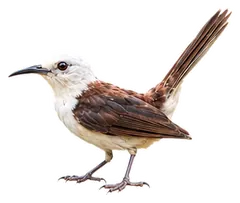 White-headed WrenCampylorhynchus albobrunneus
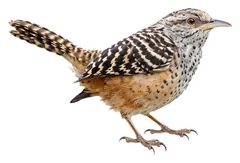 Band-backed WrenCampylorhynchus zonatus
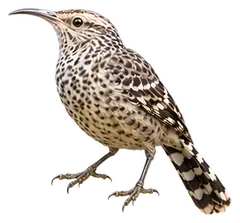 Grey-barred WrenCampylorhynchus megalopterus
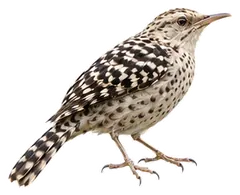 Stripe-backed WrenCampylorhynchus nuchalis
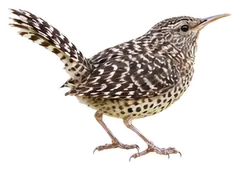 Fasciated WrenCampylorhynchus fasciatus
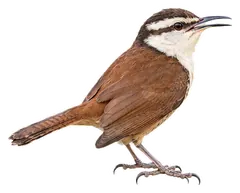 Giant WrenCampylorhynchus chiapensis
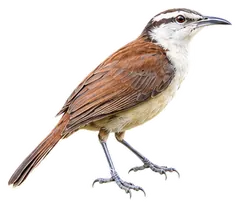 Bicolored WrenCampylorhynchus griseus
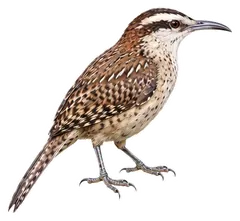 Veracruz WrenCampylorhynchus rufinucha
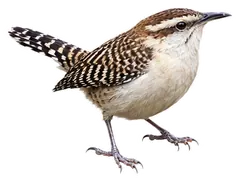 Russet-naped WrenCampylorhynchus humilis
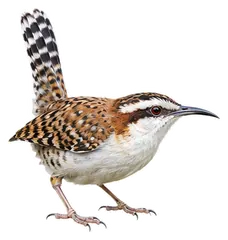 Rufous-backed WrenCampylorhynchus capistratus
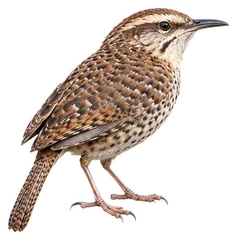 Spotted WrenCampylorhynchus gularis
 Boucard's WrenCampylorhynchus jocosus
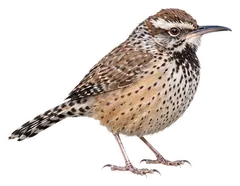
Download illustration
Free to use with credit: “Illustration: Bird Album (birdalbum.com)”. Drawn by AI from a reference photo by Gordon Karre. ↗
Heard it but can't see it? Mingji identifies birds by sound and photo, on your phone.