 Bird Album
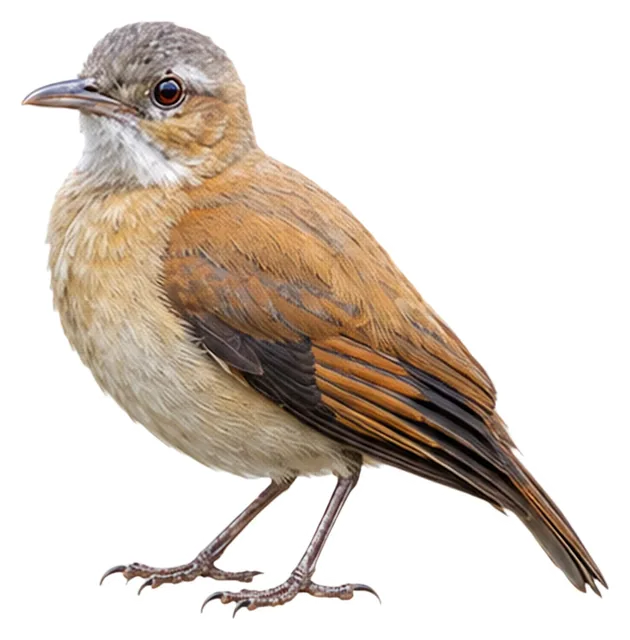
Caribbean Hornero
Furnarius longirostris Pelzeln, 1856
17–19 cmLength49 gWeight
The Caribbean hornero (Furnarius longirostris) is a species of bird in the Furnariinae subfamily of the ovenbird family Furnariidae.
Busiest months: December–March and May · Most records: Colombia, Venezuela
Where and when it's recorded

Caribbean Hornero has been recorded at 33 of the 8,171 birding hotspots we track, in 2 countries and regions.
Records by month Northern Hemisphere
Where it's recorded most
- Palermo – Camino Km 4Colombia714 records
- Agrícola CameliasColombia347 records
- Sierra de San Luis – Caserio de AcuriguaVenezuela345 records
More places
- Charca de Guarinocito, La Dorada -CaldasColombia238 records
- SFF Los Flamencos – Resguardo Perratpu/Boca de CamaronesColombia220 records
- SFF Los Flamencos – Ciénaga del Navío QuebradoColombia183 records
- Reserva Ecologica Guaquira – zonas bajasVenezuela163 records
- El Consejo de Ciruma – Parque Ecoturistico Ojo de AguaVenezuela160 records
- Coro – Paseo Monseñor IturrizaVenezuela152 records
- El Paujil Proaves ReserveColombia152 records
Countries and regions with the most records
eBird records via GBIF up to 2024-12-31. A record means someone listed it; more records partly mean more birders, not more birds.
About
The Caribbean hornero (Furnarius longirostris) is a species of bird in the Furnariinae subfamily of the ovenbird family Furnariidae. It is found in Colombia and Venezuela.
Excerpt from Wikipedia, CC BY-SA 4.0 · authors · Read more on Wikipedia
Questions
How big is the Caribbean Hornero?
The Caribbean Hornero is about 17–19 cm long and weighs around 49 g.
Where does the Caribbean Hornero live?
Its breeding range: South America: northern Colombia and northwestern Venezuela. It is most often recorded in Colombia and Venezuela.
When is the best time to see the Caribbean Hornero?
At the hotspots we track, it is recorded most in January, February, March, May and December (Northern Hemisphere).
Is the Caribbean Hornero endangered?
The IUCN Red List classifies the Caribbean Hornero as Least Concern.
What does the Caribbean Hornero eat?
Main food: Insects & other invertebrates.
What family is the Caribbean Hornero in?
It belongs to the family Ovenbirds (Furnariidae), order Passerines (Passeriformes).
At a glance
- Length
- 17–19 cm
- Weight
- 49 g
- Habitat
- Shrubland
- Diet
- Insects & other invertebrates
- Lifestyle
- Active on the ground
- Migration
- Resident (barely migrates)
- Conservation
- Least Concern
More measurements
- Wing
- 90 mm
- Tail
- 55 mm
- Bill
- 26 mm
- Tarsus
- 29 mm
Averages from the AVONET dataset; length from field guides where available.
Range
South America: northern Colombia and northwestern Venezuela
Breeding range, IOC World Bird List 15.2
Classification
- Order
- Passerines Passeriformes
- Family
- Ovenbirds Furnariidae
- Genus
- Furnarius
Other birds in the genus Furnarius
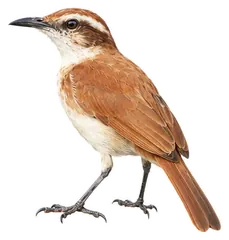 Band-tailed HorneroFurnarius figulus
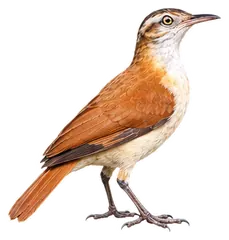 Pacific HorneroFurnarius cinnamomeus
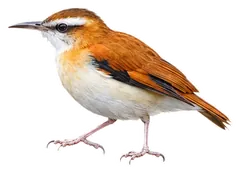 Pale-legged HorneroFurnarius leucopus
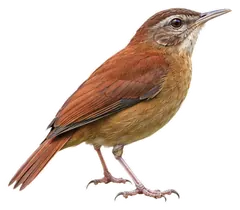 Bay HorneroFurnarius torridus
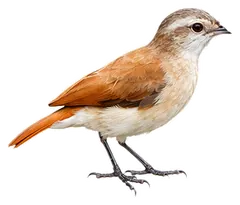 Lesser HorneroFurnarius minor
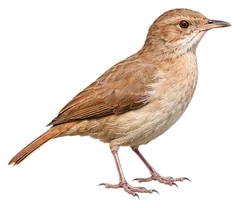 Rufous HorneroFurnarius rufus
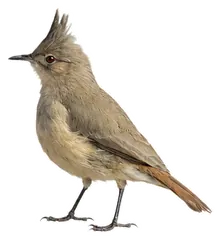 Crested HorneroFurnarius cristatus
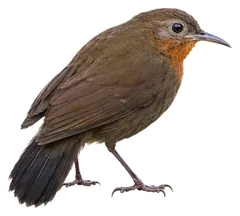 Tawny-throated LeaftosserSclerurus mexicanus
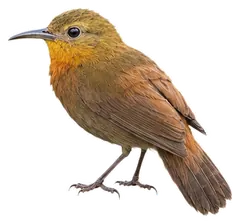 Dusky LeaftosserSclerurus obscurior
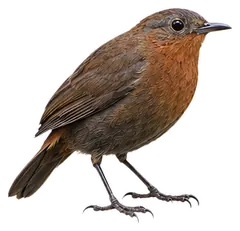 Short-billed LeaftosserSclerurus rufigularis
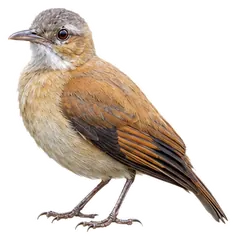
Download illustration
Free to use with credit: “Illustration: Bird Album (birdalbum.com)”. Drawn by AI from a reference photo by Juan José López Negrete. ↗
Heard it but can't see it? Mingji identifies birds by sound and photo, on your phone.