 Bird Album
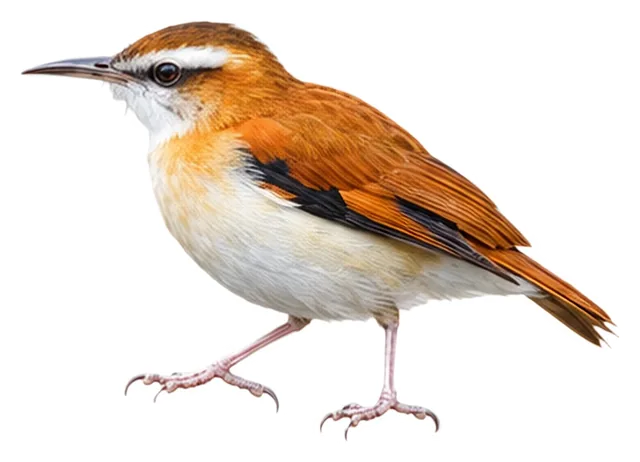
Pale-legged Hornero
Furnarius leucopus Swainson, 1838
55 gWeight
The pale-legged hornero (Furnarius leucopus) is a species of bird in the Furnariinae subfamily of the ovenbird family Furnariidae.
Busiest months: August · Most records: Brazil, Peru, Guyana
Where and when it's recorded
Busiest months: August · Most records: Brazil, Peru, Guyana

Pale-legged Hornero has been recorded at 96 of the 8,276 birding hotspots we track, in 5 countries and regions.
Records by month Southern Hemisphere
Where it's recorded most
- Pantanal – P. Jofre boat on Rio Cuiabá & tributariesBrazil1,101 records
- Manu BiolodgePeru969 records
- Poconé – Aymara LodgeBrazil855 records
More places
- Amazonía LodgePeru800 records
- Poconé – SouthWild PantanalBrazil772 records
- Pantanal – Porto JofreBrazil435 records
- Poconé – Rio Pixaim e arredoresBrazil429 records
- Poconé – Pousada PiuvalBrazil425 records
- Pantanal – Pousada Rio ClaroBrazil408 records
- PE Encontro das ÁguasBrazil395 records
Countries and regions with the most records
eBird records via GBIF up to 2024-12-31. A record means someone listed it; more records partly mean more birders, not more birds.
About
The pale-legged hornero (Furnarius leucopus) is a species of bird in the Furnariinae subfamily of the ovenbird family Furnariidae. It is found in Bolivia, Brazil, Guyana, and Peru.
Excerpt from Wikipedia, CC BY-SA 4.0 · authors · Read more on Wikipedia
Questions
How big is the Pale-legged Hornero?
The Pale-legged Hornero weighs around 55 g.
Where does the Pale-legged Hornero live?
Its breeding range: South America: western, southern Amazonia and eastern Brazil. It is most often recorded in Brazil, Peru and Guyana.
When is the best time to see the Pale-legged Hornero?
At the hotspots we track, it is recorded most in August (Southern Hemisphere).
Is the Pale-legged Hornero endangered?
The IUCN Red List classifies the Pale-legged Hornero as Least Concern.
What does the Pale-legged Hornero eat?
Main food: Insects & other invertebrates.
What family is the Pale-legged Hornero in?
It belongs to the family Ovenbirds (Furnariidae), order Passerines (Passeriformes).
At a glance
- Weight
- 55 g
- Habitat
- Shrubland
- Diet
- Insects & other invertebrates
- Lifestyle
- Active on the ground
- Migration
- Resident (barely migrates)
- Conservation
- Least Concern
More measurements
- Wing
- 90 mm
- Tail
- 61 mm
- Bill
- 25 mm
- Tarsus
- 30 mm
Averages from the AVONET dataset; length from field guides where available.
Range
South America: western, southern Amazonia and eastern Brazil
Breeding range, IOC World Bird List 15.2
Classification
- Order
- Passerines Passeriformes
- Family
- Ovenbirds Furnariidae
- Genus
- Furnarius
Other birds in the genus Furnarius
 Band-tailed HorneroFurnarius figulus
 Pacific HorneroFurnarius cinnamomeus
 Caribbean HorneroFurnarius longirostris
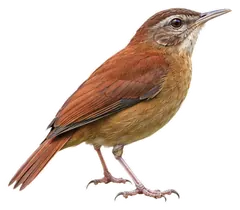 Bay HorneroFurnarius torridus
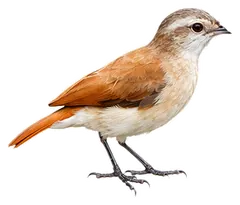 Lesser HorneroFurnarius minor
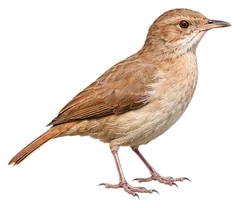 Rufous HorneroFurnarius rufus
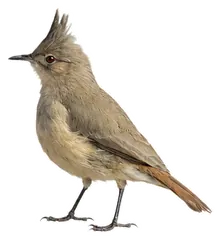 Crested HorneroFurnarius cristatus
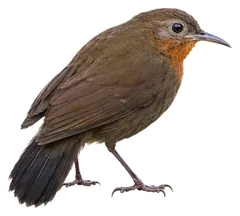 Tawny-throated LeaftosserSclerurus mexicanus
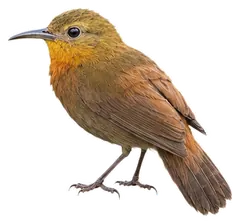 Dusky LeaftosserSclerurus obscurior
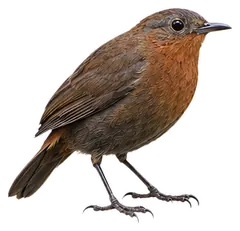 Short-billed LeaftosserSclerurus rufigularis
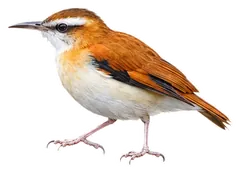
Download illustration
Free to use with credit: “Illustration: Bird Album (birdalbum.com)”. Drawn by AI from a reference photo by Allan Hopkins. ↗
Heard it but can't see it? Mingji identifies birds by sound and photo, on your phone.
In other languages
- EnglishPale-legged Hornero
- 简体中文淡腿灶鸟
- 繁體中文淡腳灶鳥
- 日本語アカアシカマドドリ
- DeutschBlassfußtöpfer
- FrançaisFournier variable
- EspañolHornero paticlaro
- Portuguêscasaca-de-couro-amarelo
- ItalianoFornaio zampechiare
- NederlandsBleekpootovenvogel
- РусскийБледноногий печник
- Svenskaljusbent hornero
- DanskLysbenet Ovnfugl
- Polskigarncarz jasnonogi