 Bird Album
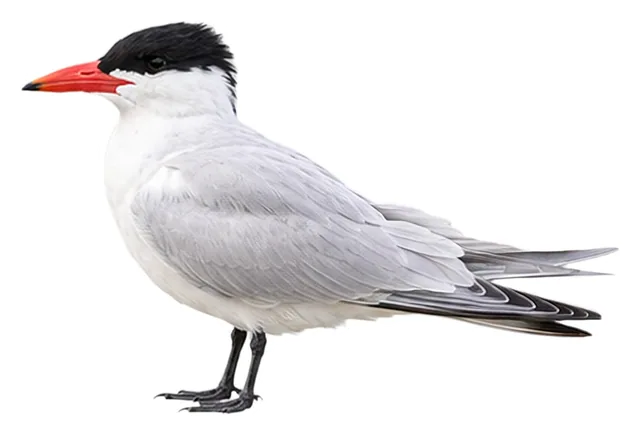
Caspian Tern
Hydroprogne caspia (Pallas, 1770)
48–60 cmLength134 cmWingspan655 gWeight
The world’s largest tern has a long, thick red-orange bill and a black cap.
Busiest months: May · Most records: United States, Canada, Australia
How to identify
Field marks
- Bill long, thick and red-orange, with a small black tip
- Head white with a black cap; neck white
- Back and upperwing pale gray
- Tail shallowly forked and underside of wingtips black in flight
Voice
A loud, heron-like quacking call.
Where and when it's recorded

Caspian Tern has been recorded at 2,268 of the 8,276 birding hotspots we track, in 132 countries and regions.
Records by month Northern Hemisphere
Where it's recorded most
- Montrose Point Bird Sanctuary, Lincoln Park, ChicagoUnited States20,033 records
- IRWD San Joaquin Marsh & Wildlife Sanctuary, IrvineUnited States11,078 records
- Edwin B. Forsythe NWRUnited States9,448 records
More places
- Howard Marsh MetroparkUnited States8,387 records
- Tommy Thompson ParkCanada6,926 records
- Bolsa Chica Ecological ReserveUnited States6,894 records
- Bombay Hook National Wildlife RefugeUnited States6,768 records
- Pte. Mouillee SGAUnited States6,767 records
- South Padre Is. – Birding and Nature CenterUnited States6,752 records
- Billy Frank Jr. Nisqually NWRUnited States6,422 records
Countries and regions with the most records
eBird records via GBIF up to 2024-12-31. A record means someone listed it; more records partly mean more birders, not more birds.
About
The Caspian tern (Hydroprogne caspia) is the world's largest species of tern, with a subcosmopolitan but scattered distribution. Despite its extensive range, it is monotypic of its genus, and has no accepted subspecies. The genus name is from Ancient Greek hudro-, "water-", and Latin progne, "swallow".
Excerpt from Wikipedia, CC BY-SA 4.0 · authors · Read more on Wikipedia
Questions
How big is the Caspian Tern?
The Caspian Tern is about 48–60 cm long, with a wingspan of 134 cm and weighs around 655 g.
Where does the Caspian Tern live?
Its breeding range: Palearctic, Oriental, Australasia, North America: patchily coastal Baltic Sea and inland southeastern Europe to western Mongolia and Ussuriland (southeastern Russia) and northeastern China and southern Asian coasts; coastal and inland western and southern Africa; Europa (west of southern Madagascar, Mozambique Channel), coastal Madagascar and Aldabra group (southwestern Seychelles); coastal Australia and New Zealand (North, South and Stewart islands) and inland northern, eastern Australia; inland Northwest Territories to central California, Great Lakes and northeastern Canada. It is most often recorded in United States, Canada and Australia.
When is the best time to see the Caspian Tern?
At the hotspots we track, it is recorded most in May (Northern Hemisphere).
Is the Caspian Tern endangered?
The IUCN Red List classifies the Caspian Tern as Least Concern.
What does the Caspian Tern eat?
Main food: Fish, shrimp & shellfish.
What family is the Caspian Tern in?
It belongs to the family Gulls, Terns, Skimmers (Laridae), order Charadriiformes.
At a glance
- Length
- 48–60 cm
- Wingspan
- 134 cm
- Weight
- 655 g
- Habitat
- Wetland
- Diet
- Fish, shrimp & shellfish
- Lifestyle
- Feeds in the air
- Migration
- Migratory
- Conservation
- Least Concern
More measurements
- Wing
- 411 mm
- Tail
- 149 mm
- Bill
- 79 mm
- Tarsus
- 43 mm
Averages from the AVONET dataset; length from field guides where available.
Range
Palearctic, Oriental, Australasia, North America: patchily coastal Baltic Sea and inland southeastern Europe to western Mongolia and Ussuriland (southeastern Russia) and northeastern China and southern Asian coasts; coastal and inland western and southern Africa; Europa (west of southern Madagascar, Mozambique Channel), coastal Madagascar and Aldabra group (southwestern Seychelles); coastal Australia and New Zealand (North, South and Stewart islands) and inland northern, eastern Australia; inland Northwest Territories to central California, Great Lakes and northeastern Canada
Breeding range, IOC World Bird List 15.2
Classification
- Order
- Charadriiformes
- Family
- Gulls, Terns, Skimmers Laridae
- Genus
- Hydroprogne
More from the family Gulls, Terns, Skimmers
 African SkimmerRynchops flavirostris
 Indian SkimmerRynchops albicollis
 Black SkimmerRynchops niger
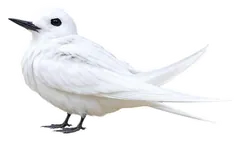 Atlantic White TernGygis alba
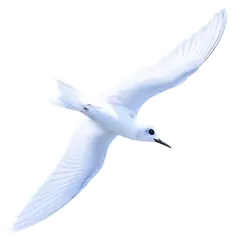 Little White TernGygis microrhyncha
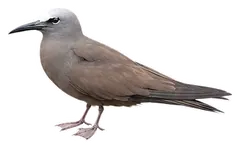 Brown NoddyAnous stolidus
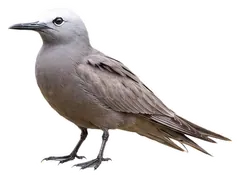 Lesser NoddyAnous tenuirostris
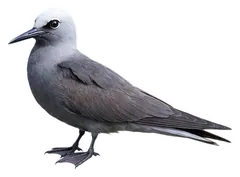 Black NoddyAnous minutus
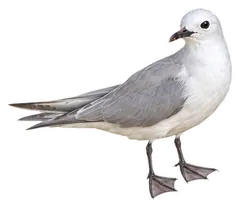 Grey NoddyAnous albivitta
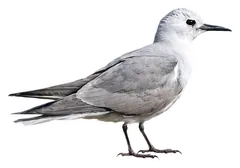 Blue NoddyAnous ceruleus
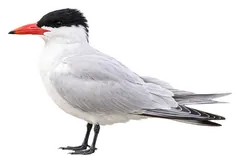
Download illustration
Free to use with credit: “Illustration: Bird Album (birdalbum.com)”. Drawn by AI from a reference photo by Mdf. ↗

Heard it but can't see it? Mingji identifies birds by sound and photo, on your phone.