 Bird Album
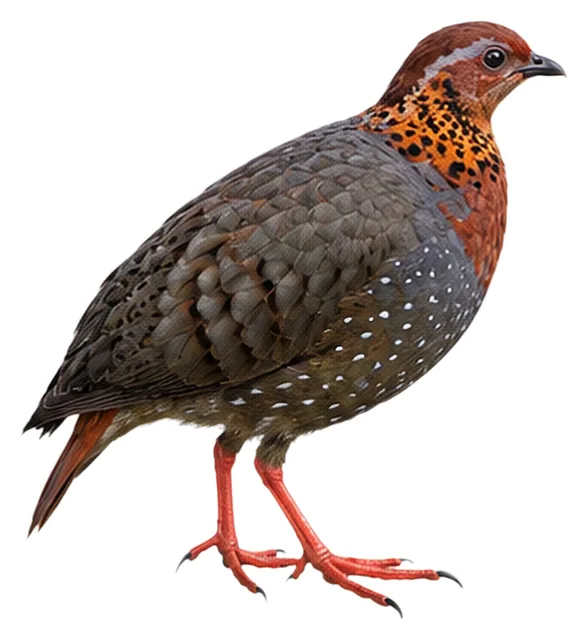
Chestnut-breasted Partridge
Arborophila mandellii Hume, 1874
≈26 cmLength268 gWeight
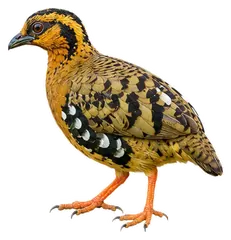
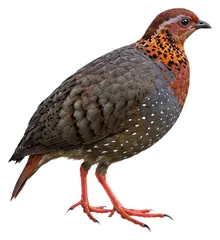
A gray belly lies below its chestnut breast-band.
Busiest months: April and November · Most records: Bhutan, China
How to identify
Field marks
- Breast-band chestnut
- Belly gray
- Throat with a band of white markings
Where and when it's recorded

Chestnut-breasted Partridge has been recorded at 16 of the 8,171 birding hotspots we track, in 2 countries and regions.
Records by month Northern Hemisphere
Where it's recorded most
- Yongkhola campBhutan52 records
- JainalaBhutan10 records
- Lingmethang Rd – Namling mid-elevation forestBhutan8 records
More places
- LingmethangBhutan7 records
- Tsamang RoadBhutan5 records
- Beibeng-Gelin RoadChina4 records
- ThrumsinglaBhutan3 records
- Tingtibi campBhutan3 records
- Tashi Gasel Lodge to Samdrup Jongkhar checkpointBhutan2 records
- Shonkhar Chu Valley, Limithang RoadBhutan2 records
Countries and regions with the most records
eBird records via GBIF up to 2024-12-31. A record means someone listed it; more records partly mean more birders, not more birds.
About
The chestnut-breasted partridge (Arborophila mandellii) is a partridge species endemic to the eastern Himalayas north of the Brahmaputra, and occurs in Bhutan, Darjeeling, Sikkim, Arunachal Pradesh and south-eastern Tibet at elevations from 350 to 2,500 m (1,150 to 8,200 ft). It is listed as near threatened on the IUCN Red List, as the estimated population comprises less than 10,000 individuals. It is threatened by forest degradation and by hunting.
Excerpt from Wikipedia, CC BY-SA 4.0 · authors · Read more on Wikipedia
Questions
How big is the Chestnut-breasted Partridge?
The Chestnut-breasted Partridge is about ≈26 cm long and weighs around 268 g.
Where does the Chestnut-breasted Partridge live?
Its breeding range: Oriental: northeastern India to southeastern Tibet. It is most often recorded in Bhutan and China.
When is the best time to see the Chestnut-breasted Partridge?
At the hotspots we track, it is recorded most in April and November (Northern Hemisphere).
Is the Chestnut-breasted Partridge endangered?
The IUCN Red List classifies the Chestnut-breasted Partridge as Near Threatened.
What does the Chestnut-breasted Partridge eat?
Main food: Omnivore.
What family is the Chestnut-breasted Partridge in?
It belongs to the family Pheasants & Allies (Phasianidae), order Galliformes.
At a glance
- Length
- ≈26 cm
- Weight
- 268 g
- Habitat
- Forest
- Diet
- Omnivore
- Lifestyle
- Active on the ground
- Migration
- Resident (barely migrates)
- Conservation
- Near Threatened
More measurements
- Wing
- 129 mm
- Tail
- 48 mm
- Bill
- 22 mm
- Tarsus
- 39 mm
Averages from the AVONET dataset; length from field guides where available.
Range
Oriental: northeastern India to southeastern Tibet
Breeding range, IOC World Bird List 15.2
Classification
- Order
- Galliformes
- Family
- Pheasants & Allies Phasianidae
- Genus
- Arborophila
Other birds in the genus Arborophila
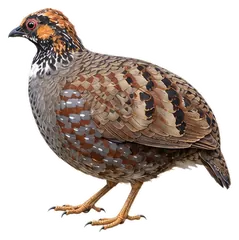 Hill PartridgeArborophila torqueola
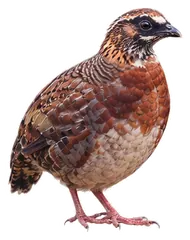 Sichuan PartridgeArborophila rufipectus
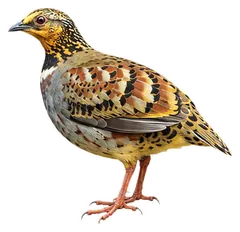 White-necklaced PartridgeArborophila gingica
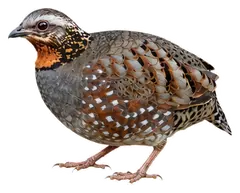 Rufous-throated PartridgeArborophila rufogularis
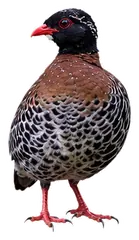 Red-billed PartridgeArborophila rubrirostris
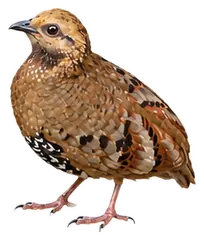 Chestnut-headed PartridgeArborophila cambodiana
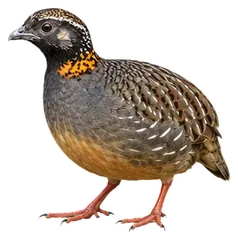 Hainan PartridgeArborophila ardens
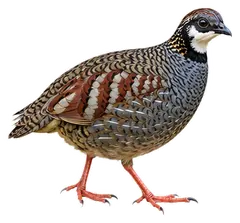 Taiwan PartridgeArborophila crudigularis
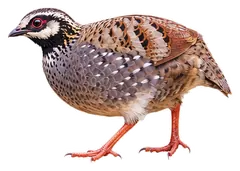 White-cheeked PartridgeArborophila atrogularis
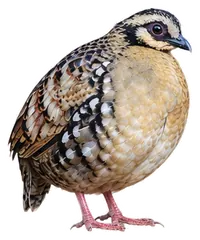 Bar-backed PartridgeArborophila brunneopectus
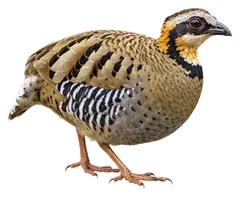 Orange-necked PartridgeArborophila davidi
 Red-breasted PartridgeArborophila hyperythra
Download illustration
Free to use with credit: “Illustration: Bird Album (birdalbum.com)”. Drawn by AI from a reference photo by patrick_aube. ↗
Heard it but can't see it? Mingji identifies birds by sound and photo, on your phone.
In other languages
- EnglishChestnut-breasted Partridge
- 简体中文红胸山鹧鸪
- 繁體中文紅胸山鷓鴣
- 日本語ムネアカミヤマテッケイ
- DeutschRotbrust-Buschwachtel
- FrançaisTorquéole de Mandelli
- EspañolArborófila pechirroja
- Portuguêsperdiz-de-peito-ferrugíneo
- ItalianoPernice pettocastano
- NederlandsRoodborstbospatrijs
- РусскийКрасногрудая лесная куропатка
- Svenskasikkimsånghöna
- DanskSikkimskovhøne
- Polskipstropiór rdzawoszyi