 Bird Album
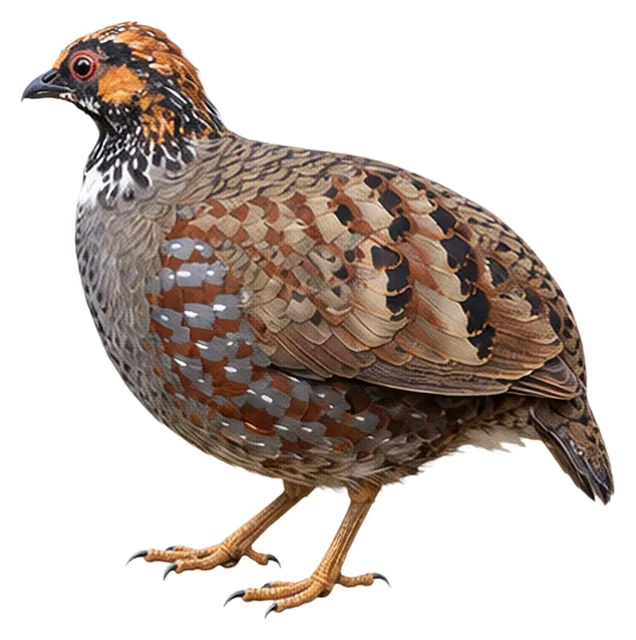
Hill Partridge
Arborophila torqueola (Valenciennes, 1825)
≈28 cmLength344 gWeight
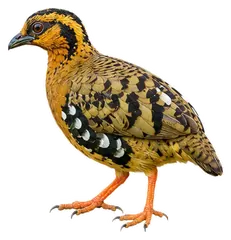
The male is richly patterned, with an orange crown and face contrasting with a black head and streaked throat.
Busiest months: April · Most records: Bhutan, India, Nepal
How to identify
Field marks
- Male has orange crown and face against a black head
- Male has streaks on the throat
- Male has gray breast and upper belly
Male, female and young
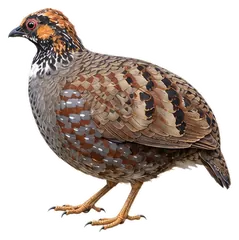
The female lacks the male's head pattern and gray breast and upper belly; the white flanks with ginger-brown streaks extend farther upward onto the belly.
Voice
Constant hen-like contact calls while foraging.
Where and when it's recorded
Busiest months: April · Most records: Bhutan, India, Nepal

Hill Partridge has been recorded at 91 of the 8,276 birding hotspots we track, in 5 countries and regions.
Records by month Northern Hemisphere
Where it's recorded most
- PangotIndia222 records
- Munsyari – Bheema WodeyarIndia200 records
- Mt. PhulchowkiNepal142 records
More places
- PelelaBhutan133 records
- Dochula – Royal Botanical ParkBhutan128 records
- Baihualing [General Area]China123 records
- SattalIndia103 records
- Mt. Phulchowki - Lowest Few Miles of RoadNepal94 records
- Dochula PassBhutan91 records
- ChelelaBhutan82 records
Countries and regions with the most records
eBird records via GBIF up to 2024-12-31. A record means someone listed it; more records partly mean more birders, not more birds.
About
The common hill partridge, necklaced hill partridge, or simply hill partridge (Arborophila torqueola) is a species of bird in the pheasant family found in Asia.
Excerpt from Wikipedia, CC BY-SA 4.0 · authors · Read more on Wikipedia
Questions
How big is the Hill Partridge?
The Hill Partridge is about ≈28 cm long and weighs around 344 g.
Where does the Hill Partridge live?
Its breeding range: Oriental: western Himalayas to northwestern Vietnam. It is most often recorded in Bhutan, India and Nepal.
When is the best time to see the Hill Partridge?
At the hotspots we track, it is recorded most in April (Northern Hemisphere).
Is the Hill Partridge endangered?
The IUCN Red List classifies the Hill Partridge as Least Concern.
What does the Hill Partridge eat?
Main food: Omnivore.
What family is the Hill Partridge in?
It belongs to the family Pheasants & Allies (Phasianidae), order Galliformes.
At a glance
- Length
- ≈28 cm
- Weight
- 344 g
- Habitat
- Forest
- Diet
- Omnivore
- Lifestyle
- Active on the ground
- Migration
- Resident (barely migrates)
- Conservation
- Least Concern
More measurements
- Wing
- 136 mm
- Tail
- 56 mm
- Bill
- 21 mm
- Tarsus
- 42 mm
Averages from the AVONET dataset; length from field guides where available.
Range
Oriental: western Himalayas to northwestern Vietnam
Breeding range, IOC World Bird List 15.2
Subspecies · 2
- Arborophila torqueola torqueola c, e Himalayas to n Myanmar and s China
- Arborophila torqueola batemani w, nw Myanmar and s China
Classification
- Order
- Galliformes
- Family
- Pheasants & Allies Phasianidae
- Genus
- Arborophila
Other birds in the genus Arborophila
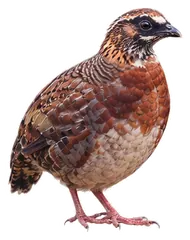 Sichuan PartridgeArborophila rufipectus
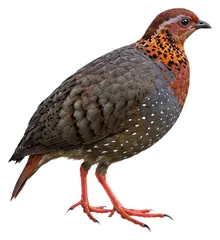 Chestnut-breasted PartridgeArborophila mandellii
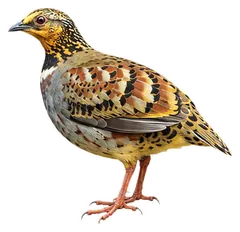 White-necklaced PartridgeArborophila gingica
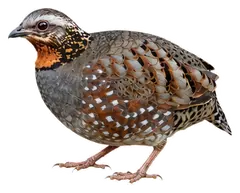 Rufous-throated PartridgeArborophila rufogularis
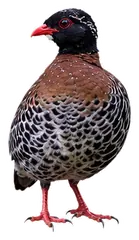 Red-billed PartridgeArborophila rubrirostris
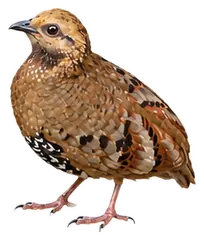 Chestnut-headed PartridgeArborophila cambodiana
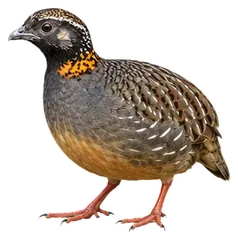 Hainan PartridgeArborophila ardens
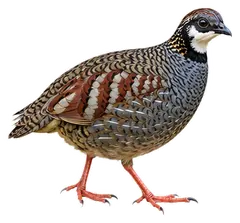 Taiwan PartridgeArborophila crudigularis
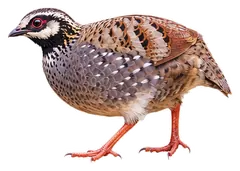 White-cheeked PartridgeArborophila atrogularis
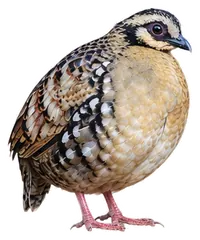 Bar-backed PartridgeArborophila brunneopectus
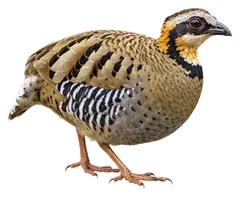 Orange-necked PartridgeArborophila davidi
 Red-breasted PartridgeArborophila hyperythra
Download illustration
Free to use with credit: “Illustration: Bird Album (birdalbum.com)”. Drawn by AI from a reference photo by Tisha Mukherjee. ↗

Heard it but can't see it? Mingji identifies birds by sound and photo, on your phone.
In other languages
- EnglishHill Partridge
- 简体中文环颈山鹧鸪
- 繁體中文環頸山鷓鴣
- 日本語チャガシラミヤマテッケイ
- DeutschHügelbuschwachtel
- FrançaisTorquéole à collier
- EspañolArborófila común
- Portuguêsperdiz-montês
- ItalianoPernice di collina
- NederlandsGewone Bospatrijs
- РусскийВоротничковая лесная куропатка
- Svenskabrunkronad sånghöna
- DanskHimalaya Skovhøne
- Polskipstropiór obrożny