 Bird Album
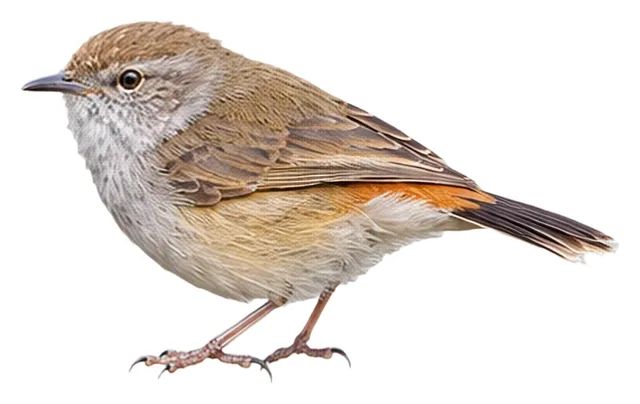
Chestnut-rumped Thornbill
Acanthiza uropygialis Gould, 1838
6.4 gWeight
The chestnut-rumped thornbill (Acanthiza uropygialis) is a small passerine bird in the family Acanthizidae, endemic to Australia.
Busiest months: September–October · Most records: Australia
Where and when it's recorded
Busiest months: September–October · Most records: Australia

Chestnut-rumped Thornbill has been recorded at 12 of the 8,276 birding hotspots we track, in 1 country or region.
Records by month Southern Hemisphere
Where it's recorded most
- Bowra Wildlife SanctuaryAustralia2,621 records
- Gluepot ReserveAustralia810 records
- Hattah-Kulkyne National ParkAustralia756 records
More places
- Terrick Terrick National ParkAustralia414 records
- Greater Bendigo National Park – KamarookaAustralia279 records
- Mount Korong Nature Conservation ReserveAustralia42 records
- Lake Cargelligo Wastewater Treatment PlantAustralia41 records
- Goschen Bushland ReserveAustralia39 records
- Alice Springs Sewage PondsAustralia8 records
- Mosquito Creek RdAustralia5 records
Countries and regions with the most records
eBird records via GBIF up to 2024-12-31. A record means someone listed it; more records partly mean more birders, not more birds.
About
The chestnut-rumped thornbill (Acanthiza uropygialis) is a small passerine bird in the family Acanthizidae, endemic to Australia.
Excerpt from Wikipedia, CC BY-SA 4.0 · authors · Read more on Wikipedia
Questions
How big is the Chestnut-rumped Thornbill?
The Chestnut-rumped Thornbill weighs around 6.4 g.
Where does the Chestnut-rumped Thornbill live?
Its breeding range: Australasia: inland western, southwestern Western Australia to southeastern Queensland and northern Victoria (west-central to south-central Australia). It is most often recorded in Australia.
When is the best time to see the Chestnut-rumped Thornbill?
At the hotspots we track, it is recorded most in September and October (Southern Hemisphere).
Is the Chestnut-rumped Thornbill endangered?
The IUCN Red List classifies the Chestnut-rumped Thornbill as Least Concern.
What does the Chestnut-rumped Thornbill eat?
Main food: Insects & other invertebrates.
What family is the Chestnut-rumped Thornbill in?
It belongs to the family Australasian Warblers (Acanthizidae), order Passerines (Passeriformes).
At a glance
- Weight
- 6.4 g
- Habitat
- Woodland
- Diet
- Insects & other invertebrates
- Lifestyle
- Perches in trees
- Migration
- Resident (barely migrates)
- Conservation
- Least Concern
More measurements
- Wing
- 52 mm
- Tail
- 38 mm
- Bill
- 10 mm
- Tarsus
- 18 mm
Averages from the AVONET dataset; length from field guides where available.
Range
Australasia: inland western, southwestern Western Australia to southeastern Queensland and northern Victoria (west-central to south-central Australia)
Breeding range, IOC World Bird List 15.2
Classification
- Order
- Passerines Passeriformes
- Family
- Australasian Warblers Acanthizidae
- Genus
- Acanthiza
Other birds in the genus Acanthiza
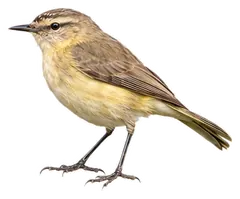 Yellow-rumped ThornbillAcanthiza chrysorrhoa
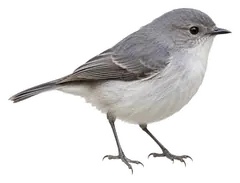 Grey ThornbillAcanthiza cinerea
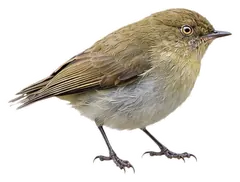 New Guinea ThornbillAcanthiza murina
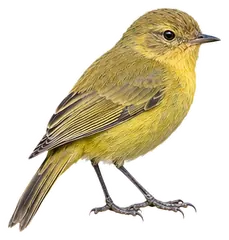 Yellow ThornbillAcanthiza nana
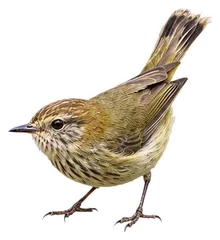 Striated ThornbillAcanthiza lineata
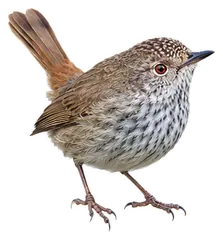 Inland ThornbillAcanthiza apicalis
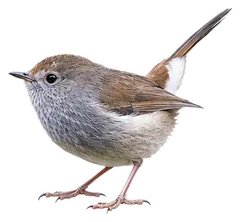 Tasmanian ThornbillAcanthiza ewingii
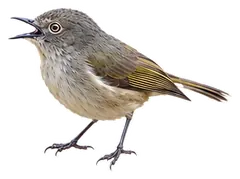 Mountain ThornbillAcanthiza katherina
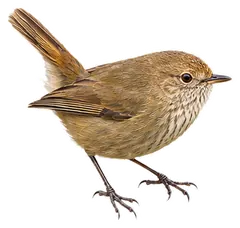 Brown ThornbillAcanthiza pusilla
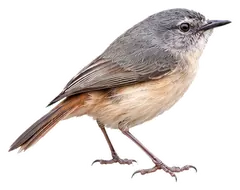 Slaty-backed ThornbillAcanthiza robustirostris
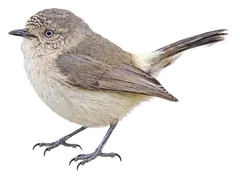 Slender-billed ThornbillAcanthiza iredalei
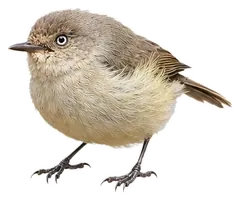 Western ThornbillAcanthiza inornata
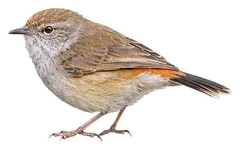
Download illustration
Free to use with credit: “Illustration: Bird Album (birdalbum.com)”. Drawn by AI from a reference photo by Anthony Katon. ↗
Heard it but can't see it? Mingji identifies birds by sound and photo, on your phone.
In other languages
- EnglishChestnut-rumped Thornbill
- 简体中文栗尾刺嘴莺
- 繁體中文栗腰刺嘴鶯
- 日本語コシアカトゲハシムシクイ
- DeutschBraunbürzel-Dornschnabel
- FrançaisAcanthize à croupion roux
- EspañolAcantiza culirroja
- Portuguêsacantiza-de-rabadilha-encarnada
- ItalianoBeccospino groppacastana
- NederlandsRoodstaartdoornsnavel
- РусскийРыжепоясничная шипоклювка
- Svenskarödgumpad taggnäbb
- DanskRødgumpet Mejsesanger
- Polskibuszówka rudorzytna