 Bird Album
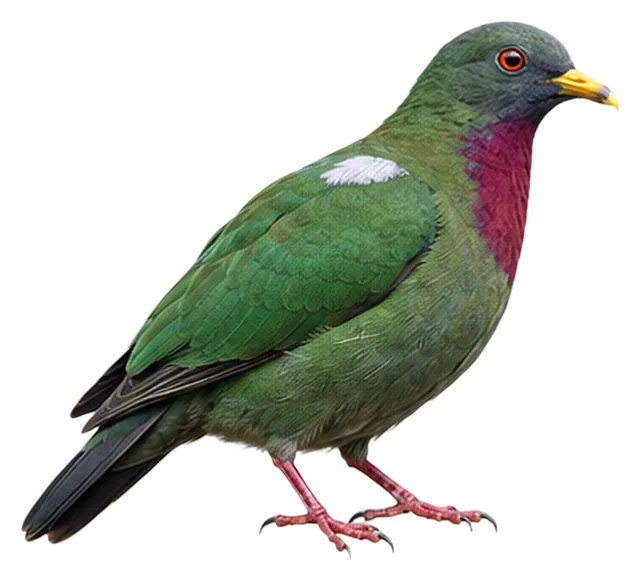
Claret-breasted Fruit Dove
Ptilinopus viridis (Linnaeus, 1766)
20–21 cmLength121 gWeight
The claret-breasted fruit dove (Ptilinopus viridis) is a species of bird in the family Columbidae.
Busiest months: April and September · Most records: Indonesia, Solomon Islands
Where and when it's recorded
Busiest months: April and September · Most records: Indonesia, Solomon Islands

Claret-breasted Fruit Dove has been recorded at 16 of the 8,276 birding hotspots we track, in 2 countries and regions.
Records by month Southern Hemisphere
Where it's recorded most
- West Waigeo birding roadIndonesia105 records
- Queen Elizabeth National Park – Mt. AustinSolomon Islands95 records
- Tetepare Nature PreserveSolomon Islands88 records
More places
- West Waigeo forest - Red and Wilson's BOP sites areaIndonesia59 records
- Airport BayIndonesia57 records
- Sawai Village RoadIndonesia25 records
- ImburanuSolomon Islands17 records
- Tirotonga Village AreaSolomon Islands14 records
- Kolombangara IslandSolomon Islands12 records
- MalagufukIndonesia12 records
Countries and regions with the most records
eBird records via GBIF up to 2024-12-31. A record means someone listed it; more records partly mean more birders, not more birds.
About
The claret-breasted fruit dove (Ptilinopus viridis) is a species of bird in the family Columbidae. It is found in the Moluccas, New Guinea and the Solomon Islands archipelago. Its natural habitat is subtropical or tropical moist lowland forests.
Excerpt from Wikipedia, CC BY-SA 4.0 · authors · Read more on Wikipedia
Questions
How big is the Claret-breasted Fruit Dove?
The Claret-breasted Fruit Dove is about 20–21 cm long and weighs around 121 g.
Where does the Claret-breasted Fruit Dove live?
Its breeding range: Australasia: central Moluccas, Bird's Head and Neck (northwestern New Guinea), northern coastal New Guinea and satellites and Solomon Islands. It is most often recorded in Indonesia and Solomon Islands.
When is the best time to see the Claret-breasted Fruit Dove?
At the hotspots we track, it is recorded most in April and September (Southern Hemisphere).
Is the Claret-breasted Fruit Dove endangered?
The IUCN Red List classifies the Claret-breasted Fruit Dove as Least Concern.
What does the Claret-breasted Fruit Dove eat?
Main food: Fruit.
What family is the Claret-breasted Fruit Dove in?
It belongs to the family Pigeons, Doves (Columbidae), order Columbiformes.
At a glance
- Length
- 20–21 cm
- Weight
- 121 g
- Habitat
- Forest
- Diet
- Fruit
- Lifestyle
- Perches in trees
- Migration
- Resident (barely migrates)
- Conservation
- Least Concern
More measurements
- Wing
- 112 mm
- Tail
- 57 mm
- Bill
- 18 mm
- Tarsus
- 21 mm
Averages from the AVONET dataset; length from field guides where available.
Range
Australasia: central Moluccas, Bird's Head and Neck (northwestern New Guinea), northern coastal New Guinea and satellites and Solomon Islands
Breeding range, IOC World Bird List 15.2
Classification
- Order
- Columbiformes
- Family
- Pigeons, Doves Columbidae
- Genus
- Ptilinopus
Other birds in the genus Ptilinopus
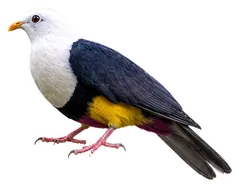 Banded Fruit DovePtilinopus cinctus
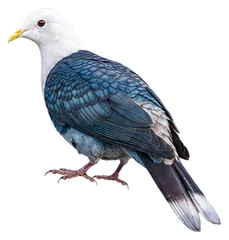 Black-banded Fruit DovePtilinopus alligator
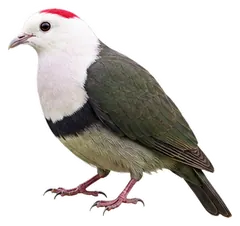 Red-naped Fruit DovePtilinopus dohertyi
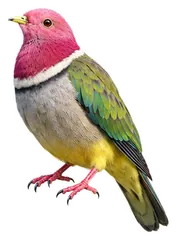 Pink-headed Fruit DovePtilinopus porphyreus
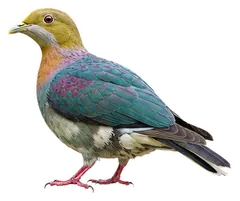 Pink-spotted Fruit DovePtilinopus perlatus
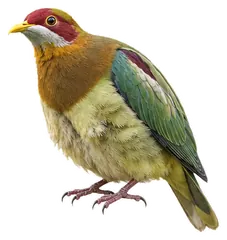 Ornate Fruit DovePtilinopus ornatus
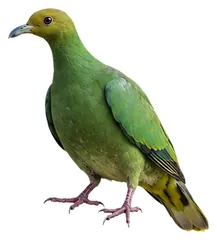 Tanna Fruit DovePtilinopus tannensis
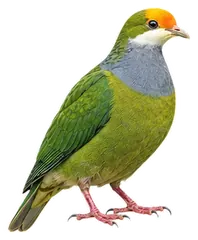 Orange-fronted Fruit DovePtilinopus aurantiifrons
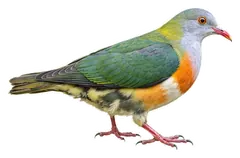 Wallace's Fruit DovePtilinopus wallacii
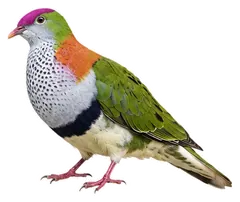 Superb Fruit DovePtilinopus superbus
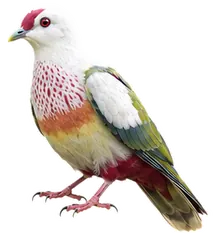 Many-colored Fruit DovePtilinopus perousii
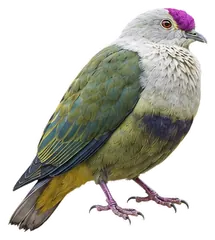 Crimson-crowned Fruit DovePtilinopus porphyraceus
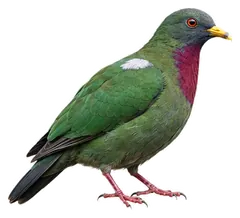
Download illustration
Free to use with credit: “Illustration: Bird Album (birdalbum.com)”. Drawn by AI from a reference photo by Rand Rudland. ↗
Heard it but can't see it? Mingji identifies birds by sound and photo, on your phone.
In other languages
- EnglishClaret-breasted Fruit Dove
- 简体中文紫红胸果鸠
- 繁體中文紅胸果鳩
- 日本語ムネアカヒメアオバト
- DeutschRotlatz-Fruchttaube
- FrançaisPtilope turvert
- EspañolTilopo pechirrojo
- Portuguêspombo-frugívoro-de-peito-vermelho
- ItalianoTortora beccafrutta pettorosso
- NederlandsRoodbefjufferduif
- РусскийКрасногрудый фруктовый голубь
- Svenskarödstrupig fruktduva
- DanskRødbrystet Frugtdue
- Polskiowocożer czerwonopierśny