 Bird Album
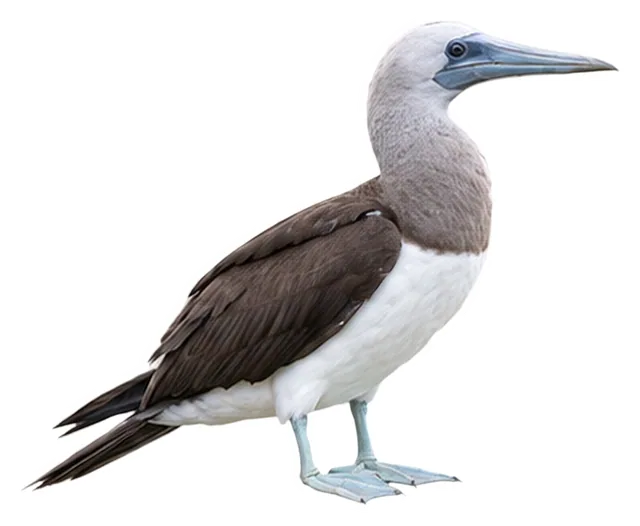
Cocos Booby
Sula brewsteri Goss, 1888
The Cocos booby (Sula brewsteri), formerly known as Brewster's booby, is a species of booby in the family Sulidae.
Busiest months: October–November · Most records: United States, Costa Rica, Mexico
Where and when it's recorded

Cocos Booby has been recorded at 51 of the 8,171 birding hotspots we track, in 9 countries and regions.
Records by month Northern Hemisphere
Where it's recorded most
- Southeast Farallon IslandUnited States6,257 records
- PN Manuel AntonioCosta Rica650 records
- PN Corcovado – Sector SirenaCosta Rica501 records
More places
- Pt. Pinos – seawatch onlyUnited States304 records
- Pt. PinosUnited States89 records
- Boca de TomatesMexico66 records
- Pillar Point HarborUnited States65 records
- Laguna San PanchoMexico62 records
- Playa YelapaMexico51 records
- Midway Atoll NWR – Eastern IslandU.S. Outlying Islands37 records
Countries and regions with the most records
eBird records via GBIF up to 2024-12-31. A record means someone listed it; more records partly mean more birders, not more birds.
About
The Cocos booby (Sula brewsteri), formerly known as Brewster's booby, is a species of booby in the family Sulidae. It was formerly considered a subspecies of brown booby, but it was split by the American Ornithological Society in 2024 due to morphological and behavioural differences. It is native to the east and central Pacific Ocean.
Excerpt from Wikipedia, CC BY-SA 4.0 · authors · Read more on Wikipedia
Questions
Where does the Cocos Booby live?
Its breeding range: North America, Middle America, South America: islands off southern California (Channel Islands), western Mexico: from central Baja California and Gulf of California (northwestern Mexico) to Revillagigedo Islands (far west of central Mexico) and Clipperton (far southwest of Mexico): Pacific coasts of Central America and Colombia: Gulf of Fonseca islands (Honduras) to Gorgona Island (just west of southwestern Colombia). It is most often recorded in United States, Costa Rica and Mexico.
When is the best time to see the Cocos Booby?
At the hotspots we track, it is recorded most in October and November (Northern Hemisphere).
What family is the Cocos Booby in?
It belongs to the family Gannets, Boobies (Sulidae), order Suliformes.
Range
North America, Middle America, South America: islands off southern California (Channel Islands), western Mexico: from central Baja California and Gulf of California (northwestern Mexico) to Revillagigedo Islands (far west of central Mexico) and Clipperton (far southwest of Mexico): Pacific coasts of Central America and Colombia: Gulf of Fonseca islands (Honduras) to Gorgona Island (just west of southwestern Colombia)
Breeding range, IOC World Bird List 15.2
Classification
- Order
- Suliformes
- Family
- Gannets, Boobies Sulidae
- Genus
- Sula
Other birds in the genus Sula
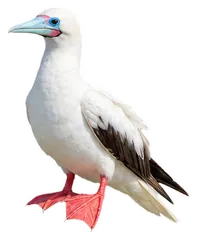 Red-footed BoobySula sula
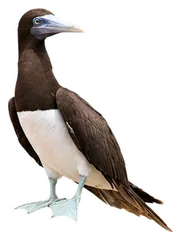 Brown BoobySula leucogaster
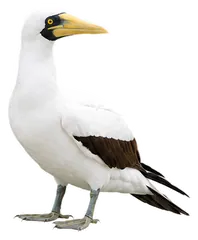 Masked BoobySula dactylatra
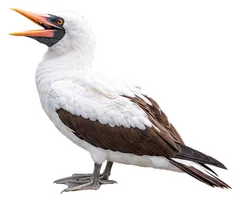 Nazca BoobySula granti
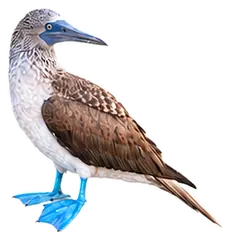 Blue-footed BoobySula nebouxii
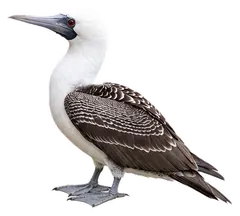 Peruvian BoobySula variegata
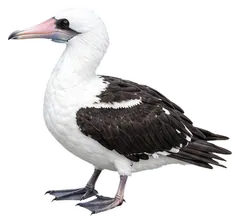 Abbott's BoobyPapasula abbotti
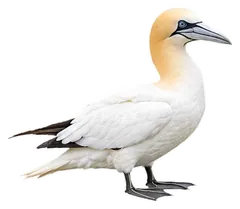 Northern GannetMorus bassanus
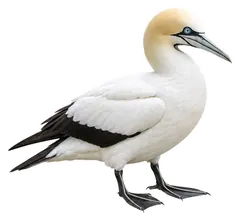 Cape GannetMorus capensis
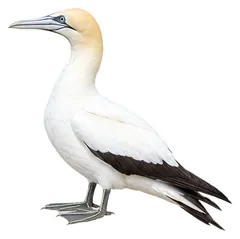 Australasian GannetMorus serrator
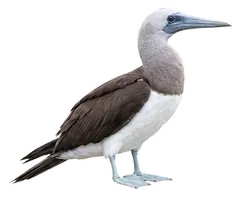
Download illustration
Free to use with credit: “Illustration: Bird Album (birdalbum.com)”. Drawn by AI from a reference photo by Ryan Rash. ↗
Heard it but can't see it? Mingji identifies birds by sound and photo, on your phone.