 Bird Album
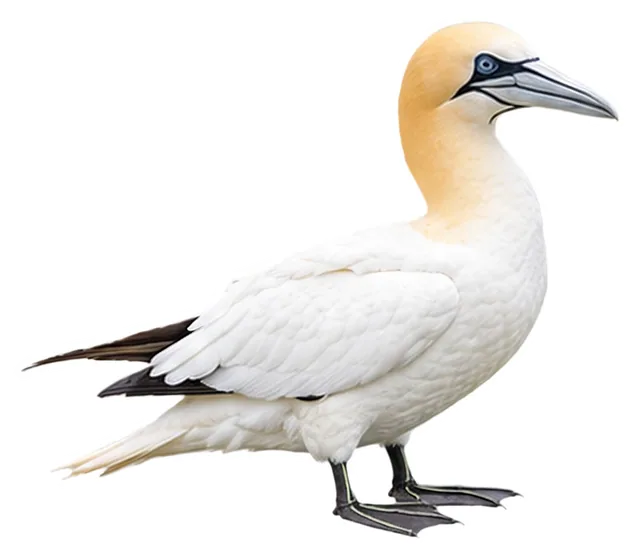
Northern Gannet
Morus bassanus (Linnaeus, 1758)
3 kgWeight
The northern gannet (Morus bassanus) is a seabird, the largest species of the gannet family, Sulidae.
Busiest months: October · Most records: United States, United Kingdom, Canada
Where and when it's recorded
Busiest months: October · Most records: United States, United Kingdom, Canada

Northern Gannet has been recorded at 562 of the 8,276 birding hotspots we track, in 44 countries and regions.
Records by month Northern Hemisphere
Where it's recorded most
- Southeast Farallon IslandUnited States5,878 records
- Cape Island – CMP – Coral Ave. dune crossingUnited States5,437 records
- PN Sintra-Cascais – Cabo RasoPortugal4,720 records
More places
- Sandy HookUnited States4,550 records
- Ocean City InletUnited States4,519 records
- Parker River NWRUnited States4,344 records
- Bempton Cliffs RSPB ReserveUnited Kingdom3,970 records
- Quai, Pointe-au-PèreCanada3,701 records
- PN Sudoeste Alentejano e Costa Vicentina – Cabo de São VicentePortugal3,574 records
- Monhegan IslandUnited States3,427 records
Countries and regions with the most records
eBird records via GBIF up to 2024-12-31. A record means someone listed it; more records partly mean more birders, not more birds.
About
The northern gannet (Morus bassanus) is a seabird, the largest species of the gannet family, Sulidae. It is native to the coasts of the North Atlantic Ocean, breeding in Western Europe and Northeastern North America. It is the largest seabird in the northern Atlantic.
Excerpt from Wikipedia, CC BY-SA 4.0 · authors · Read more on Wikipedia
Questions
How big is the Northern Gannet?
The Northern Gannet weighs around 3 kg.
Where does the Northern Gannet live?
Its breeding range: Atlantic Ocean: islands off subarctic, northern temperate coasts of North Atlantic Ocean: Iceland, Faroe Islands, British Isles, northwestern France and northern Norway (eastern North Atlantic); Gulf of St. Lawrence and Atlantic coast of Newfoundland (southeastern Canada, western North Atlantic). It is most often recorded in United States, United Kingdom and Canada.
When is the best time to see the Northern Gannet?
At the hotspots we track, it is recorded most in October (Northern Hemisphere).
Is the Northern Gannet endangered?
The IUCN Red List classifies the Northern Gannet as Least Concern.
What does the Northern Gannet eat?
Main food: Fish, shrimp & shellfish.
What family is the Northern Gannet in?
It belongs to the family Gannets, Boobies (Sulidae), order Suliformes.
At a glance
- Weight
- 3 kg
- Habitat
- Ocean
- Diet
- Fish, shrimp & shellfish
- Lifestyle
- Feeds in the air
- Migration
- Partial migrant
- Conservation
- Least Concern
More measurements
- Wing
- 486 mm
- Tail
- 206 mm
- Bill
- 99 mm
- Tarsus
- 60 mm
Averages from the AVONET dataset; length from field guides where available.
Range
Atlantic Ocean: islands off subarctic, northern temperate coasts of North Atlantic Ocean: Iceland, Faroe Islands, British Isles, northwestern France and northern Norway (eastern North Atlantic); Gulf of St. Lawrence and Atlantic coast of Newfoundland (southeastern Canada, western North Atlantic)
Breeding range, IOC World Bird List 15.2
Classification
- Order
- Suliformes
- Family
- Gannets, Boobies Sulidae
- Genus
- Morus
Other birds in the genus Morus
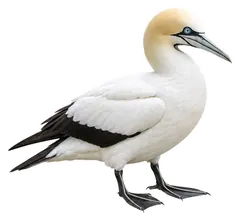 Cape GannetMorus capensis
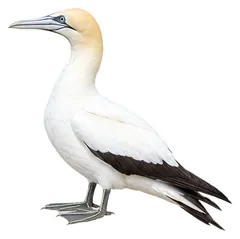 Australasian GannetMorus serrator
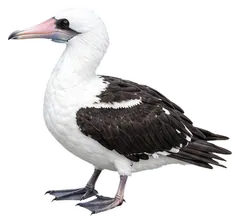 Abbott's BoobyPapasula abbotti
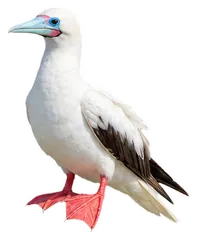 Red-footed BoobySula sula
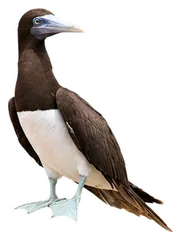 Brown BoobySula leucogaster
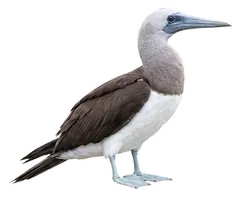 Cocos BoobySula brewsteri
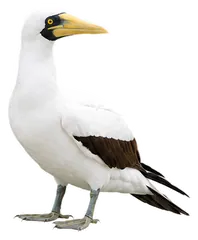 Masked BoobySula dactylatra
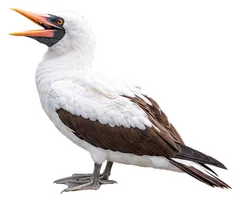 Nazca BoobySula granti
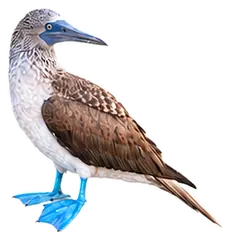 Blue-footed BoobySula nebouxii
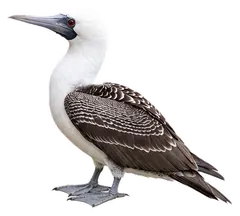 Peruvian BoobySula variegata
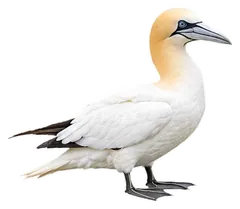
Download illustration
Free to use with credit: “Illustration: Bird Album (birdalbum.com)”. Drawn by AI from a reference photo by Pétur Gauti Valgeirsson. ↗
Heard it but can't see it? Mingji identifies birds by sound and photo, on your phone.