 Bird Album
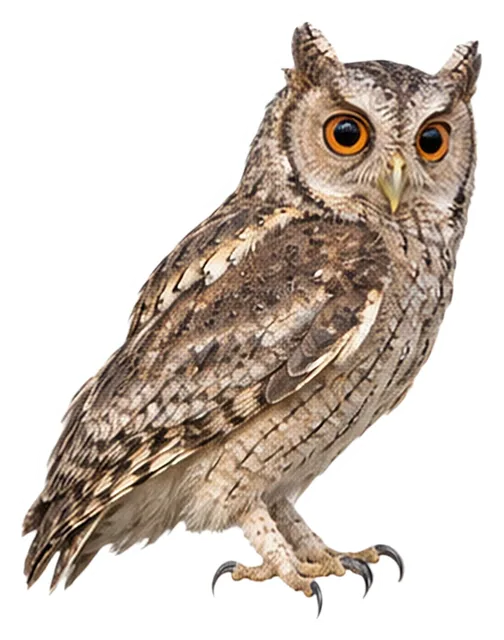
Collared Scops Owl
Otus lettia (Hodgson, 1836)
23 cmLength139 gWeight
This small nocturnal owl has small ear tufts, a pale facial disc and a pale yellow collar.
Busiest months: January–February · Most records: China, Thailand, Singapore
How to identify
Field marks
- Small ear tufts on the head
- Facial disc white or pale yellow, eyes orange or rufous
- Upperparts gray or sandy-brown, underparts pale yellow with fine markings
- A single pale yellowish-brown collar around the neck
Male, female and young
No obvious differences in appearance between the sexes.
Voice
A quiet “goog gook”.
Where and when it's recorded
Busiest months: January–February · Most records: China, Thailand, Singapore

Collared Scops Owl has been recorded at 556 of the 8,276 birding hotspots we track, in 12 countries and regions.
Records by month Northern Hemisphere
Where it's recorded most
- Taipei – National Taiwan University Main CampusTaiwan (China)1,228 records
- Sangla and AreaNepal615 records
- Kaeng Krachan NP – Baan Maka Nature LodgeThailand584 records
More places
- Pingtung – Pingtung University of Science and TechnologyTaiwan (China)313 records
- Pasir Ris ParkSingapore297 records
- TmatboeyCambodia257 records
- Taipei – Taipei Botanical GardenTaiwan (China)255 records
- Kaeng Krachan NPThailand205 records
- Rot Fai ParkThailand200 records
- MacRitchie Reservoir ParkSingapore188 records
Countries and regions with the most records
eBird records via GBIF up to 2024-12-31. A record means someone listed it; more records partly mean more birders, not more birds.
About
The collared scops owl (Otus lettia) is an owl which is a resident breeder in south Asia from northern Pakistan, northern India, Nepal, Bangladesh, the Himalayas east to southern China, and Taiwan (China). It is partially migratory, with some birds wintering in India, Sri Lanka and Malaysia. This species was formerly considered to be included within what is now separated as the Indian scops owl (O. bakkamoena).
Excerpt from Wikipedia, CC BY-SA 4.0 · authors · Read more on Wikipedia
Questions
How big is the Collared Scops Owl?
The Collared Scops Owl is about 23 cm long and weighs around 139 g.
Where does the Collared Scops Owl live?
Its breeding range: Oriental: western Himalayas through Thai-Malay Peninsula, southern China, northern Indochina and Taiwan (China). It is most often recorded in China, Thailand and Singapore.
When is the best time to see the Collared Scops Owl?
At the hotspots we track, it is recorded most in January and February (Northern Hemisphere).
Is the Collared Scops Owl endangered?
The IUCN Red List classifies the Collared Scops Owl as Least Concern.
What does the Collared Scops Owl eat?
Main food: Insects & other invertebrates.
What family is the Collared Scops Owl in?
It belongs to the family Owls (Strigidae), order Strigiformes.
At a glance
- Length
- 23 cm
- Weight
- 139 g
- Habitat
- Forest
- Diet
- Insects & other invertebrates
- Lifestyle
- Perches in trees
- Migration
- Resident (barely migrates)
- Conservation
- Least Concern
More measurements
- Wing
- 156 mm
- Tail
- 81 mm
- Bill
- 21 mm
- Tarsus
- 34 mm
Averages from the AVONET dataset; length from field guides where available.
Range
Oriental: western Himalayas through Thai-Malay Peninsula, southern China, northern Indochina and Taiwan (China)
Breeding range, IOC World Bird List 15.2
Subspecies · 3
- Otus lettia erythrocampe se China and nw Vietnam
- Otus lettia glabripes Taiwan (China)
- Otus lettia umbratilis Hainan I. (off se China)
Classification
- Order
- Strigiformes
- Family
- Owls Strigidae
- Genus
- Otus
Other birds in the genus Otus
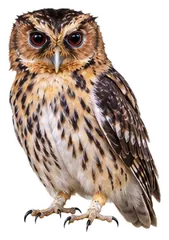 Giant Scops OwlOtus gurneyi
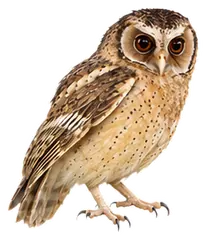 White-fronted Scops OwlOtus sagittatus
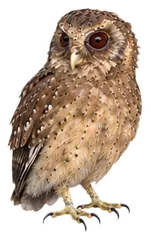 Reddish Scops OwlOtus rufescens
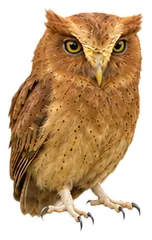 Serendib Scops OwlOtus thilohoffmanni
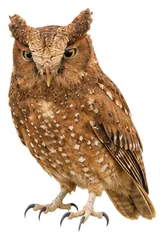 Sandy Scops OwlOtus icterorhynchus
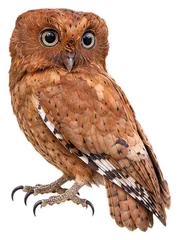 Sokoke Scops OwlOtus ireneae
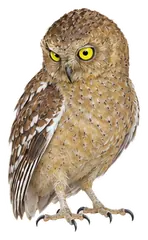 Andaman Scops OwlOtus balli
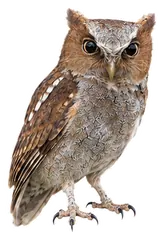 Flores Scops OwlOtus alfredi
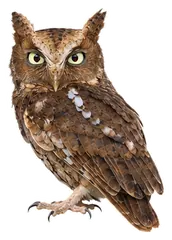 Mountain Scops OwlOtus spilocephalus
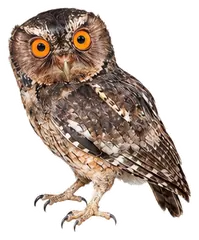 Javan Scops OwlOtus angelinae
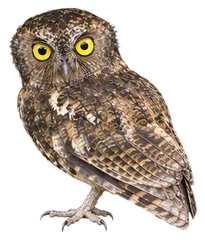 Mindanao Scops OwlOtus mirus
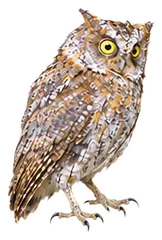 Luzon Scops OwlOtus longicornis
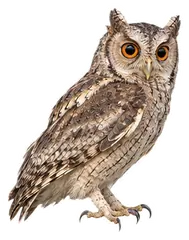
Download illustration
Free to use with credit: “Illustration: Bird Album (birdalbum.com)”. Drawn by AI from a reference photo by JJ Harrison. ↗

Heard it but can't see it? Mingji identifies birds by sound and photo, on your phone.
In other languages
- EnglishCollared Scops Owl
- 简体中文领角鸮
- 繁體中文領角鴞
- 日本語チャメオオコノハズク
- DeutschHalsband-Zwergohreule
- FrançaisPetit-duc à collier
- EspañolAutillo chino
- Portuguêsmocho-de-orelhas-de-colar
- ItalianoAssiolo dal collare
- NederlandsGekraagde Dwergooruil
- РусскийОжереловая совка
- Svenskakinesisk dvärguv
- DanskBagindisk Dværghornugle
- Polskisyczek jasnolicy