 Bird Album
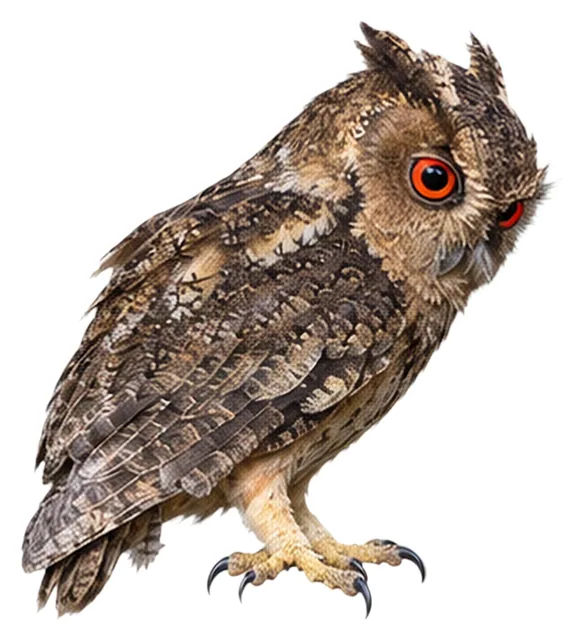
Japanese Scops Owl
Otus semitorques Temminck & Schlegel, 1845
≈28 cmLength60–66 cmWingspan122 gWeight
Its gray-brown feathers resemble bark, and prominent ear tufts stand upright on its head.
Busiest months: April–May · Most records: China, Japan, South Korea
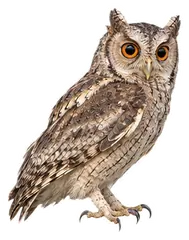
Looks like Collared Scops Owl
How to identify
Field marks
- Ear tufts well developed, facial disc poorly defined
- Collar patch on the nape
- Back gray-brown, belly grayish-white with mixed markings
Voice
The male gives repeated low “whook” calls at varying intervals.
Similar species
Where and when it's recorded

Japanese Scops Owl has been recorded at 32 of the 8,171 birding hotspots we track, in 3 countries and regions.
Records by month Northern Hemisphere
Where it's recorded most
- Niigata – Nishikaigan ParkJapan44 records
- Xiaolongmen National Forest ParkChina20 records
- Tangjiahe NNRChina11 records
More places
- Nanhui DongtanChina11 records
- Seoul – ChanggyeonggungSouth Korea8 records
- Amami – Tatsugo – Amami Nature ForestJapan7 records
- Dongzhai NNRChina6 records
- Urqihan [General Area]China5 records
- Temple of HeavenChina5 records
- Wajima – Hegurajima (island)Japan4 records
Countries and regions with the most records
eBird records via GBIF up to 2024-12-31. A record means someone listed it; more records partly mean more birders, not more birds.
About
The Japanese scops-owl (Otus semitorques) is a small owl species in the family Strigidae, or true owl family. It is a member of the genus Otus, the scops owl genus. It is resident to Japan, China, Korea, and Russia.
Excerpt from Wikipedia, CC BY-SA 4.0 · authors · Read more on Wikipedia
Questions
How big is the Japanese Scops Owl?
The Japanese Scops Owl is about ≈28 cm long, with a wingspan of 60–66 cm and weighs around 122 g.
Where does the Japanese Scops Owl live?
Its breeding range: Palearctic: northeastern China, Korean Peninsula, Ussuriland, Japan and Ryukyu Islands. It is most often recorded in China, Japan and South Korea.
When is the best time to see the Japanese Scops Owl?
At the hotspots we track, it is recorded most in April and May (Northern Hemisphere).
Is the Japanese Scops Owl endangered?
The IUCN Red List classifies the Japanese Scops Owl as Least Concern.
What does the Japanese Scops Owl eat?
Main food: Insects & other invertebrates.
What family is the Japanese Scops Owl in?
It belongs to the family Owls (Strigidae), order Strigiformes.
At a glance
- Length
- ≈28 cm
- Wingspan
- 60–66 cm
- Weight
- 122 g
- Habitat
- Forest
- Diet
- Insects & other invertebrates
- Lifestyle
- Perches in trees
- Migration
- Partial migrant
- Conservation
- Least Concern
More measurements
- Wing
- 178 mm
- Tail
- 90 mm
- Bill
- 22 mm
- Tarsus
- 37 mm
Averages from the AVONET dataset; length from field guides where available.
Range
Palearctic: northeastern China, Korean Peninsula, Ussuriland, Japan and Ryukyu Islands
Breeding range, IOC World Bird List 15.2
Subspecies · 1
- Otus semitorques ussuriensis ne China, se Siberia and Korean Pen.
Classification
- Order
- Strigiformes
- Family
- Owls Strigidae
- Genus
- Otus
Other birds in the genus Otus
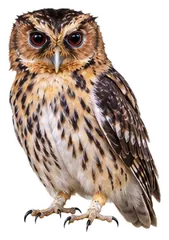 Giant Scops OwlOtus gurneyi
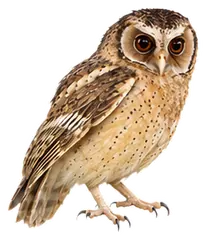 White-fronted Scops OwlOtus sagittatus
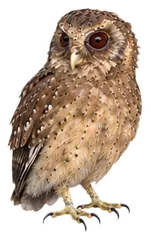 Reddish Scops OwlOtus rufescens
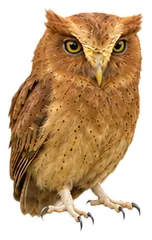 Serendib Scops OwlOtus thilohoffmanni
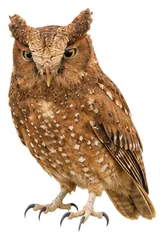 Sandy Scops OwlOtus icterorhynchus
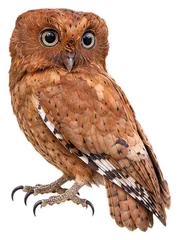 Sokoke Scops OwlOtus ireneae
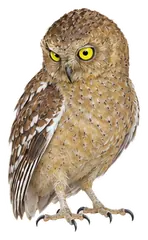 Andaman Scops OwlOtus balli
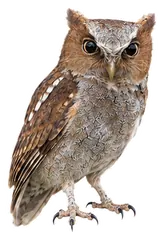 Flores Scops OwlOtus alfredi
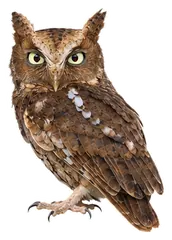 Mountain Scops OwlOtus spilocephalus
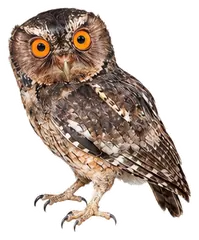 Javan Scops OwlOtus angelinae
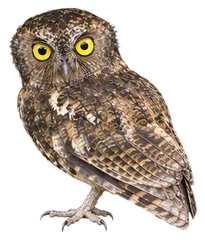 Mindanao Scops OwlOtus mirus
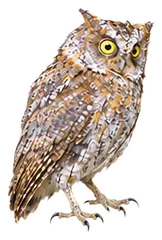 Luzon Scops OwlOtus longicornis
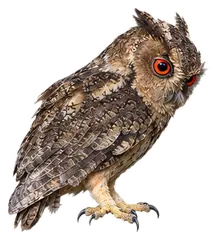
Download illustration
Free to use with credit: “Illustration: Bird Album (birdalbum.com)”. Drawn by AI from a reference photo by Hiroki Shudo. ↗
Heard it but can't see it? Mingji identifies birds by sound and photo, on your phone.
In other languages
- EnglishJapanese Scops Owl
- 简体中文北领角鸮
- 繁體中文日本角鴞
- 日本語オオコノハズク
- 한국어큰소쩍새
- DeutschJapan-Zwergohreule
- FrançaisPetit-duc du Japon
- EspañolAutillo japonés
- Portuguêsmocho-de-orelhas-japonês
- ItalianoAssiolo del Giappone
- NederlandsJapanse Dwergooruil
- РусскийОшейниковая совка
- Svenskajapansk dvärguv
- DanskJapansk Dværghornugle
- Polskisyczek półobrożny