 Bird Album
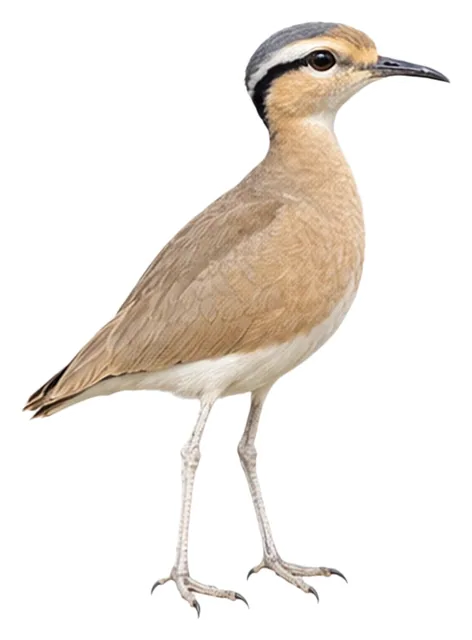
Cream-colored Courser
Cursorius cursor (Latham, 1787)
138 gWeight
The cream-coloured courser (Cursorius cursor) is a species of wader in the pratincole and courser family, Glareolidae.
Busiest months: March · Most records: Morocco, Kuwait, United Arab Emirates
Where and when it's recorded

Cream-colored Courser has been recorded at 89 of the 8,171 birding hotspots we track, in 27 countries and regions.
Records by month Northern Hemisphere
Where it's recorded most
- Tagdilt TrackMorocco214 records
- Al Jahra Reserve (Restricted access)Kuwait173 records
- Vallée des Oiseaux (Tagdilt Track) – ancienne pisteMorocco115 records
More places
- Décharge de BoumalneMorocco90 records
- Dubai Pivot FieldsUnited Arab Emirates83 records
- PN Sous-Massa – Estuaire de l'Oued MassaMorocco72 records
- Wamm FarmsUnited Arab Emirates70 records
- Erg Chebbi – nordMorocco65 records
- Jahra East Outfall ( al Jodailyat)Kuwait50 records
- Southern Wadi of Ras Shukeir SaltmarshesEgypt47 records
Countries and regions with the most records
eBird records via GBIF up to 2024-12-31. A record means someone listed it; more records partly mean more birders, not more birds.
About
The cream-coloured courser (Cursorius cursor) is a species of wader in the pratincole and courser family, Glareolidae. Both parts of the scientific name derive from Latin cursor, "runner", from currere, "to run" which describes their usual habit as they hunt their insect prey on the ground in dry open semi-desert regions of the Middle East and northern Africa.
Excerpt from Wikipedia, CC BY-SA 4.0 · authors · Read more on Wikipedia
Questions
How big is the Cream-colored Courser?
The Cream-colored Courser weighs around 138 g.
Where does the Cream-colored Courser live?
Its breeding range: Palearctic, Africa: subtropical to tropical desert of western Paleotropics: eastern Canary and Cape Verde islands (central, southern Macaronesia, west of western Africa), northwestern Africa, Middle East from southeastern Turkey to Socotra, Iran and western Turkmenistan to far northwestern India. It is most often recorded in Morocco, Kuwait and United Arab Emirates.
When is the best time to see the Cream-colored Courser?
At the hotspots we track, it is recorded most in March (Northern Hemisphere).
Is the Cream-colored Courser endangered?
The IUCN Red List classifies the Cream-colored Courser as Least Concern.
What does the Cream-colored Courser eat?
Main food: Insects & other invertebrates.
What family is the Cream-colored Courser in?
It belongs to the family Coursers, Pratincoles (Glareolidae), order Charadriiformes.
At a glance
- Weight
- 138 g
- Habitat
- Desert
- Diet
- Insects & other invertebrates
- Lifestyle
- Active on the ground
- Migration
- Partial migrant
- Conservation
- Least Concern
More measurements
- Wing
- 152 mm
- Tail
- 57 mm
- Bill
- 27 mm
- Tarsus
- 51 mm
Averages from the AVONET dataset; length from field guides where available.
Range
Palearctic, Africa: subtropical to tropical desert of western Paleotropics: eastern Canary and Cape Verde islands (central, southern Macaronesia, west of western Africa), northwestern Africa, Middle East from southeastern Turkey to Socotra, Iran and western Turkmenistan to far northwestern India
Breeding range, IOC World Bird List 15.2
Classification
- Order
- Charadriiformes
- Family
- Coursers, Pratincoles Glareolidae
- Genus
- Cursorius
Other birds in the genus Cursorius
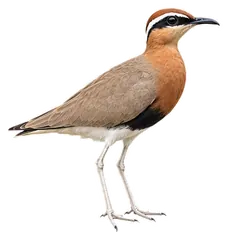 Indian CourserCursorius coromandelicus
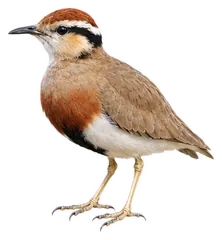 Temminck's CourserCursorius temminckii
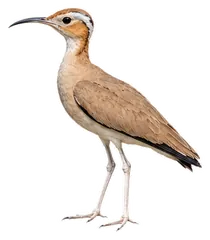 Burchell's CourserCursorius rufus
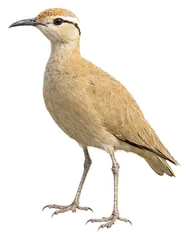 Somali CourserCursorius somalensis
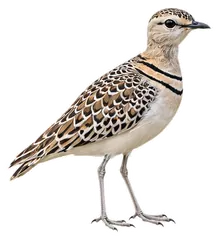 Double-banded CourserSmutsornis africanus
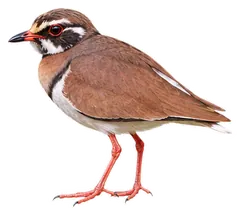 Bronze-winged CourserRhinoptilus chalcopterus
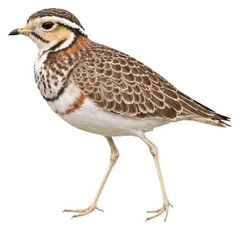 Three-banded CourserRhinoptilus cinctus
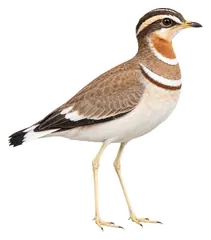 Jerdon's CourserRhinoptilus bitorquatus
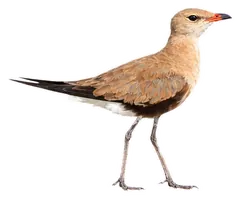 Australian PratincoleGlareola isabella
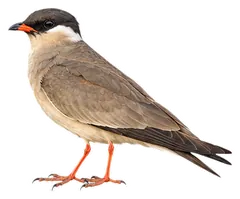 Rock PratincoleGlareola nuchalis
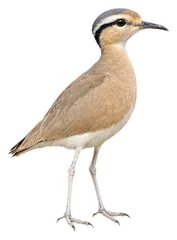
Download illustration
Free to use with credit: “Illustration: Bird Album (birdalbum.com)”. Drawn by AI from a reference photo by Tarique Sani. ↗
Heard it but can't see it? Mingji identifies birds by sound and photo, on your phone.