 Bird Album
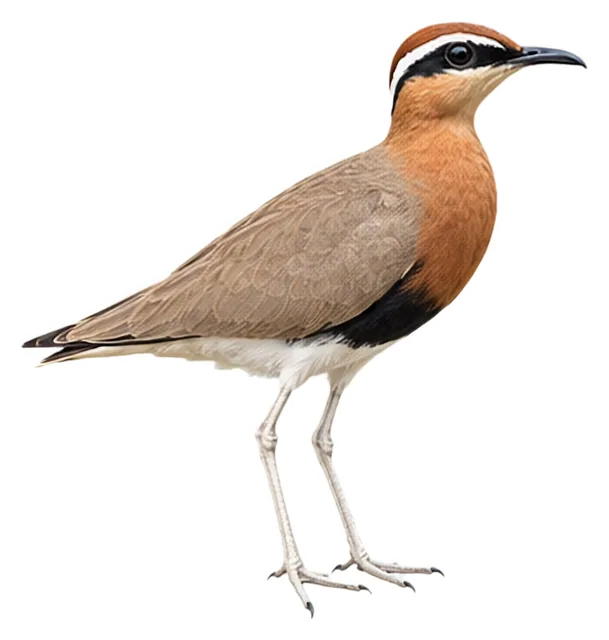
Indian Courser
Cursorius coromandelicus (Gmelin, JF, 1789)
138 gWeight
The Indian courser (Cursorius coromandelicus) is a species of courser found in mainland South Asia, mainly in the plains bounded by the Ganges and Indus river system.
Busiest months: January–February · Most records: India, Nepal, Sri Lanka
Where and when it's recorded
Busiest months: January–February · Most records: India, Nepal, Sri Lanka

Indian Courser has been recorded at 44 of the 8,276 birding hotspots we track, in 4 countries and regions.
Records by month Northern Hemisphere
Where it's recorded most
- Osman Sagar LakeIndia272 records
- Jayamangali Blackbuck Conservation ReserveIndia163 records
- Ujani Dam – Kumbhargaon Bird SanctuaryIndia132 records
More places
- Bharatpur – Keoladeo Ghana NPIndia126 records
- Sultanpur National ParkIndia105 records
- Nalsarovar Bird SanctuaryIndia81 records
- Tal Chhapar SanctuaryIndia70 records
- Nalsarovar OutskirtsIndia55 records
- Koshi Tappu Wildlife ReserveNepal38 records
- Ranthambore NPIndia26 records
Countries and regions with the most records
eBird records via GBIF up to 2024-12-31. A record means someone listed it; more records partly mean more birders, not more birds.
About
The Indian courser (Cursorius coromandelicus) is a species of courser found in mainland South Asia, mainly in the plains bounded by the Ganges and Indus river system. Like other coursers, it is a ground bird that can be found in small groups as they forage for insects in dry open semi-desert country.
Excerpt from Wikipedia, CC BY-SA 4.0 · authors · Read more on Wikipedia
Questions
How big is the Indian Courser?
The Indian Courser weighs around 138 g.
Where does the Indian Courser live?
Its breeding range: Oriental: subtropical to tropical dry stony plains of South Asia: north-central Pakistan, sub-Himalayan India, far southern Nepal and far northern Sri Lanka. It is most often recorded in India, Nepal and Sri Lanka.
When is the best time to see the Indian Courser?
At the hotspots we track, it is recorded most in January and February (Northern Hemisphere).
Is the Indian Courser endangered?
The IUCN Red List classifies the Indian Courser as Near Threatened.
What does the Indian Courser eat?
Main food: Insects & other invertebrates.
What family is the Indian Courser in?
It belongs to the family Coursers, Pratincoles (Glareolidae), order Charadriiformes.
At a glance
- Weight
- 138 g
- Habitat
- Grassland
- Diet
- Insects & other invertebrates
- Lifestyle
- Active on the ground
- Migration
- Resident (barely migrates)
- Conservation
- Near Threatened
More measurements
- Wing
- 145 mm
- Tail
- 53 mm
- Bill
- 22 mm
- Tarsus
- 50 mm
Averages from the AVONET dataset; length from field guides where available.
Range
Oriental: subtropical to tropical dry stony plains of South Asia: north-central Pakistan, sub-Himalayan India, far southern Nepal and far northern Sri Lanka
Breeding range, IOC World Bird List 15.2
Classification
- Order
- Charadriiformes
- Family
- Coursers, Pratincoles Glareolidae
- Genus
- Cursorius
Other birds in the genus Cursorius
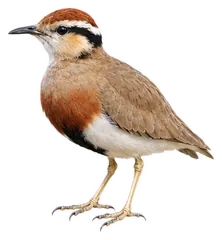 Temminck's CourserCursorius temminckii
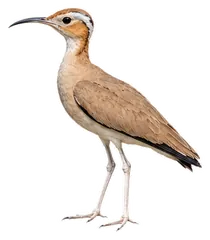 Burchell's CourserCursorius rufus
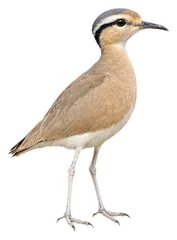 Cream-colored CourserCursorius cursor
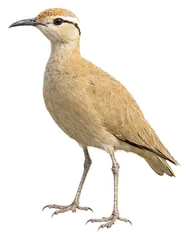 Somali CourserCursorius somalensis
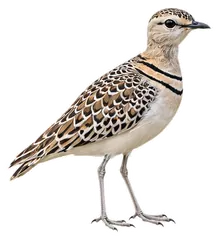 Double-banded CourserSmutsornis africanus
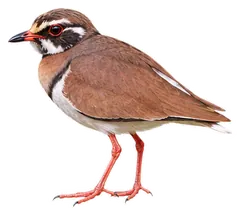 Bronze-winged CourserRhinoptilus chalcopterus
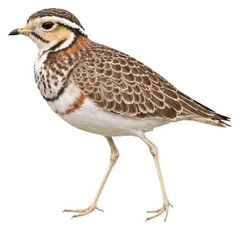 Three-banded CourserRhinoptilus cinctus
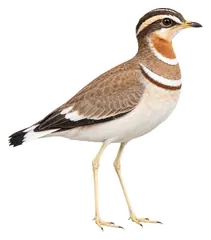 Jerdon's CourserRhinoptilus bitorquatus
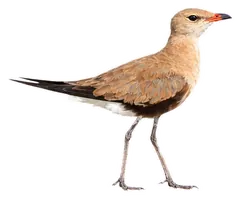 Australian PratincoleGlareola isabella
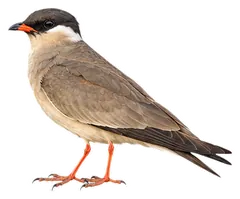 Rock PratincoleGlareola nuchalis
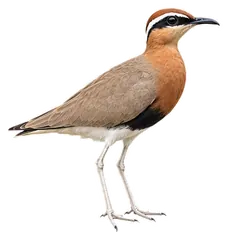
Download illustration
Free to use with credit: “Illustration: Bird Album (birdalbum.com)”. Drawn by AI from a reference photo by Gaurang Tawde. ↗
Heard it but can't see it? Mingji identifies birds by sound and photo, on your phone.
In other languages
- EnglishIndian Courser
- 简体中文印度走鸻
- 繁體中文印度走鴴
- 日本語インドスナバシリ
- DeutschKoromandelrennvogel
- FrançaisCourvite de Coromandel
- EspañolCorredor indio
- Portuguêscorredeira-indiana
- ItalianoCorrione indiano
- NederlandsIndische Renvogel
- РусскийКоромандельский бегунок
- Svenskaindisk ökenlöpare
- DanskIndisk Ørkenløber
- Polskirączak indyjski