 Bird Album
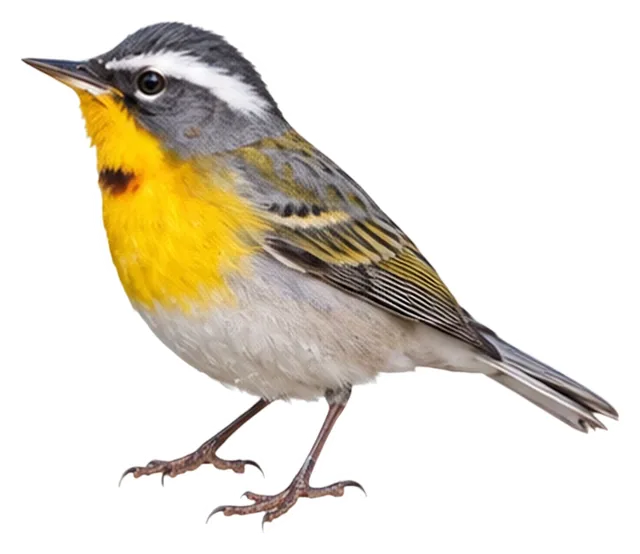
Crescent-chested Warbler
Oreothlypis superciliosa (Hartlaub, 1844)
9 gWeight
The crescent-chested warbler (Oreothlypis superciliosa) is a small New World warbler.
Busiest months: March · Most records: Guatemala, Mexico, Honduras
Where and when it's recorded

Crescent-chested Warbler has been recorded at 41 of the 8,171 birding hotspots we track, in 6 countries and regions.
Records by month Northern Hemisphere
Where it's recorded most
- Laguna del BosqueGuatemala809 records
- Reserva de La Chara PintaMexico694 records
- Restaurante Rincón Suizo – sendero en bosque de pino-encinoGuatemala588 records
More places
- Reserva Ecológica Sierra de San Juan – La NoriaMexico461 records
- Parque Regional Municipal Zunil – Fuentes GeorginasGuatemala454 records
- Reserva de la Biosfera El Triunfo – Campamento El TriunfoMexico453 records
- PN Los Volcanes – Sector Cerro VerdeEl Salvador333 records
- Zamorano Univ. – Res. Biol. UyucaHonduras307 records
- Finca Caleras ChichavacGuatemala267 records
- ANP Bosque de TlalpanMexico255 records
Countries and regions with the most records
eBird records via GBIF up to 2024-12-31. A record means someone listed it; more records partly mean more birders, not more birds.
About
The crescent-chested warbler (Oreothlypis superciliosa) is a small New World warbler. It is common throughout its montane range, from northern Mexico to northern Nicaragua, and is an occasional vagrant to Arizona and Texas. It shows an affinity for oaks.
Excerpt from Wikipedia, CC BY-SA 4.0 · authors · Read more on Wikipedia
Questions
How big is the Crescent-chested Warbler?
The Crescent-chested Warbler weighs around 9 g.
Where does the Crescent-chested Warbler live?
Its breeding range: Middle America: Mexico to Nicaragua. It is most often recorded in Guatemala, Mexico and Honduras.
When is the best time to see the Crescent-chested Warbler?
At the hotspots we track, it is recorded most in March (Northern Hemisphere).
Is the Crescent-chested Warbler endangered?
The IUCN Red List classifies the Crescent-chested Warbler as Least Concern.
What does the Crescent-chested Warbler eat?
Main food: Insects & other invertebrates.
What family is the Crescent-chested Warbler in?
It belongs to the family New World Warblers (Parulidae), order Passerines (Passeriformes).
At a glance
- Weight
- 9 g
- Habitat
- Forest
- Diet
- Insects & other invertebrates
- Lifestyle
- Perches in trees
- Migration
- Resident (barely migrates)
- Conservation
- Least Concern
More measurements
- Wing
- 62 mm
- Tail
- 53 mm
- Bill
- 14 mm
- Tarsus
- 16 mm
Averages from the AVONET dataset; length from field guides where available.
Range
Middle America: Mexico to Nicaragua
Breeding range, IOC World Bird List 15.2
Classification
- Order
- Passerines Passeriformes
- Family
- New World Warblers Parulidae
- Genus
- Oreothlypis
Other birds in the genus Oreothlypis
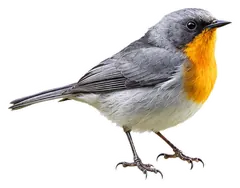 Flame-throated WarblerOreothlypis gutturalis
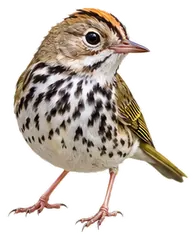 OvenbirdSeiurus aurocapilla
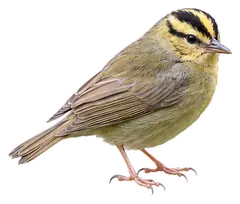 Worm-eating WarblerHelmitheros vermivorum
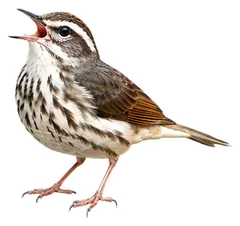 Louisiana WaterthrushParkesia motacilla
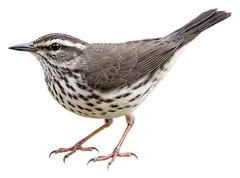 Northern WaterthrushParkesia noveboracensis
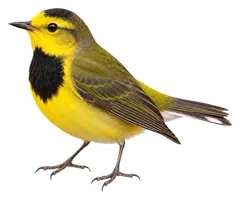 Bachman's WarblerVermivora bachmanii
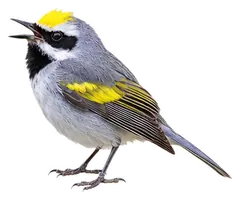 Golden-winged WarblerVermivora chrysoptera
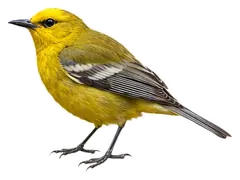 Blue-winged WarblerVermivora cyanoptera
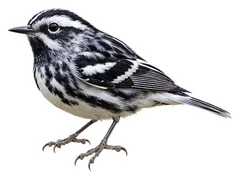 Black-and-white WarblerMniotilta varia
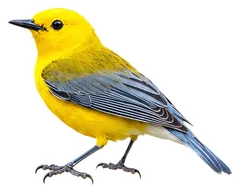 Prothonotary WarblerProtonotaria citrea
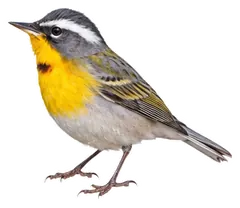
Download illustration
Free to use with credit: “Illustration: Bird Album (birdalbum.com)”. Drawn by AI from a reference photo by Rolando Chavez. ↗
Heard it but can't see it? Mingji identifies birds by sound and photo, on your phone.
In other languages
- EnglishCrescent-chested Warbler
- 简体中文月胸森莺
- 繁體中文斑胸蟲森鶯
- 日本語ミカヅキアメリカムシクイ
- DeutschSchmuckwaldsänger
- FrançaisParuline à croissant
- EspañolReinita cejuda
- Portuguêsmariquita-medalhada
- ItalianoParula semilunare
- NederlandsOrnaatzanger
- РусскийУкрашенная древесница
- Svenskamånbröstad skogssångare
- DanskHvidbrynet Parula
- Polskilasówka białobrewa