 Bird Album
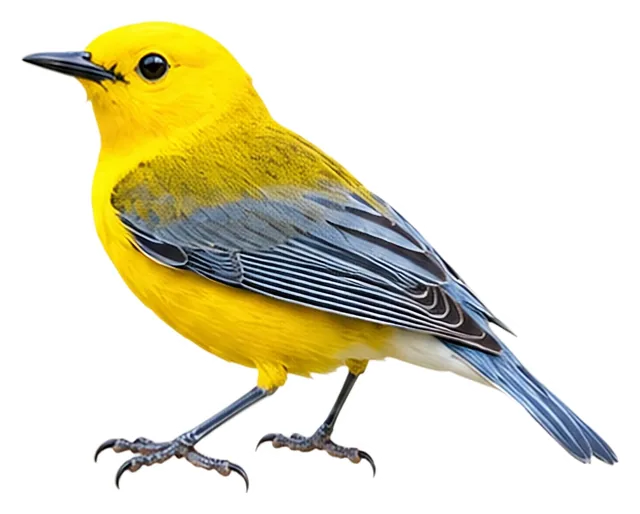
Prothonotary Warbler
Protonotaria citrea (Boddaert, 1783)
14 gWeight
The prothonotary warbler (Protonotaria citrea) is a small songbird of the New World warbler family.
Busiest months: May · Most records: United States, Canada, Costa Rica
Where and when it's recorded

Prothonotary Warbler has been recorded at 869 of the 8,171 birding hotspots we track, in 35 countries and regions.
Records by month Northern Hemisphere
Where it's recorded most
- Magee Marsh – BoardwalkUnited States23,615 records
- Point Pelee National ParkCanada6,249 records
- High Island – Smith Oaks SanctuaryUnited States5,267 records
More places
- Sabine WoodsUnited States4,658 records
- Hughes Hollow - McKee Beshers WMAUnited States3,770 records
- Magee MarshUnited States3,750 records
- Radnor Lake SPUnited States3,749 records
- High Island – Boy Scout WoodsUnited States3,315 records
- Occoquan Bay NWRUnited States2,823 records
- Point Pelee NP – Woodland Nature TrailCanada2,815 records
Countries and regions with the most records
eBird records via GBIF up to 2024-12-31. A record means someone listed it; more records partly mean more birders, not more birds.
About
The prothonotary warbler (Protonotaria citrea) is a small songbird of the New World warbler family. It is named for its plumage, which resembles the yellow robes once worn by papal clerks (named prothonotaries) in the Roman Catholic Church.
Excerpt from Wikipedia, CC BY-SA 4.0 · authors · Read more on Wikipedia
Questions
How big is the Prothonotary Warbler?
The Prothonotary Warbler weighs around 14 g.
Where does the Prothonotary Warbler live?
Its breeding range: North America: central, eastern, southeastern USA. It is most often recorded in United States, Canada and Costa Rica.
When is the best time to see the Prothonotary Warbler?
At the hotspots we track, it is recorded most in May (Northern Hemisphere).
Is the Prothonotary Warbler endangered?
The IUCN Red List classifies the Prothonotary Warbler as Least Concern.
What does the Prothonotary Warbler eat?
Main food: Insects & other invertebrates.
What family is the Prothonotary Warbler in?
It belongs to the family New World Warblers (Parulidae), order Passerines (Passeriformes).
At a glance
- Weight
- 14 g
- Habitat
- Forest
- Diet
- Insects & other invertebrates
- Lifestyle
- Perches in trees
- Migration
- Migratory
- Conservation
- Least Concern
More measurements
- Wing
- 69 mm
- Tail
- 43 mm
- Bill
- 17 mm
- Tarsus
- 18 mm
Averages from the AVONET dataset; length from field guides where available.
Range
North America: central, eastern, southeastern USA
Breeding range, IOC World Bird List 15.2
Classification
- Order
- Passerines Passeriformes
- Family
- New World Warblers Parulidae
- Genus
- Protonotaria
More from the family New World Warblers
 OvenbirdSeiurus aurocapilla
 Worm-eating WarblerHelmitheros vermivorum
 Louisiana WaterthrushParkesia motacilla
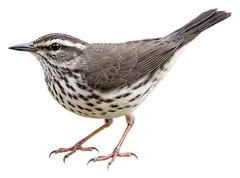 Northern WaterthrushParkesia noveboracensis
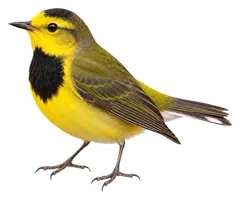 Bachman's WarblerVermivora bachmanii
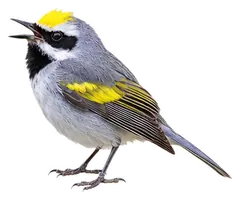 Golden-winged WarblerVermivora chrysoptera
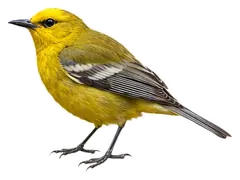 Blue-winged WarblerVermivora cyanoptera
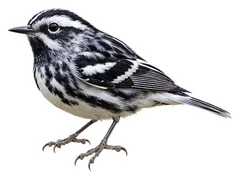 Black-and-white WarblerMniotilta varia
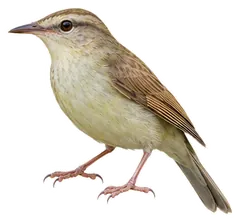 Swainson's WarblerLimnothlypis swainsonii
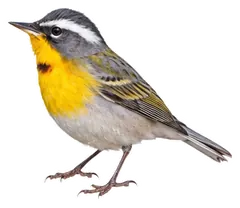 Crescent-chested WarblerOreothlypis superciliosa
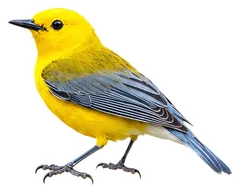
Download illustration
Free to use with credit: “Illustration: Bird Album (birdalbum.com)”. Drawn by AI from a reference photo by bwood708. ↗
Heard it but can't see it? Mingji identifies birds by sound and photo, on your phone.
In other languages
- EnglishProthonotary Warbler
- 简体中文蓝翅黄森莺
- 繁體中文藍翅黃森鶯
- 日本語オウゴンアメリカムシクイ
- DeutschZitronenwaldsänger
- FrançaisParuline orangée
- EspañolReinita protonotaria
- Portuguêsmariquita-protonotária
- ItalianoParula protonotaria
- NederlandsCitroenzanger
- РусскийЛимонная червеедка
- Svenskagyllenskogssångare
- DanskBlommegul Sanger
- Polskibursztynka