 Bird Album
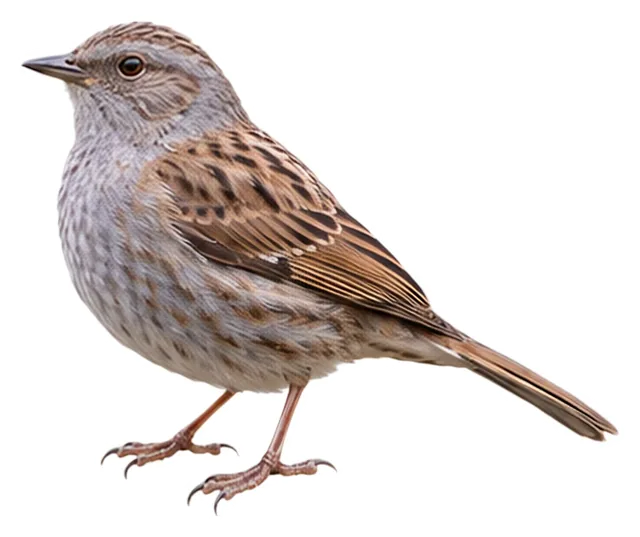
Dunnock
Prunella modularis (Linnaeus, 1758)
13–14 cmLength20 gWeight
The dunnock (Prunella modularis) is a small passerine, or perching bird, found throughout temperate Europe and into Asian Russia.
Busiest months: April and October · Most records: United Kingdom, New Zealand, Spain
Where and when it's recorded

Dunnock has been recorded at 1,167 of the 8,276 birding hotspots we track, in 61 countries and regions.
Records by month Northern Hemisphere
Where it's recorded most
- Amwell HMWT NRUnited Kingdom5,965 records
- Titchwell Marsh RSPB ReserveUnited Kingdom4,117 records
- Minsmere RSPB ReserveUnited Kingdom3,852 records
More places
- Beddington FarmlandsUnited Kingdom3,843 records
- Spurn Bird Observatory Recording AreaUnited Kingdom3,399 records
- Rutland WaterUnited Kingdom2,876 records
- Walthamstow WetlandsUnited Kingdom2,753 records
- South Downs NP – Pulborough Brooks RSPB ReserveUnited Kingdom2,683 records
- Rainham Marshes RSPB Reserve, SSSI and LNRUnited Kingdom2,546 records
- Brent ReservoirUnited Kingdom2,118 records
Countries and regions with the most records
eBird records via GBIF up to 2024-12-31. A record means someone listed it; more records partly mean more birders, not more birds.
About
The dunnock (Prunella modularis) is a small passerine, or perching bird, found throughout temperate Europe and into Asian Russia. Dunnocks have also been introduced and become common in New Zealand. It is the most widespread member of the accentor family; most other accentors are limited to mountain habitats.
Excerpt from Wikipedia, CC BY-SA 4.0 · authors · Read more on Wikipedia
Questions
How big is the Dunnock?
The Dunnock is about 13–14 cm long and weighs around 20 g.
Where does the Dunnock live?
Its breeding range: Palearctic: western, southwestern, also northwestern Africa. It is most often recorded in United Kingdom, New Zealand and Spain.
When is the best time to see the Dunnock?
At the hotspots we track, it is recorded most in April and October (Northern Hemisphere).
Is the Dunnock endangered?
The IUCN Red List classifies the Dunnock as Least Concern.
What does the Dunnock eat?
Main food: Insects & other invertebrates.
What family is the Dunnock in?
It belongs to the family Accentors (Prunellidae), order Passerines (Passeriformes).
At a glance
- Length
- 13–14 cm
- Weight
- 20 g
- Habitat
- Forest
- Diet
- Insects & other invertebrates
- Lifestyle
- Active on the ground
- Migration
- Resident (barely migrates)
- Conservation
- Least Concern
More measurements
- Wing
- 69 mm
- Tail
- 60 mm
- Bill
- 14 mm
- Tarsus
- 20 mm
Averages from the AVONET dataset; length from field guides where available.
Range
Palearctic: western, southwestern, also northwestern Africa
Breeding range, IOC World Bird List 15.2
Classification
- Order
- Passerines Passeriformes
- Family
- Accentors Prunellidae
- Genus
- Prunella
Other birds in the genus Prunella
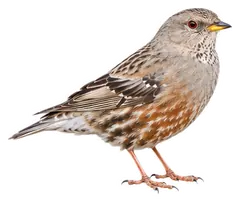 Alpine AccentorPrunella collaris
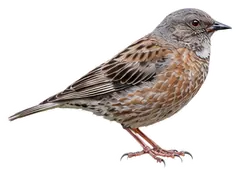 Altai AccentorPrunella himalayana
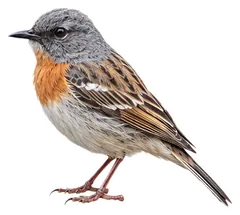 Robin AccentorPrunella rubeculoides
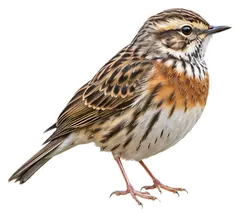 Rufous-breasted AccentorPrunella strophiata
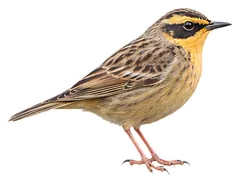 Siberian AccentorPrunella montanella
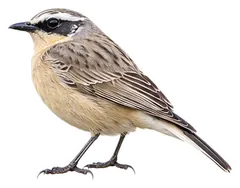 Brown AccentorPrunella fulvescens
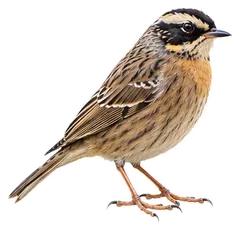 Radde's AccentorPrunella ocularis
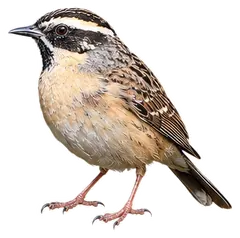 Black-throated AccentorPrunella atrogularis
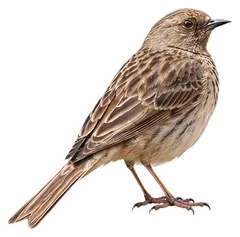 Kozlov's AccentorPrunella koslowi
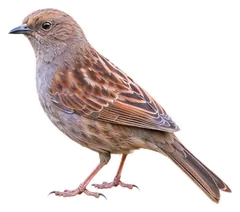 Japanese AccentorPrunella rubida
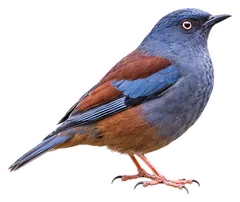 Maroon-backed AccentorPrunella immaculata
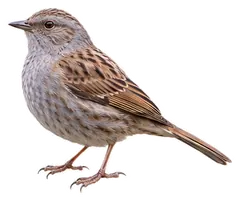
Download illustration
Free to use with credit: “Illustration: Bird Album (birdalbum.com)”. Drawn by AI from a reference photo by Ben Ackerley. ↗
Heard it but can't see it? Mingji identifies birds by sound and photo, on your phone.