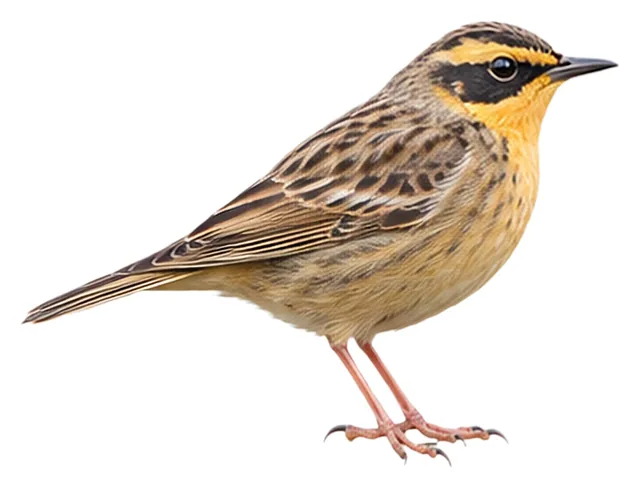
Siberian Accentor
Prunella montanella (Pallas, 1776)
14 cmLength17 gWeight
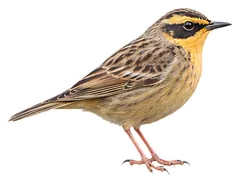
It has a long, broad, pale yellow supercilium and is secretive, readily slipping into cover.
Busiest months: October–November · Most records: China, United States, South Korea
Looks like Black-throated Accentor
How to identify
Field marks
- Supercilium long, broad and pale yellow
- Crown dark brown, with black patch behind the eye
- Back brown with bright chestnut streaks
- Underparts ochre-yellow, with chestnut streaks on the breast sides and flanks
Male, female and young
The female has slightly darker underparts and fainter streaks; juveniles are darker, with brown spots on the breast.
Voice
The call is a three-syllable “ti-ti-ti”; the male sings a loud, high-pitched “chirichiriri” from scrub or treetops.
Similar species
Where and when it's recorded
Busiest months: October–November · Most records: China, United States, South Korea

Siberian Accentor has been recorded at 227 of the 8,276 birding hotspots we track, in 14 countries and regions.
Records by month Northern Hemisphere
Where it's recorded most
- Lingshan Scenic AreaChina311 records
- GambellUnited States197 records
- Muravyevka ParkRussia113 records
More places
- Khurkh Bird Ringing Station, Khentii, MNMongolia99 records
- Ming Tombs ReservoirChina66 records
- Wild Duck LakeChina58 records
- Shidu, Juma River PNRChina57 records
- BulaotunChina57 records
- St. Paul IslandUnited States55 records
- Wajima – Hegurajima (island)Japan50 records
Countries and regions with the most records
eBird records via GBIF up to 2024-12-31. A record means someone listed it; more records partly mean more birders, not more birds.
About
The Siberian accentor (Prunella montanella) is a small passerine bird that breeds in northern Russia from the Ural Mountains eastwards across Siberia. It is migratory, wintering in Korea and eastern China, with rare occurrences in western Europe and northwestern North America. Its typical breeding habitat is subarctic deciduous forests and open coniferous woodland, often close to water, although it also occurs in mountains and spruce taiga.
Excerpt from Wikipedia, CC BY-SA 4.0 · authors · Read more on Wikipedia
Questions
How big is the Siberian Accentor?
The Siberian Accentor is about 14 cm long and weighs around 17 g.
Where does the Siberian Accentor live?
Its breeding range: Palearctic: northern, eastern. It is most often recorded in China, United States and South Korea.
When is the best time to see the Siberian Accentor?
At the hotspots we track, it is recorded most in October and November (Northern Hemisphere).
Is the Siberian Accentor endangered?
The IUCN Red List classifies the Siberian Accentor as Least Concern.
What does the Siberian Accentor eat?
Main food: Insects & other invertebrates.
What family is the Siberian Accentor in?
It belongs to the family Accentors (Prunellidae), order Passerines (Passeriformes).
At a glance
- Length
- 14 cm
- Weight
- 17 g
- Habitat
- Forest
- Diet
- Insects & other invertebrates
- Lifestyle
- Active on the ground
- Migration
- Migratory
- Conservation
- Least Concern
More measurements
- Wing
- 72 mm
- Tail
- 66 mm
- Bill
- 13 mm
- Tarsus
- 19 mm
Averages from the AVONET dataset; length from field guides where available.
Range
Palearctic: northern, eastern
Breeding range, IOC World Bird List 15.2
Classification
- Order
- Passerines Passeriformes
- Family
- Accentors Prunellidae
- Genus
- Prunella
Other birds in the genus Prunella
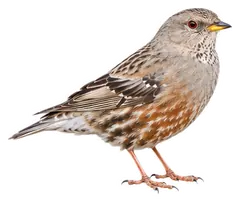 Alpine AccentorPrunella collaris
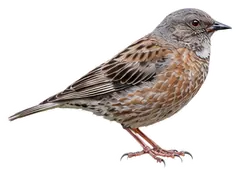 Altai AccentorPrunella himalayana
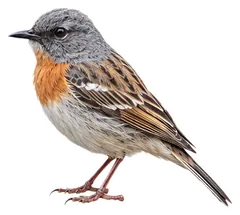 Robin AccentorPrunella rubeculoides
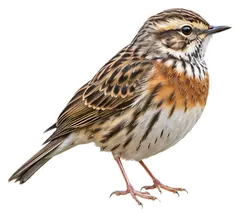 Rufous-breasted AccentorPrunella strophiata
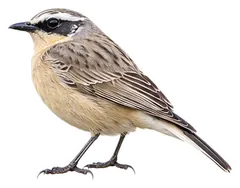 Brown AccentorPrunella fulvescens
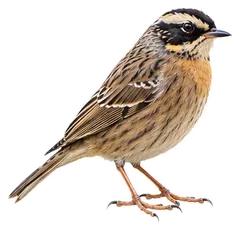 Radde's AccentorPrunella ocularis
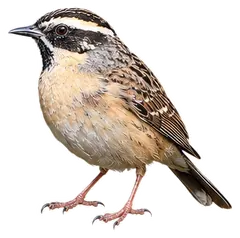 Black-throated AccentorPrunella atrogularis
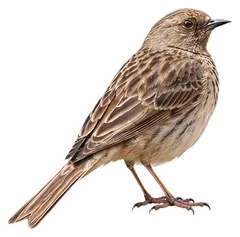 Kozlov's AccentorPrunella koslowi
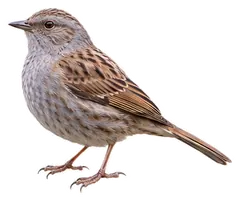 DunnockPrunella modularis
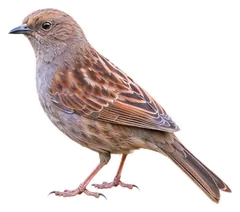 Japanese AccentorPrunella rubida
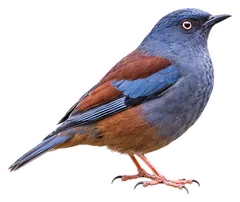 Maroon-backed AccentorPrunella immaculata
Download illustration
Free to use with credit: “Illustration: Bird Album (birdalbum.com)”. Drawn by AI from a reference photo by Jargal Lamjav. ↗

Heard it but can't see it? Mingji identifies birds by sound and photo, on your phone.
In other languages
- EnglishSiberian Accentor
- 简体中文棕眉山岩鹨
- 繁體中文棕眉岩鷚
- 日本語ヤマヒバリ
- 한국어멧종다리
- DeutschBergbraunelle
- FrançaisAccenteur montanelle
- EspañolAcentor siberiano
- Portuguêsferreirinha-siberiana
- ItalianoPassera scopaiola asiatica
- NederlandsBergheggenmus
- РусскийСибирская завирушка
- Svenskasibirisk järnsparv
- DanskSibirisk Jernspurv
- Polskipłochacz syberyjski