 Bird Album
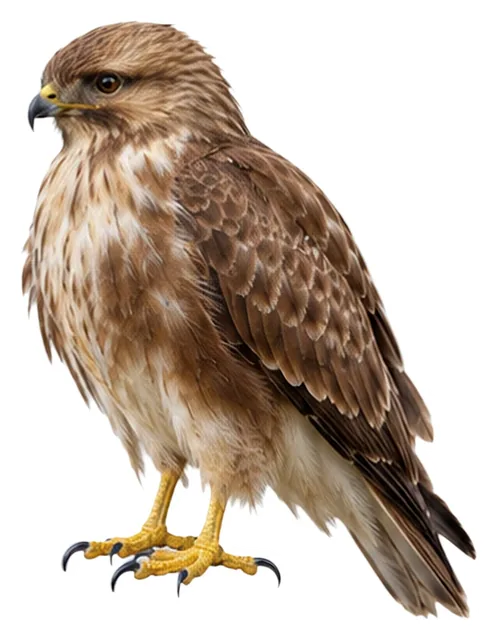
Eastern Buzzard
Buteo japonicus Temminck & Schlegel, 1845
≈57 cmLength130 cmWingspan759 gWeight
This medium to large raptor is carnivorous, feeding mainly on terrestrial vertebrates.
Busiest months: December–January · Most records: China, Japan, South Korea
How to identify
Where and when it's recorded

Eastern Buzzard has been recorded at 1,204 of the 8,171 birding hotspots we track, in 18 countries and regions.
Records by month Northern Hemisphere
Where it's recorded most
- Mai Po Nature ReserveHong Kong (China)1,490 records
- Baiwangshan Forest ParkChina570 records
- Nanhui DongtanChina510 records
More places
- Edogawa Ward – Kasai Rinkai Park / Kasai Kaihin ParkJapan507 records
- Taipei – Tianliaoyang WetlandTaiwan (China)460 records
- Kinmen – Doumen Hiking TrailChina453 records
- Aogu Wetland IBATaiwan (China)451 records
- Kinmen – Shagang RanchChina422 records
- Matsu – DongyinChina422 records
- Kinmen – Lieyu Lingshui LakeChina368 records
Countries and regions with the most records
eBird records via GBIF up to 2024-12-31. A record means someone listed it; more records partly mean more birders, not more birds.
About
The eastern buzzard or Japanese buzzard (Buteo japonicus) is a medium to large bird of prey that is sometimes considered a subspecies of the widespread common buzzard (Buteo buteo). It was formerly treated as a subspecies of the common buzzard, but molecular phylogenetic studies revealed that B. buteo as then circumscribed was polyphyletic, leading to the recognition of the eastern buzzard and Himalayan buzzard (B. refectus) as distinct species. It is native to East Asia and some parts of Russia and South Asia, with some birds wintering in Southeast Asia.
Excerpt from Wikipedia, CC BY-SA 4.0 · authors · Read more on Wikipedia
Questions
How big is the Eastern Buzzard?
The Eastern Buzzard is about ≈57 cm long, with a wingspan of 130 cm and weighs around 759 g.
Where does the Eastern Buzzard live?
Its breeding range: Oriental: central, southern Siberia, Mongolia, northeastern China and Japan. It is most often recorded in China, Japan and South Korea.
When is the best time to see the Eastern Buzzard?
At the hotspots we track, it is recorded most in January and December (Northern Hemisphere).
Is the Eastern Buzzard endangered?
The IUCN Red List classifies the Eastern Buzzard as Least Concern.
What does the Eastern Buzzard eat?
Main food: Vertebrate prey.
What family is the Eastern Buzzard in?
It belongs to the family Kites, Hawks, Eagles (Accipitridae), order Accipitriformes.
At a glance
- Length
- ≈57 cm
- Wingspan
- 130 cm
- Weight
- 759 g
- Habitat
- Grassland
- Diet
- Vertebrate prey
- Lifestyle
- Perches in trees
- Migration
- Partial migrant
- Conservation
- Least Concern
More measurements
- Wing
- 395 mm
- Tail
- 212 mm
- Bill
- 34 mm
- Tarsus
- 77 mm
Averages from the AVONET dataset; length from field guides where available.
Range
Oriental: central, southern Siberia, Mongolia, northeastern China and Japan
Breeding range, IOC World Bird List 15.2
Subspecies · 2
- Buteo japonicus burmanicus se Siberia (Transbaikalia) and n Mongolia to ne China, n Korea and e, ne Siberia. Sakhalin? | non-breeding: s, se Asia, w Japan
- Buteo japonicus japonicus Japan, locally Luzon (n Philippines) | non-breeding: s Japan to Ryukyu Is., Taiwan (China), Philippines, se China
Classification
- Order
- Accipitriformes
- Family
- Kites, Hawks, Eagles Accipitridae
- Genus
- Buteo
Other birds in the genus Buteo
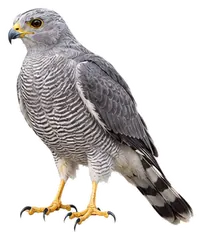 Grey HawkButeo plagiatus
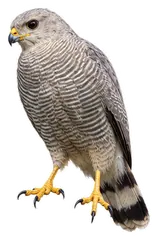 Grey-lined HawkButeo nitidus
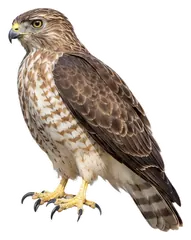 Broad-winged HawkButeo platypterus
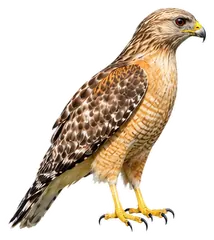 Red-shouldered HawkButeo lineatus
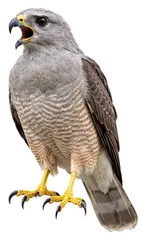 Ridgway's HawkButeo ridgwayi
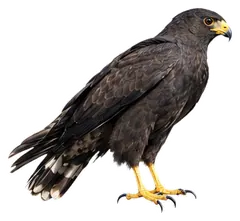 Zone-tailed HawkButeo albonotatus
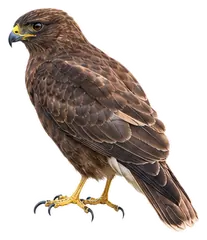 Hawaiian HawkButeo solitarius
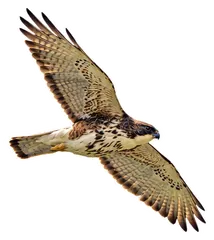 White-throated HawkButeo albigula
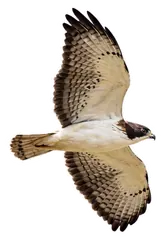 Short-tailed HawkButeo brachyurus
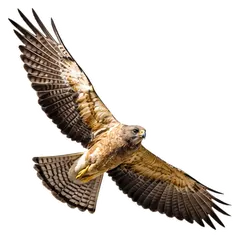 Swainson's HawkButeo swainsoni
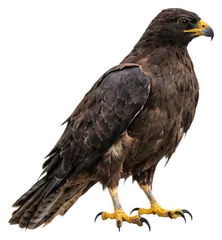 Galapagos HawkButeo galapagoensis
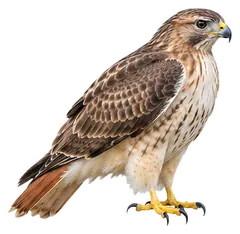 Red-tailed HawkButeo jamaicensis
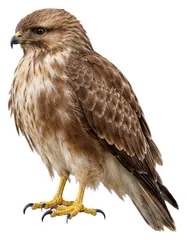
Download illustration
Free to use with credit: “Illustration: Bird Album (birdalbum.com)”. Drawn by AI from a reference photo by NOZO. ↗

Heard it but can't see it? Mingji identifies birds by sound and photo, on your phone.