 Bird Album
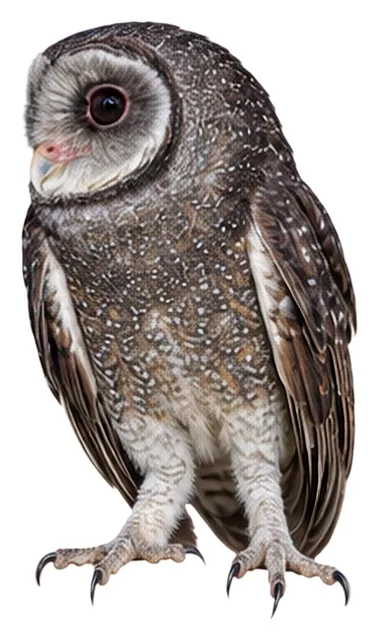
Greater Sooty Owl
Tyto tenebricosa (Gould, 1845)
37–50 cmLength661 gWeight
The sooty owl or greater sooty owl (Tyto tenebricosa) is a medium to large owl found in south-eastern Australia, Montane rainforests of New Guinea and have been seen on Flinders Island in the Bass Strait.
Busiest months: October–November · Most records: Australia, Papua New Guinea, Indonesia
Where and when it's recorded

Greater Sooty Owl has been recorded at 36 of the 8,171 birding hotspots we track, in 3 countries and regions.
Records by month Southern Hemisphere
Where it's recorded most
- Kingfisher Park Birdwatchers LodgeAustralia302 records
- Bunyip State ParkAustralia195 records
- Crater Lakes National Park – Chambers Rainforest LodgeAustralia106 records
More places
- O'Reilly's Rainforest RetreatAustralia92 records
- D'Aguilar National Park – Maiala Loop WalkAustralia61 records
- Minggre Birdwatching HomestayIndonesia43 records
- Ambua LodgePapua New Guinea34 records
- Bendthualaly, BellawongarahAustralia30 records
- Crater Lakes National Park – Lake EachamAustralia30 records
- Kumul LodgePapua New Guinea20 records
Countries and regions with the most records
eBird records via GBIF up to 2024-12-31. A record means someone listed it; more records partly mean more birders, not more birds.
About
The sooty owl or greater sooty owl (Tyto tenebricosa) is a medium to large owl found in south-eastern Australia, Montane rainforests of New Guinea and have been seen on Flinders Island in the Bass Strait. The lesser sooty owl (T. multipunctata), is sometimes considered to be conspecific with this species, in which case they are then together referred to as sooty owls. It is substantially smaller and occurs in the wet tropics region of North Queensland, Australia.
Excerpt from Wikipedia, CC BY-SA 4.0 · authors · Read more on Wikipedia
Questions
How big is the Greater Sooty Owl?
The Greater Sooty Owl is about 37–50 cm long and weighs around 661 g.
Where does the Greater Sooty Owl live?
Its breeding range: Australasia: New Guinea (except south-central) and eastern Australia. It is most often recorded in Australia, Papua New Guinea and Indonesia.
When is the best time to see the Greater Sooty Owl?
At the hotspots we track, it is recorded most in October and November (Southern Hemisphere).
Is the Greater Sooty Owl endangered?
The IUCN Red List classifies the Greater Sooty Owl as Least Concern.
What does the Greater Sooty Owl eat?
Main food: Vertebrate prey.
What family is the Greater Sooty Owl in?
It belongs to the family Barn Owls (Tytonidae), order Strigiformes.
At a glance
- Length
- 37–50 cm
- Weight
- 661 g
- Habitat
- Forest
- Diet
- Vertebrate prey
- Lifestyle
- Varied
- Migration
- Resident (barely migrates)
- Conservation
- Least Concern
More measurements
- Wing
- 257 mm
- Tail
- 126 mm
- Bill
- 40 mm
- Tarsus
- 67 mm
Averages from the AVONET dataset; length from field guides where available.
Range
Australasia: New Guinea (except south-central) and eastern Australia
Breeding range, IOC World Bird List 15.2
Classification
- Order
- Strigiformes
- Family
- Barn Owls Tytonidae
- Genus
- Tyto
Other birds in the genus Tyto
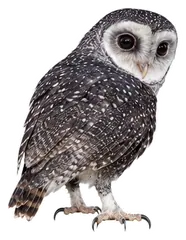 Lesser Sooty OwlTyto multipunctata
 Minahasa Masked OwlTyto inexspectata
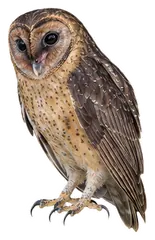 Taliabu Masked OwlTyto nigrobrunnea
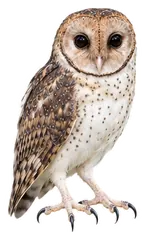 Moluccan Masked OwlTyto sororcula
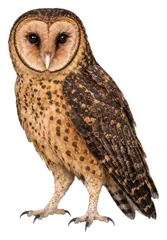 Manus Masked OwlTyto manusi
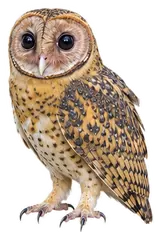 Golden Masked OwlTyto aurantia
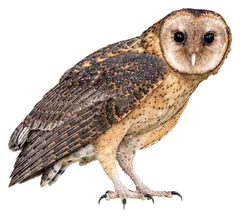 Australian Masked OwlTyto novaehollandiae
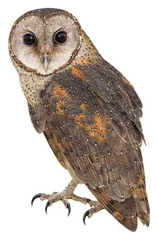 Sulawesi Masked OwlTyto rosenbergii
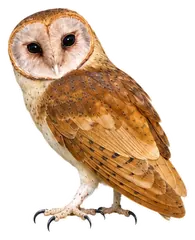 Red OwlTyto soumagnei
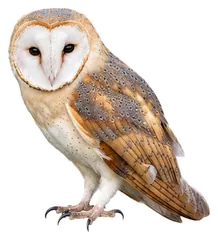 Western Barn OwlTyto alba
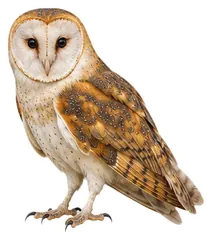 American Barn OwlTyto furcata
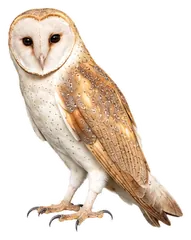 Eastern Barn OwlTyto javanica
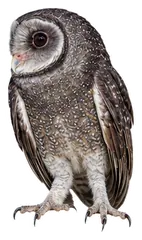
Download illustration
Free to use with credit: “Illustration: Bird Album (birdalbum.com)”. Drawn by AI from a reference photo by Indra Bone. ↗
Heard it but can't see it? Mingji identifies birds by sound and photo, on your phone.