 Bird Album
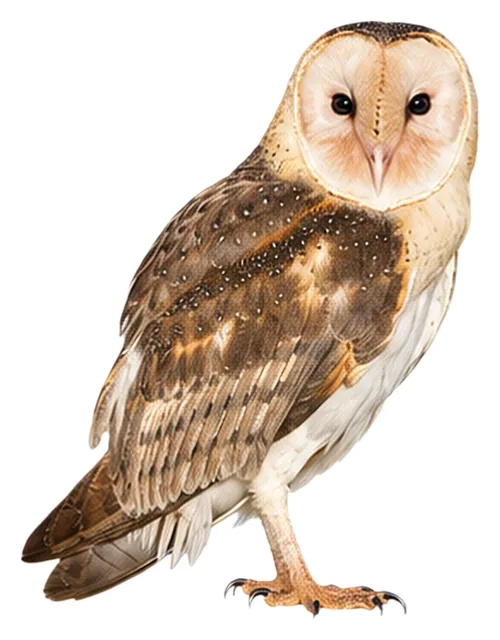
Eastern Grass Owl
Tyto longimembris (Jerdon, 1839)
32–38 cmLength100–116 cmWingspan424 gWeight
It has a heart-shaped facial disc and reaches into dense grass with its long legs to catch prey.
Most records: Australia, Philippines, China
How to identify
Field marks
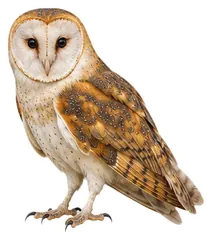
- Facial disc heart-shaped
- Back dark brown or rufous-brown with pale markings
- Eyes dark brown, bill very pale
- Wings with black and rufous-brown barring
Male, female and young
Female larger than male; male body length 32–38 cm, female 35–42 cm.
Voice
A harsh call, like a hissing shriek.
Where and when it's recorded

Eastern Grass Owl has been recorded at 82 of the 8,171 birding hotspots we track, in 11 countries and regions.
Records by month Southern Hemisphere
Where it's recorded most
- Kedron Brook Wetlands ReserveAustralia198 records
- Bislig lowlands – Old AirportPhilippines189 records
- Danzhou Bay [historical – General Area]China65 records
More places
- Roebuck Plains StationAustralia59 records
- Tyto WetlandsAustralia57 records
- Hunter Wetlands National Park – Ash IslandAustralia55 records
- Partridge CreekAustralia54 records
- Heneng VillageChina33 records
- Candaba MarshPhilippines32 records
- Lake Samsonvale – Postmans TrackAustralia29 records
Countries and regions with the most records
eBird records via GBIF up to 2024-12-31. A record means someone listed it; more records partly mean more birders, not more birds.
About
The eastern grass owl (Tyto longimembris), also known as Chinese grass owl or Australasian grass owl, is a species of owl in the family Tytonidae. They feed predominantly on small rodents.
Excerpt from Wikipedia, CC BY-SA 4.0 · authors · Read more on Wikipedia
Questions
How big is the Eastern Grass Owl?
The Eastern Grass Owl is about 32–38 cm long, with a wingspan of 100–116 cm and weighs around 424 g.
Where does the Eastern Grass Owl live?
Its breeding range: Oriental, Australasia: eastern India to eastern China, Philippines, Taiwan (China), Sulawesi, southeastern New Guinea, northern, northeastern Australia and New Caledonia. It is most often recorded in Australia, Philippines and China.
Is the Eastern Grass Owl endangered?
The IUCN Red List classifies the Eastern Grass Owl as Least Concern.
What does the Eastern Grass Owl eat?
Main food: Vertebrate prey.
What family is the Eastern Grass Owl in?
It belongs to the family Barn Owls (Tytonidae), order Strigiformes.
At a glance
- Length
- 32–38 cm
- Wingspan
- 100–116 cm
- Weight
- 424 g
- Habitat
- Grassland
- Diet
- Vertebrate prey
- Lifestyle
- Feeds in the air
- Migration
- Resident (barely migrates)
- Conservation
- Least Concern
More measurements
- Wing
- 312 mm
- Tail
- 116 mm
- Bill
- 36 mm
- Tarsus
- 84 mm
Averages from the AVONET dataset; length from field guides where available.
Range
Oriental, Australasia: eastern India to eastern China, Philippines, Taiwan (China), Sulawesi, southeastern New Guinea, northern, northeastern Australia and New Caledonia
Breeding range, IOC World Bird List 15.2
Subspecies · 2
- Tyto longimembris chinensis se China and Vietnam
- Tyto longimembris pithecops Taiwan (China)
Classification
- Order
- Strigiformes
- Family
- Barn Owls Tytonidae
- Genus
- Tyto
Other birds in the genus Tyto
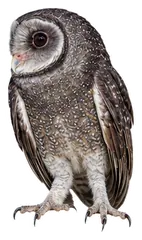 Greater Sooty OwlTyto tenebricosa
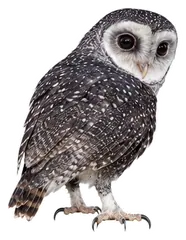 Lesser Sooty OwlTyto multipunctata
 Minahasa Masked OwlTyto inexspectata
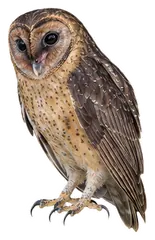 Taliabu Masked OwlTyto nigrobrunnea
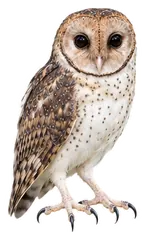 Moluccan Masked OwlTyto sororcula
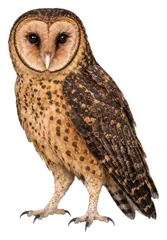 Manus Masked OwlTyto manusi
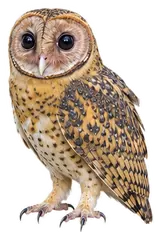 Golden Masked OwlTyto aurantia
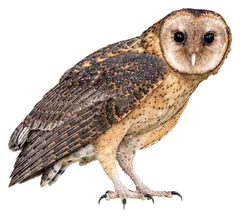 Australian Masked OwlTyto novaehollandiae
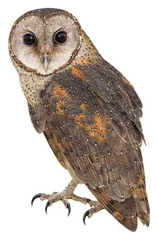 Sulawesi Masked OwlTyto rosenbergii
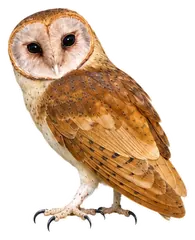 Red OwlTyto soumagnei
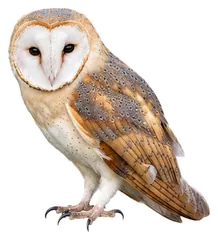 Western Barn OwlTyto alba
 American Barn OwlTyto furcata
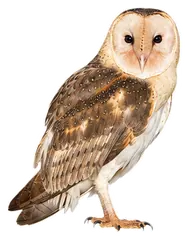
Download illustration
Free to use with credit: “Illustration: Bird Album (birdalbum.com)”. Drawn by AI from a reference photo by Chien Lee. ↗
Heard it but can't see it? Mingji identifies birds by sound and photo, on your phone.