 Bird Album
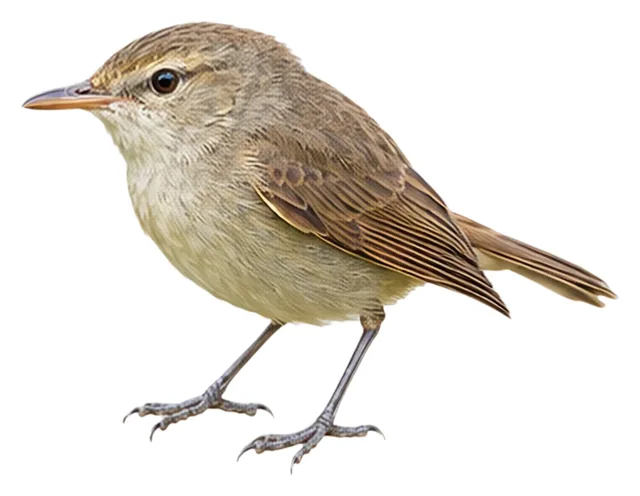
Eastern Olivaceous Warbler
Iduna pallida (Hemprich & Ehrenberg, 1833)
≈13 cmLength9 gWeight
The adult has a plain pale brown back and whitish underparts, and flicks its tail downward.
Busiest months: May · Most records: Israel, United Arab Emirates, Greece
Looks like Sykes's Warbler
How to identify
Field marks
- Adult has a pale brown back without markings
- Adult has whitish underparts
- Strong, pointed bill and gray legs and feet
- Flicks the tail downward
Male, female and young
Sexes identical; juvenile has a more buff-colored belly.
Voice
Song is a rapid, nasal babble.
Similar species
Where and when it's recorded
Busiest months: May · Most records: Israel, United Arab Emirates, Greece

Eastern Olivaceous Warbler has been recorded at 404 of the 8,276 birding hotspots we track, in 60 countries and regions.
Records by month Northern Hemisphere
Where it's recorded most
- Jerusalem Bird ObservatoryIsrael2,682 records
- Mushrif Palace GardensUnited Arab Emirates2,418 records
- International Birding and Research Center Eilat (IBRCE)Israel2,400 records
More places
- Yeruham LakeIsrael706 records
- Private estate near Green MubazzarahUnited Arab Emirates687 records
- Aras Kuş Halkalama İstasyonuTürkiye673 records
- Gazelle ValleyIsrael577 records
- Hulda ReservoirIsrael397 records
- Validebağ Korusu – Genel AlanTürkiye361 records
- Kalloni Salt PansGreece359 records
Countries and regions with the most records
eBird records via GBIF up to 2024-12-31. A record means someone listed it; more records partly mean more birders, not more birds.
About
The eastern olivaceous warbler (Iduna pallida), known simply as the olivaceous warbler when its western relative is referred to as the 'isabelline warbler', is a small passerine bird with drab plumage tones, that is native to the Old World. For the most part it breeds in southeastern Europe, the Middle East and adjacent western Asia, and winters in the northern Afrotropics.
Excerpt from Wikipedia, CC BY-SA 4.0 · authors · Read more on Wikipedia
Questions
How big is the Eastern Olivaceous Warbler?
The Eastern Olivaceous Warbler is about ≈13 cm long and weighs around 9 g.
Where does the Eastern Olivaceous Warbler live?
Its breeding range: Palearctic, Africa: south-central Palearctic, northern Africa. It is most often recorded in Israel, United Arab Emirates and Greece.
When is the best time to see the Eastern Olivaceous Warbler?
At the hotspots we track, it is recorded most in May (Northern Hemisphere).
Is the Eastern Olivaceous Warbler endangered?
The IUCN Red List classifies the Eastern Olivaceous Warbler as Least Concern.
What does the Eastern Olivaceous Warbler eat?
Main food: Insects & other invertebrates.
What family is the Eastern Olivaceous Warbler in?
It belongs to the family Reed Warblers & Allies (Acrocephalidae), order Passerines (Passeriformes).
At a glance
- Length
- ≈13 cm
- Weight
- 9 g
- Habitat
- Shrubland
- Diet
- Insects & other invertebrates
- Lifestyle
- Perches in trees
- Migration
- Migratory
- Conservation
- Least Concern
More measurements
- Wing
- 65 mm
- Tail
- 53 mm
- Bill
- 17 mm
- Tarsus
- 21 mm
Averages from the AVONET dataset; length from field guides where available.
Range
Palearctic, Africa: south-central Palearctic, northern Africa
Breeding range, IOC World Bird List 15.2
Classification
- Order
- Passerines Passeriformes
- Family
- Reed Warblers & Allies Acrocephalidae
- Genus
- Iduna
Other birds in the genus Iduna
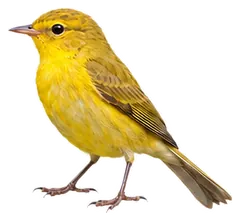 African Yellow WarblerIduna natalensis
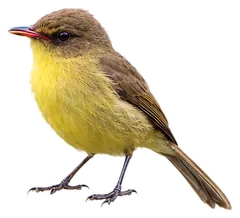 Mountain Yellow WarblerIduna similis
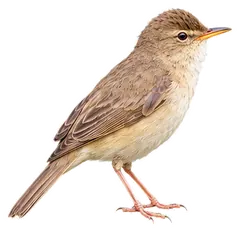 Booted WarblerIduna caligata
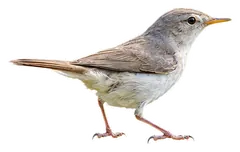 Sykes's WarblerIduna rama
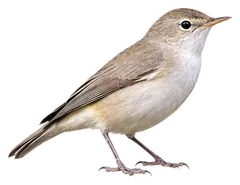 Western Olivaceous WarblerIduna opaca
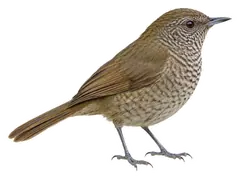 Grauer's WarblerGraueria vittata
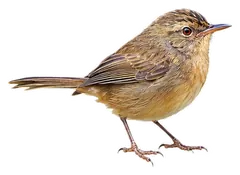 Malagasy Brush WarblerNesillas typica
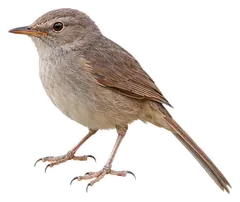 Subdesert Brush WarblerNesillas lantzii
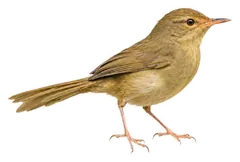 Anjouan Brush WarblerNesillas longicaudata
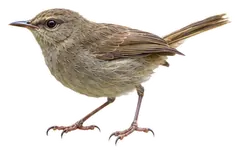 Grande Comore Brush WarblerNesillas brevicaudata
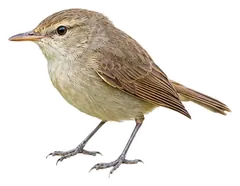
Download illustration
Free to use with credit: “Illustration: Bird Album (birdalbum.com)”. Drawn by AI from a reference photo by Jakob Fahr. ↗
Heard it but can't see it? Mingji identifies birds by sound and photo, on your phone.