 Bird Album
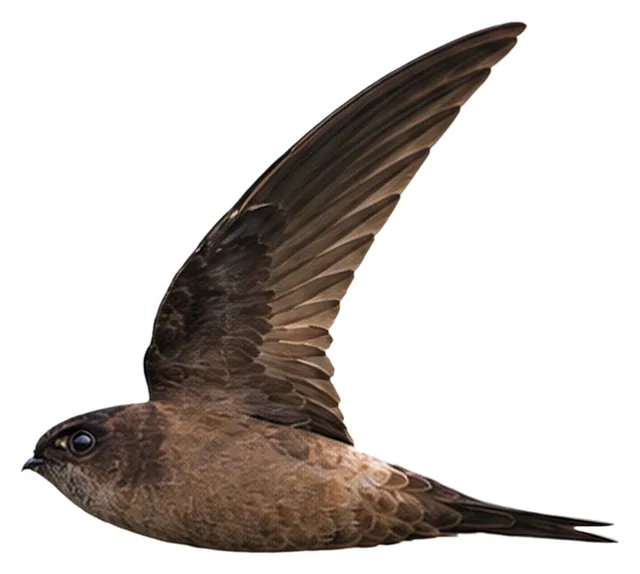
Edible-nest Swiftlet
Aerodramus fuciphagus (Thunberg, 1812)
≈12 cmLength11 gWeight
This small swift spends most of its life in the air, and its saliva-built nest is used in bird's nest soup.
Busiest months: December–March · Most records: Thailand, Cambodia, Malaysia
How to identify
Field marks
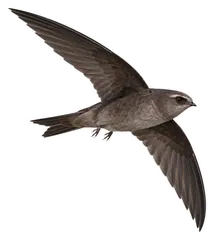
- Blackish-brown upperparts
- Pale patch on the rump
- Short, slightly notched tail
- Long, narrow wings swept back into a crescent in flight
Voice
High-pitched, gurgling calls in breeding colonies, also continuous clucking for echolocation.
Where and when it's recorded
Busiest months: December–March · Most records: Thailand, Cambodia, Malaysia

Edible-nest Swiftlet has been recorded at 420 of the 8,276 birding hotspots we track, in 14 countries and regions.
Records by month Northern Hemisphere
Where it's recorded most
- Pak Thale Nature ReserveThailand1,388 records
- Lat Krabang – Thap Yao paddies & aquaculture pondsThailand869 records
- Phutthamonthon ParkThailand786 records
More places
- Cat Tien NPVietnam741 records
- Angkor WatCambodia738 records
- Bang Pu – Recreation CenterThailand730 records
- Benjakiti ParkThailand690 records
- Khlong Tamru – 1 Alley salt pansThailand622 records
- Sepilok – Rainforest Discovery CenterMalaysia590 records
- Khao Dinsor (Khao Dinso) / Chumphon Raptor CenterThailand564 records
Countries and regions with the most records
eBird records via GBIF up to 2024-12-31. A record means someone listed it; more records partly mean more birders, not more birds.
About
The edible-nest swiftlet (Aerodramus fuciphagus), also known as the white-nest swiftlet, is a small bird of the swift family which is found in Southeast Asia. Its opaque and whitish nest is made exclusively of solidified saliva and is the main ingredient of bird's nest soup, a delicacy of Chinese cuisine. Germain's swiftlet (Aerodramus germani) is now treated as conspecific with this species.
Excerpt from Wikipedia, CC BY-SA 4.0 · authors · Read more on Wikipedia
Questions
How big is the Edible-nest Swiftlet?
The Edible-nest Swiftlet is about ≈12 cm long and weighs around 11 g.
Where does the Edible-nest Swiftlet live?
Its breeding range: Oriental, Australasia: Andaman Islands to Southeast Asia, Lesser Sundas, Borneo and west-central, southwestern Philippines. It is most often recorded in Thailand, Cambodia and Malaysia.
When is the best time to see the Edible-nest Swiftlet?
At the hotspots we track, it is recorded most in January, February, March and December (Northern Hemisphere).
Is the Edible-nest Swiftlet endangered?
The IUCN Red List classifies the Edible-nest Swiftlet as Least Concern.
What does the Edible-nest Swiftlet eat?
Main food: Insects & other invertebrates.
What family is the Edible-nest Swiftlet in?
It belongs to the family Swifts (Apodidae), order Apodiformes.
At a glance
- Length
- ≈12 cm
- Weight
- 11 g
- Habitat
- Forest
- Diet
- Insects & other invertebrates
- Lifestyle
- Feeds in the air
- Migration
- Resident (barely migrates)
- Conservation
- Least Concern
More measurements
- Wing
- 110 mm
- Tail
- 48 mm
- Bill
- 7 mm
- Tarsus
- 9 mm
Averages from the AVONET dataset; length from field guides where available.
Range
Oriental, Australasia: Andaman Islands to Southeast Asia, Lesser Sundas, Borneo and west-central, southwestern Philippines
Breeding range, IOC World Bird List 15.2
Classification
- Order
- Apodiformes
- Family
- Swifts Apodidae
- Genus
- Aerodramus
Other birds in the genus Aerodramus
 Seychelles SwiftletAerodramus elaphrus
 Mascarene SwiftletAerodramus francicus
 Indian SwiftletAerodramus unicolor
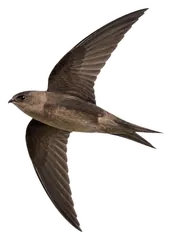 Philippine SwiftletAerodramus mearnsi
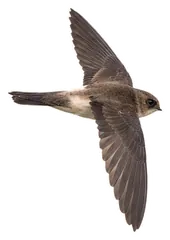 Moluccan SwiftletAerodramus infuscatus
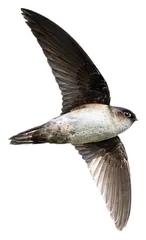 Mountain SwiftletAerodramus hirundinaceus
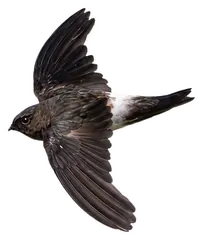 White-rumped SwiftletAerodramus spodiopygius
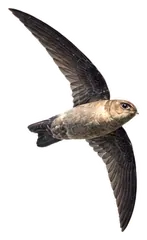 Australian SwiftletAerodramus terraereginae
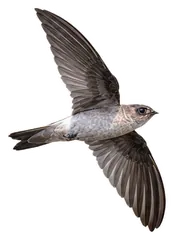 Himalayan SwiftletAerodramus brevirostris
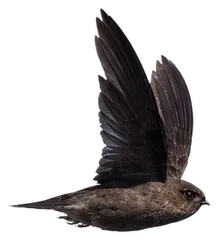 Volcano SwiftletAerodramus vulcanorum
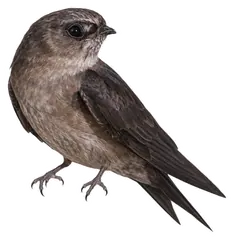 Whitehead's SwiftletAerodramus whiteheadi
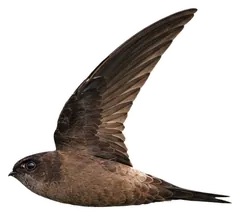
 Bare-legged SwiftletAerodramus nuditarsus
Download illustration
Free to use with credit: “Illustration: Bird Album (birdalbum.com)”. Drawn by AI from a reference photo by Josh van der Meulen. ↗
Heard it but can't see it? Mingji identifies birds by sound and photo, on your phone.
In other languages
- EnglishEdible-nest Swiftlet
- 简体中文爪哇金丝燕
- 繁體中文爪哇金絲燕
- DeutschWeißnestsalangane
- FrançaisSalangane à nid blanc
- EspañolSalangana nidoblanco
- Portuguêssalangana-de-ninho-branco
- ItalianoSalangana nidoedule
- NederlandsEetbaar-nestsalangaan
- РусскийСалангана-водорослеед
- Svenskavitbosalangan
- DanskGrågumpet Salangan
- Polskisalangana sundajska