 Bird Album
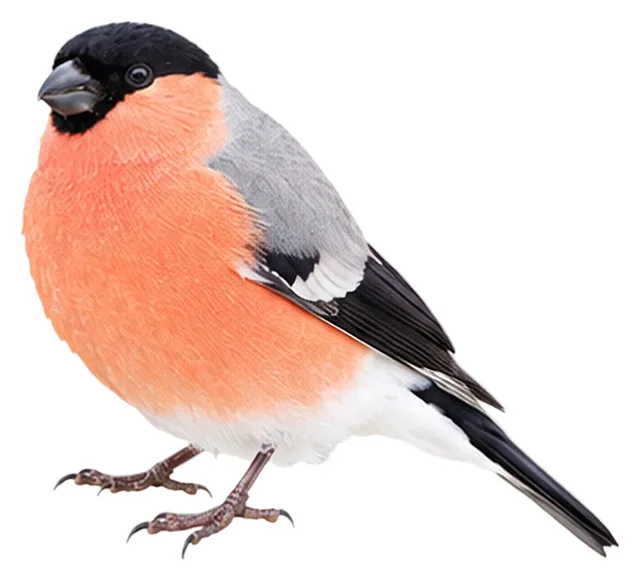
Eurasian Bullfinch
Pyrrhula pyrrhula (Linnaeus, 1758)
≈16 cmLength26 cmWingspan24 gWeight
It has a black cap and a short, stout bill, with a red breast and belly in the male and a conspicuous white rump in flight.
Busiest months: January and November · Most records: United Kingdom, Germany, Russia
How to identify
Field marks
- Male has a red breast and underparts
- Adult has a black crown and face
- Bill short, stout and black
- White rump and white wing-bar conspicuous in flight
Male, female and young
Male has a red breast and underparts; in the female and juvenile these areas are yellowish-brown with a gray tinge; juvenile has a gray-brown crown and face.
Voice
Usual call is a soft, low, mournful whistle, “peeu” or “pew”; song is weak and rustling, interspersed with soft whistles and audible only at close range.
Where and when it's recorded

Eurasian Bullfinch has been recorded at 891 of the 8,171 birding hotspots we track, in 56 countries and regions.
Records by month Northern Hemisphere
Where it's recorded most
- Elton ReservoirUnited Kingdom1,670 records
- Rutland WaterUnited Kingdom1,597 records
- South Downs NP – Pulborough Brooks RSPB ReserveUnited Kingdom1,408 records
More places
- Otmoor RSPB ReserveUnited Kingdom1,133 records
- Leighton Moss RSPB ReserveUnited Kingdom865 records
- Peak District NP – Underhill Farm, ElkstoneUnited Kingdom854 records
- Aylestone Meadows LNRUnited Kingdom760 records
- Woolston Eyes NRUnited Kingdom721 records
- Pennington Flash LNRUnited Kingdom714 records
- Fen Drayton Lakes RSPB ReserveUnited Kingdom710 records
Countries and regions with the most records
eBird records via GBIF up to 2024-12-31. A record means someone listed it; more records partly mean more birders, not more birds.
About
The Eurasian bullfinch or common bullfinch (Pyrrhula pyrrhula) is a small passerine bird in the finch family, Fringillidae. In Anglophone Europe it is known simply as the bullfinch (English regional, Shropshire: plum bird), as it is the original bird to bear the name bullfinch.
Excerpt from Wikipedia, CC BY-SA 4.0 · authors · Read more on Wikipedia
Questions
How big is the Eurasian Bullfinch?
The Eurasian Bullfinch is about ≈16 cm long, with a wingspan of 26 cm and weighs around 24 g.
Where does the Eurasian Bullfinch live?
Its breeding range: Palearctic: widespread; western, northern Europe through northern Russia and northern Mongolia to Kamchatka and south through northern, central Japan. It is most often recorded in United Kingdom, Germany and Russia.
When is the best time to see the Eurasian Bullfinch?
At the hotspots we track, it is recorded most in January and November (Northern Hemisphere).
Is the Eurasian Bullfinch endangered?
The IUCN Red List classifies the Eurasian Bullfinch as Least Concern.
What does the Eurasian Bullfinch eat?
Main food: Omnivore.
What family is the Eurasian Bullfinch in?
It belongs to the family Finches, Euphonias (Fringillidae), order Passerines (Passeriformes).
At a glance
- Length
- ≈16 cm
- Wingspan
- 26 cm
- Weight
- 24 g
- Habitat
- Forest
- Diet
- Omnivore
- Lifestyle
- Perches in trees
- Migration
- Resident (barely migrates)
- Conservation
- Least Concern
More measurements
- Wing
- 89 mm
- Tail
- 68 mm
- Bill
- 13 mm
- Tarsus
- 18 mm
Averages from the AVONET dataset; length from field guides where available.
Range
Palearctic: widespread; western, northern Europe through northern Russia and northern Mongolia to Kamchatka and south through northern, central Japan
Breeding range, IOC World Bird List 15.2
Subspecies · 1
- Pyrrhula pyrrhula cineracea w Siberia and ne Kazakhstan to e Siberia and ne China
Classification
- Order
- Passerines Passeriformes
- Family
- Finches, Euphonias Fringillidae
- Genus
- Pyrrhula
Other birds in the genus Pyrrhula
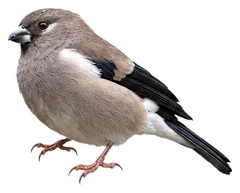 Brown BullfinchPyrrhula nipalensis
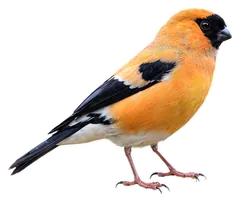 Orange BullfinchPyrrhula aurantiaca
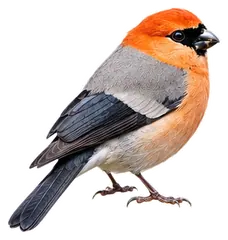 Red-headed BullfinchPyrrhula erythrocephala
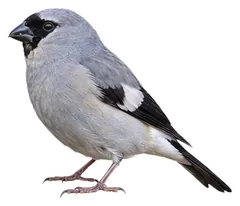 Grey-headed BullfinchPyrrhula erythaca
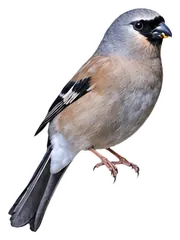 Taiwan BullfinchPyrrhula owstoni
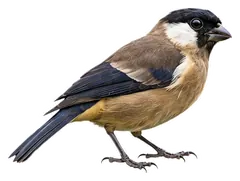 White-cheeked BullfinchPyrrhula leucogenis
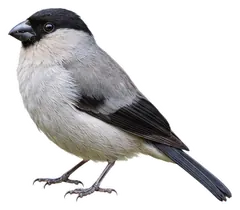 Azores BullfinchPyrrhula murina
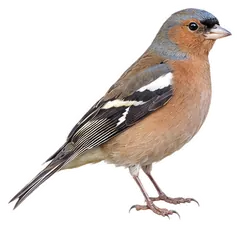 Eurasian ChaffinchFringilla coelebs
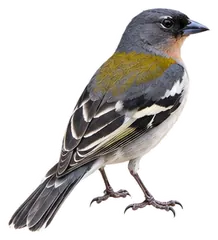 African ChaffinchFringilla spodiogenys
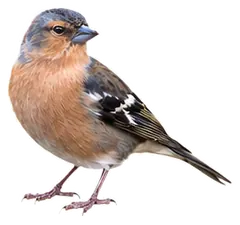 Azores ChaffinchFringilla moreletti
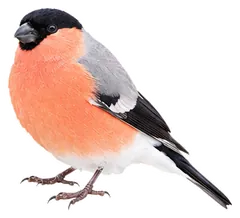
Download illustration
Free to use with credit: “Illustration: Bird Album (birdalbum.com)”. Drawn by AI from a reference photo by yury-redkin. ↗
Heard it but can't see it? Mingji identifies birds by sound and photo, on your phone.